Blog

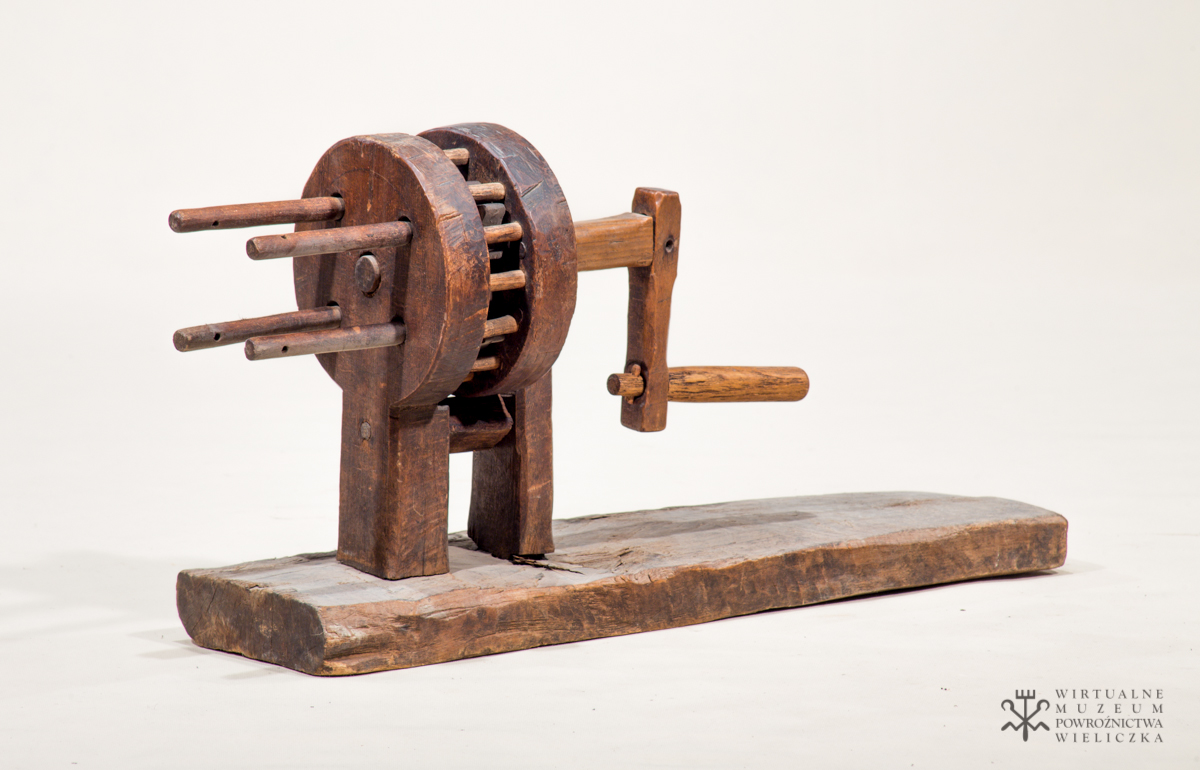
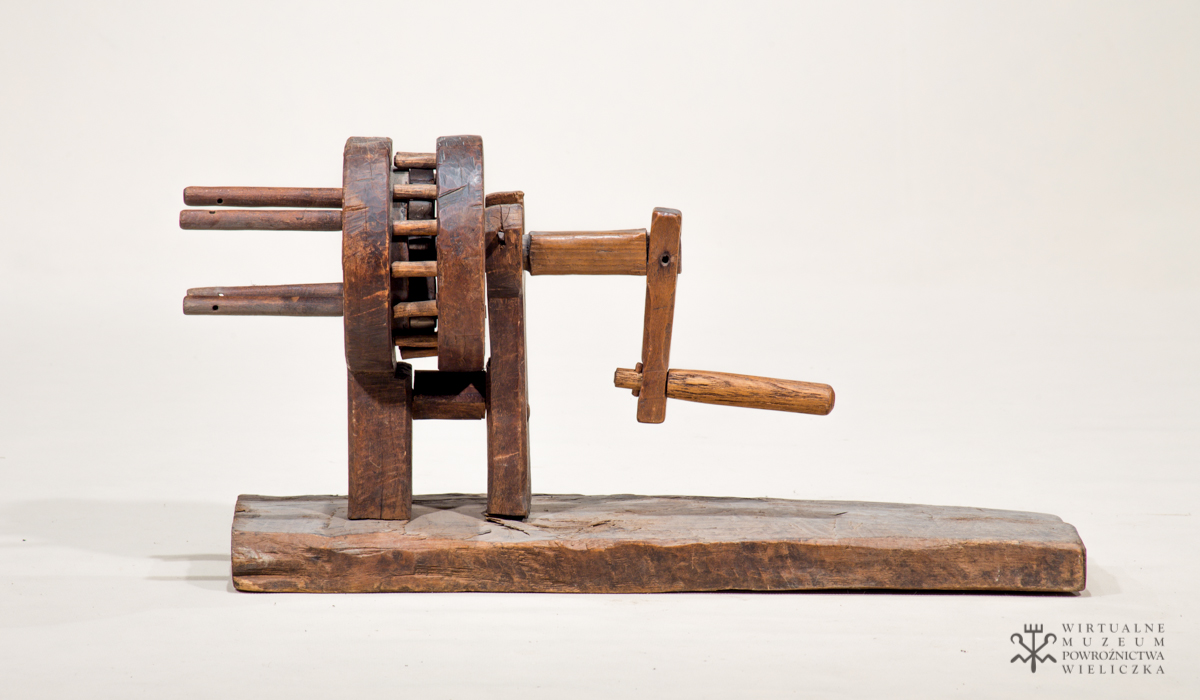
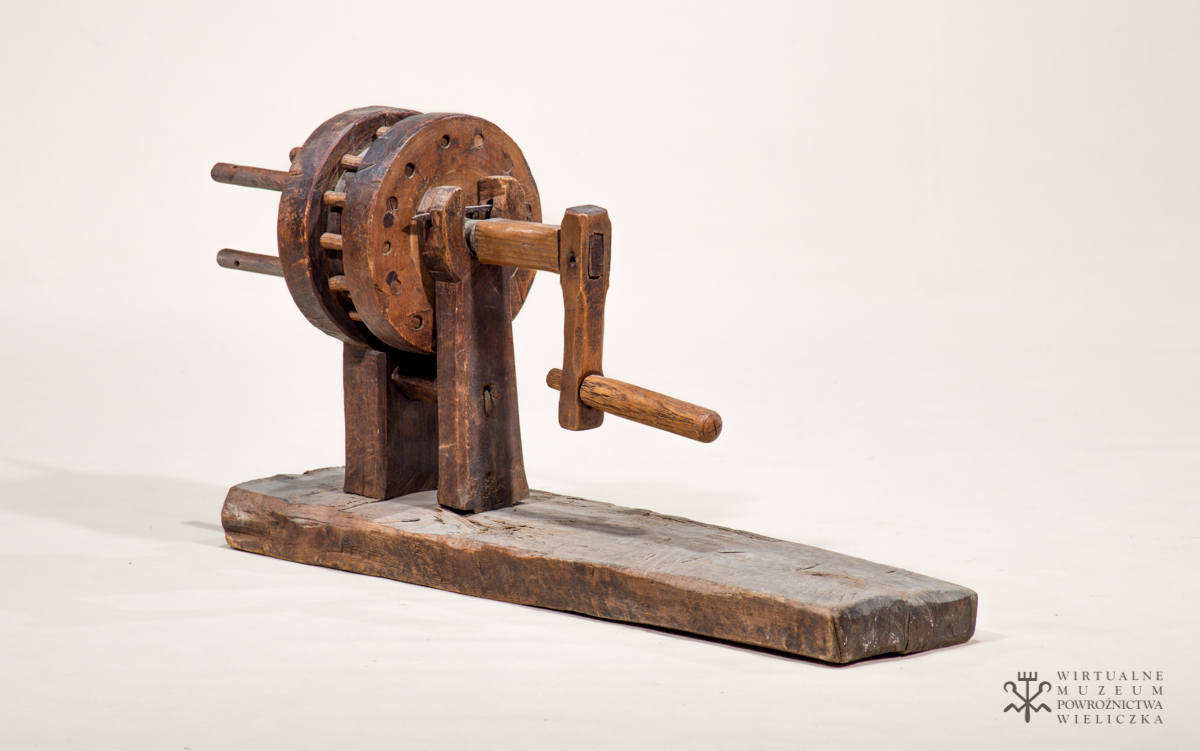
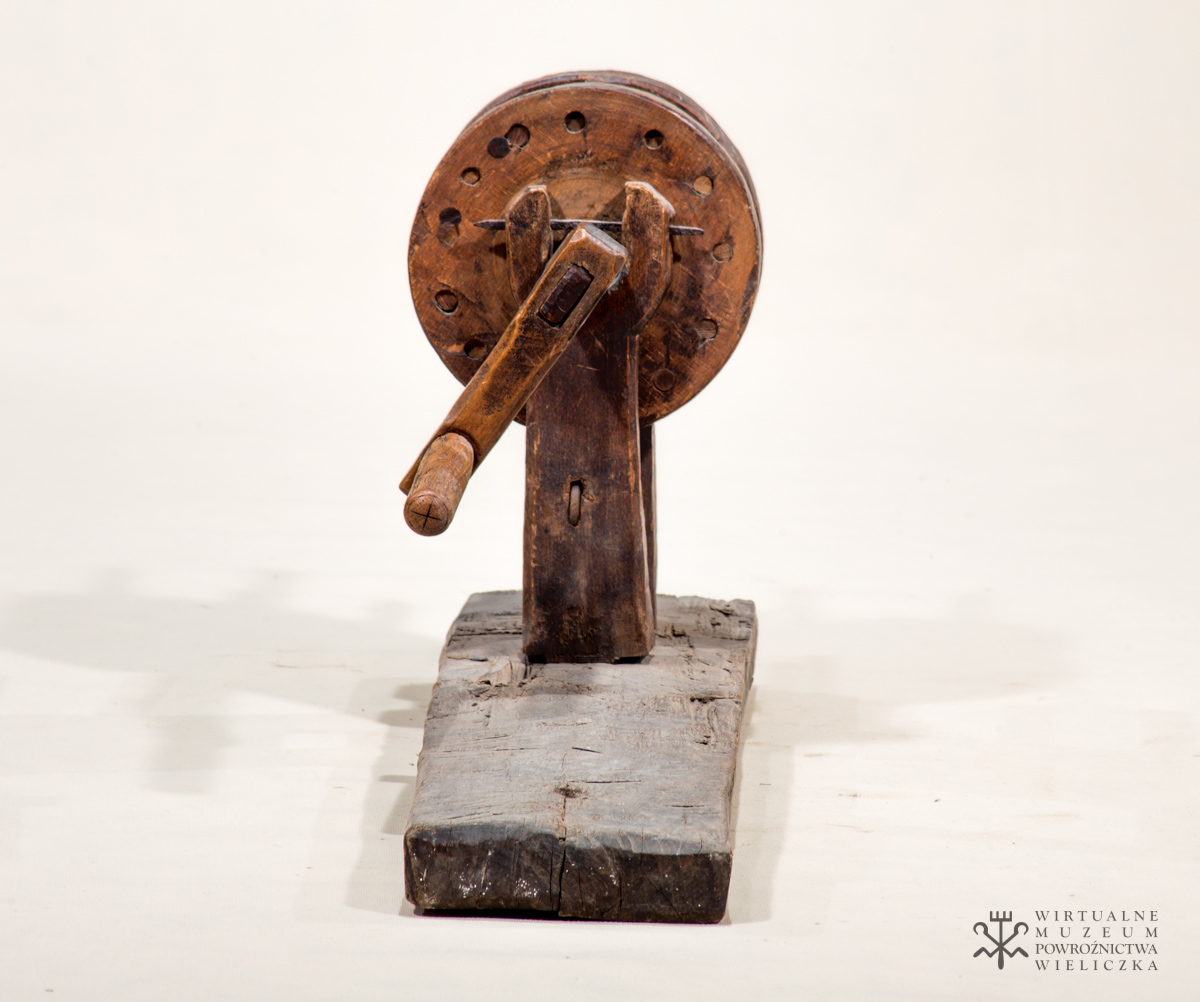
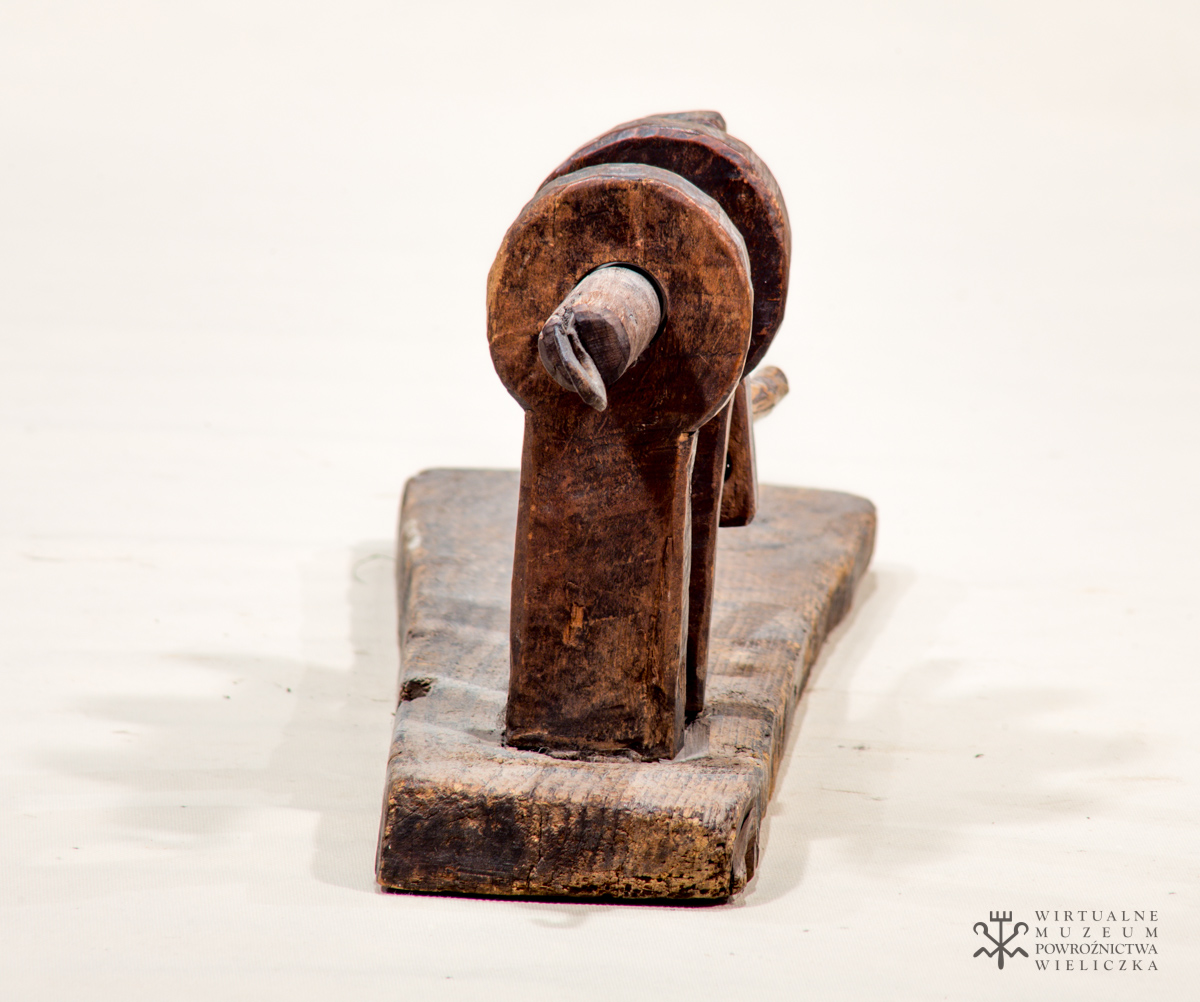
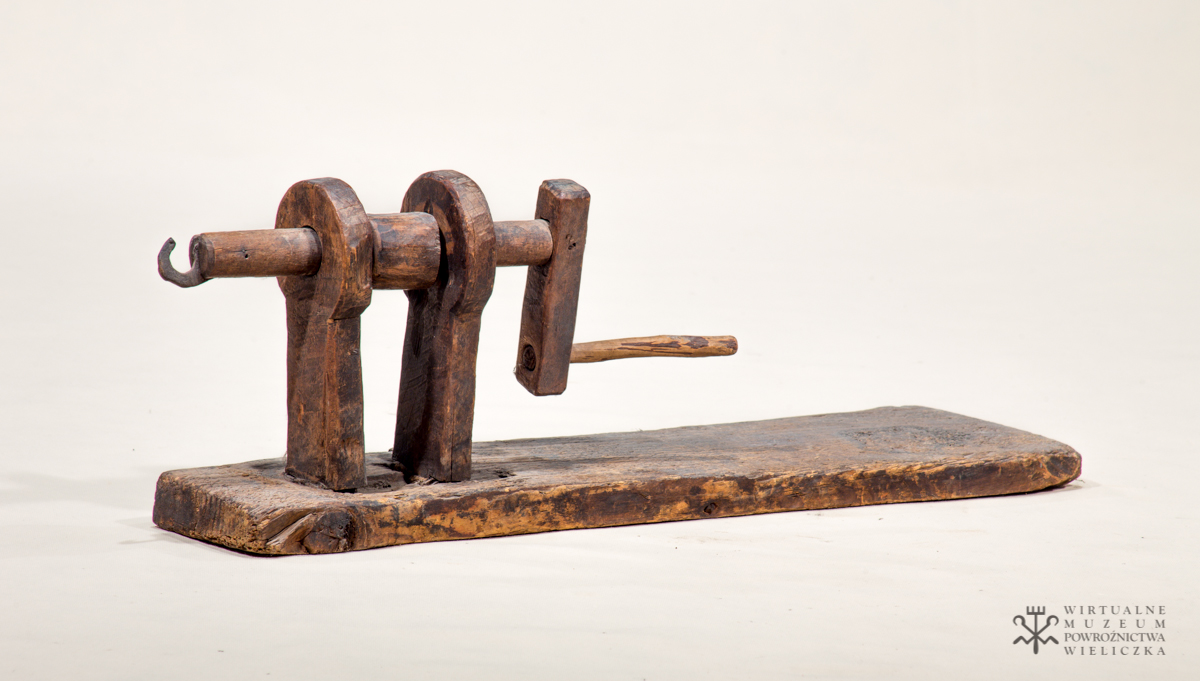
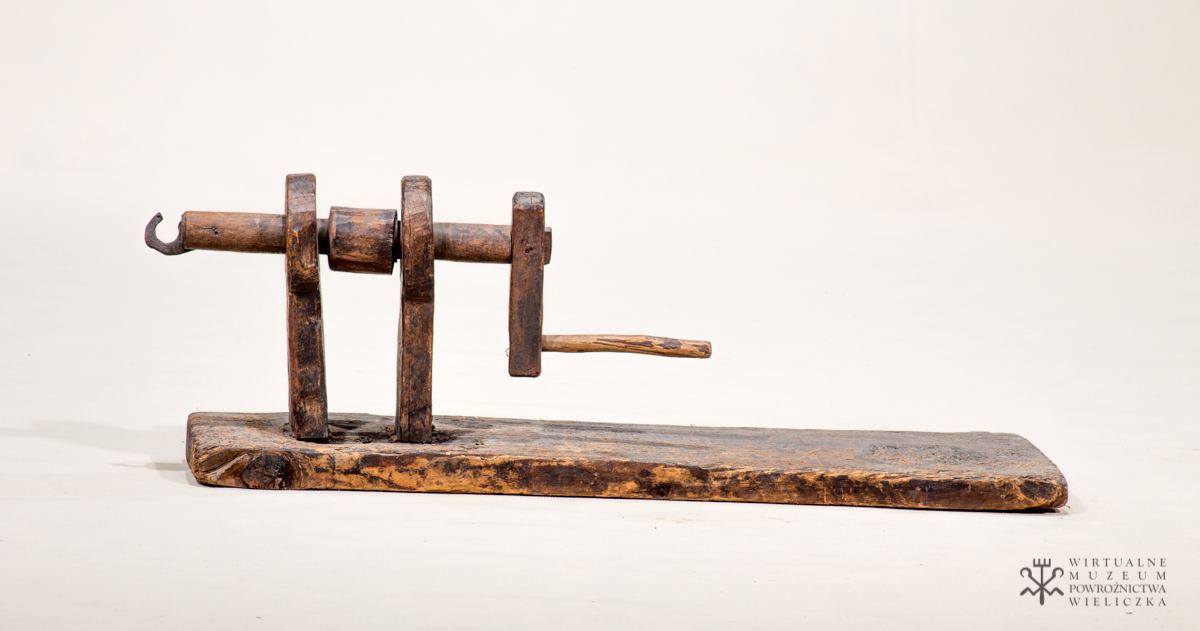
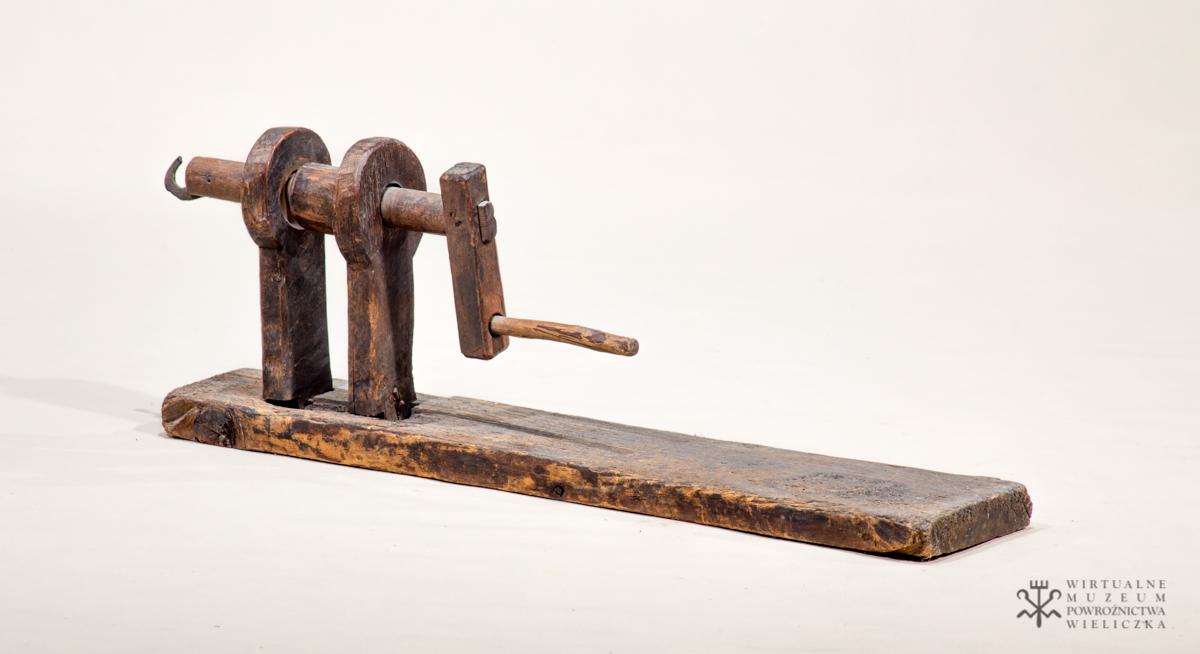
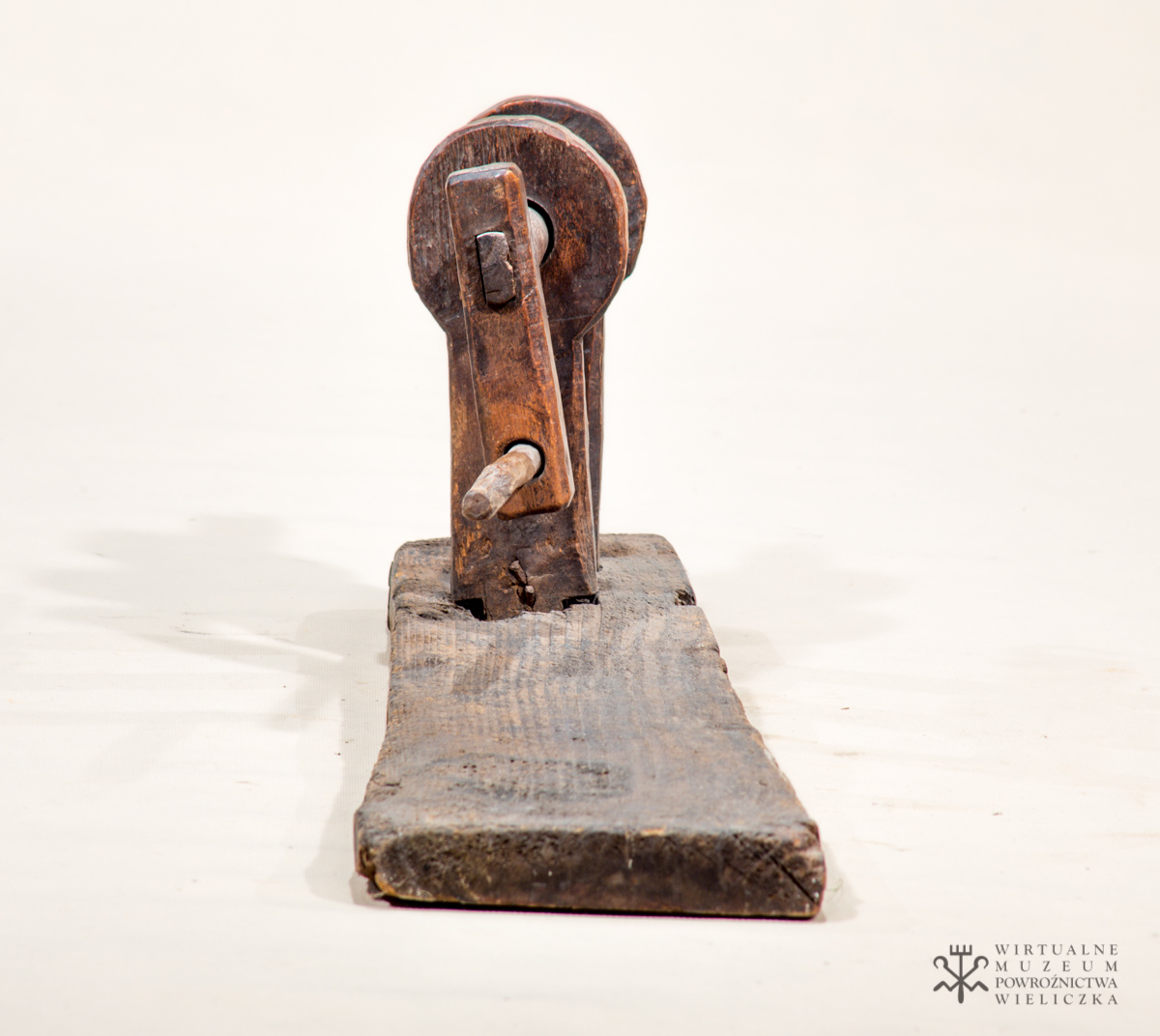
  • A rope reel from a workshop in Bochnia


    XIX/XX century / Germiany (?)

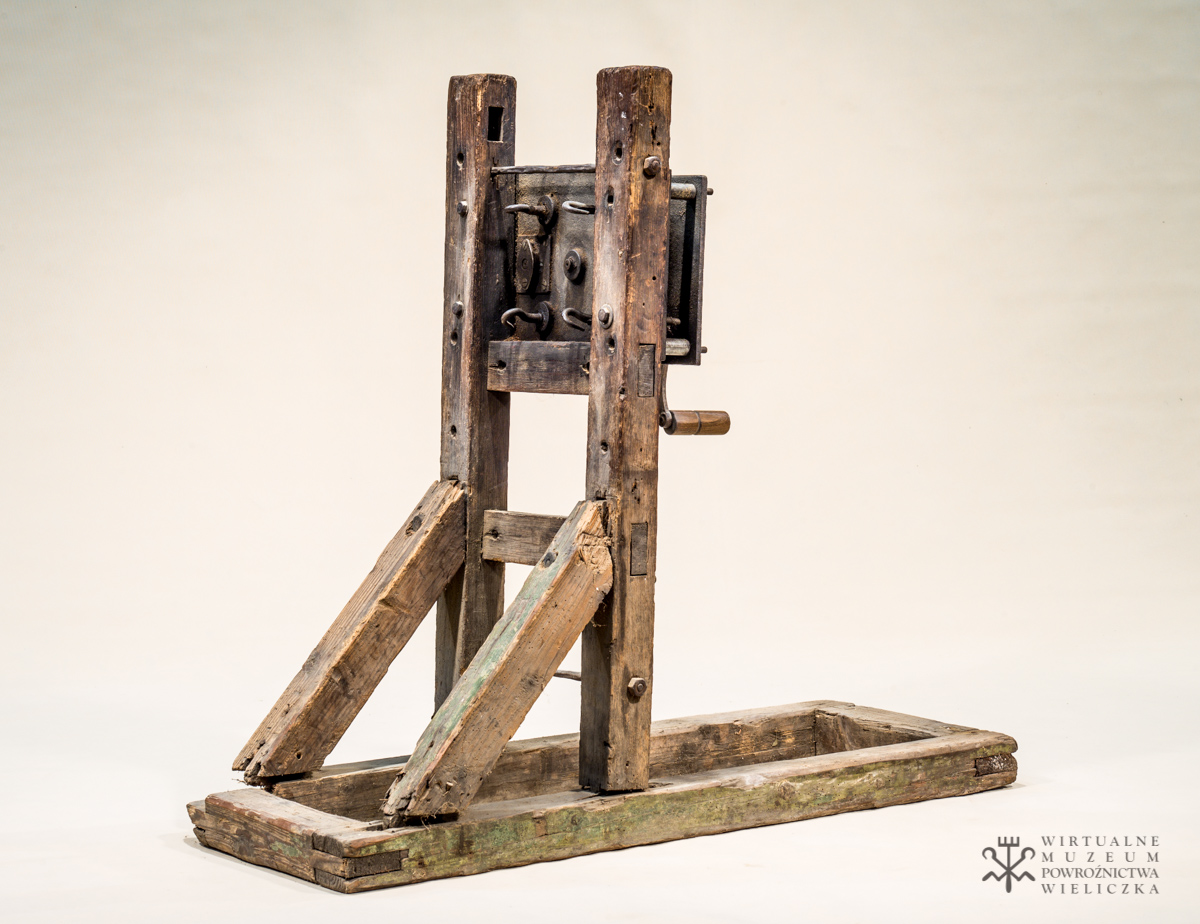
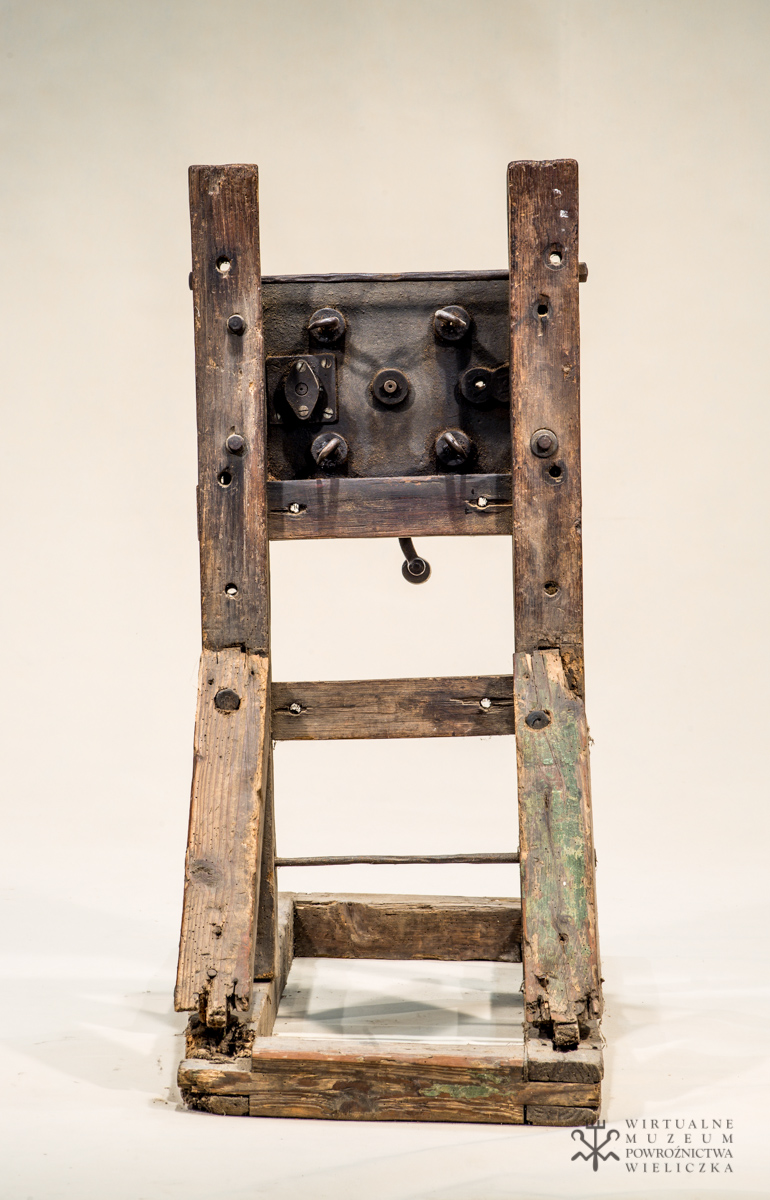
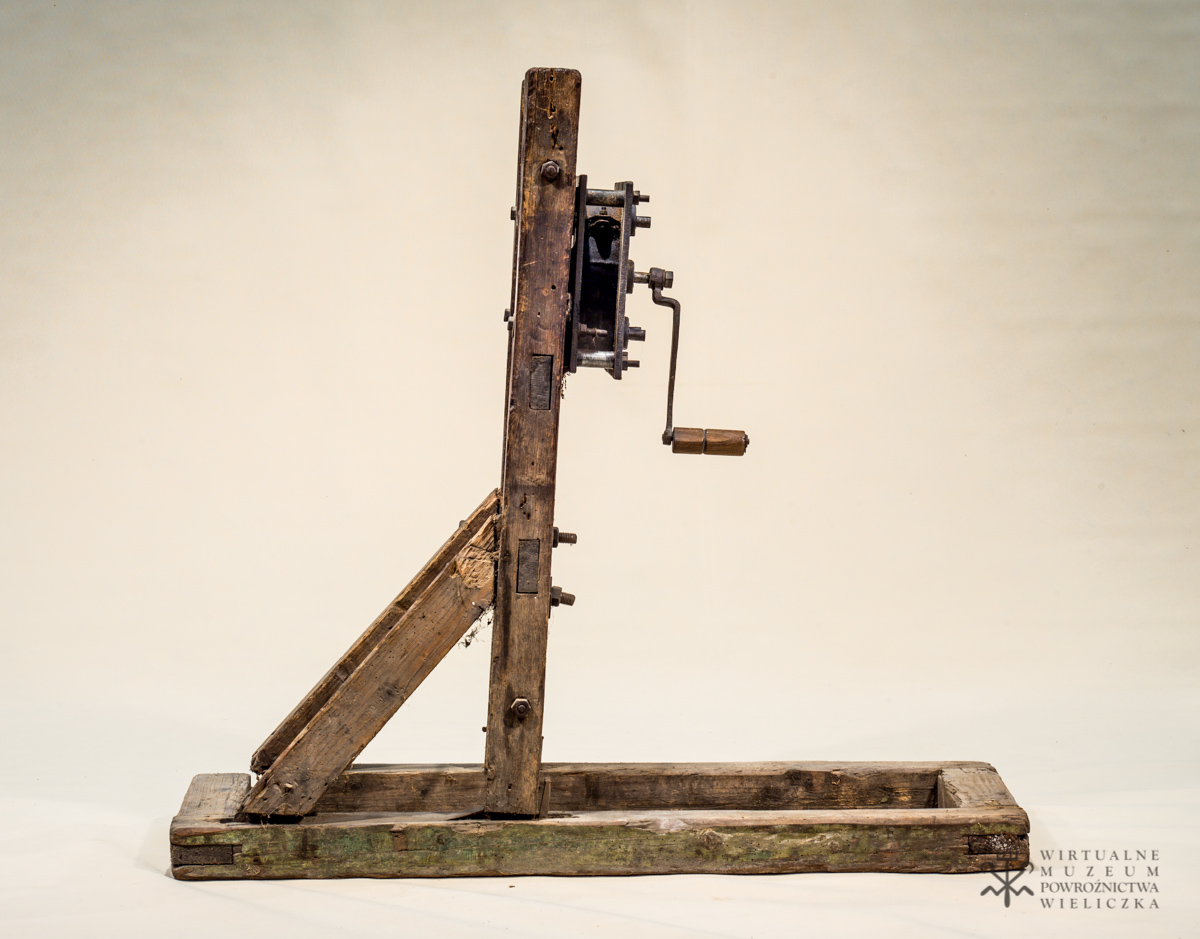
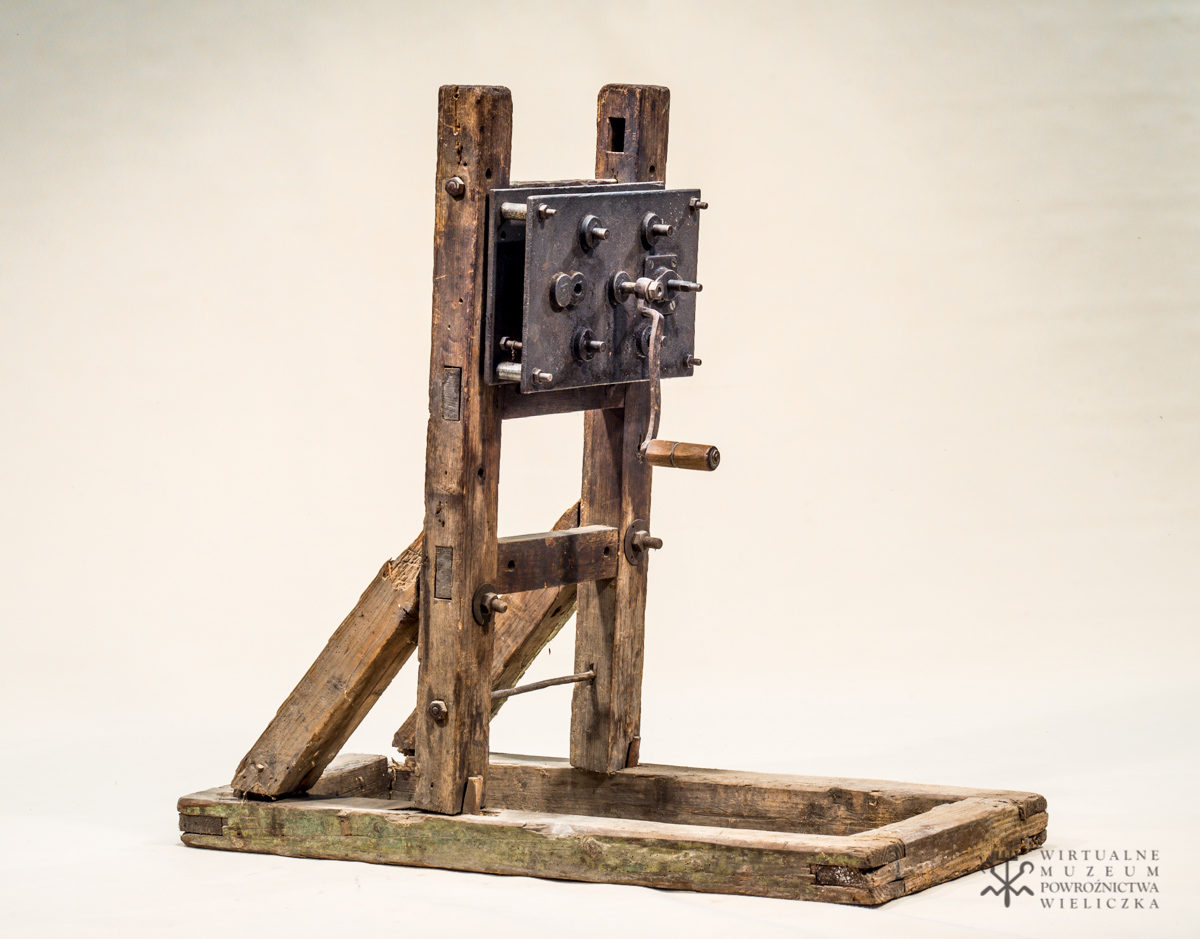
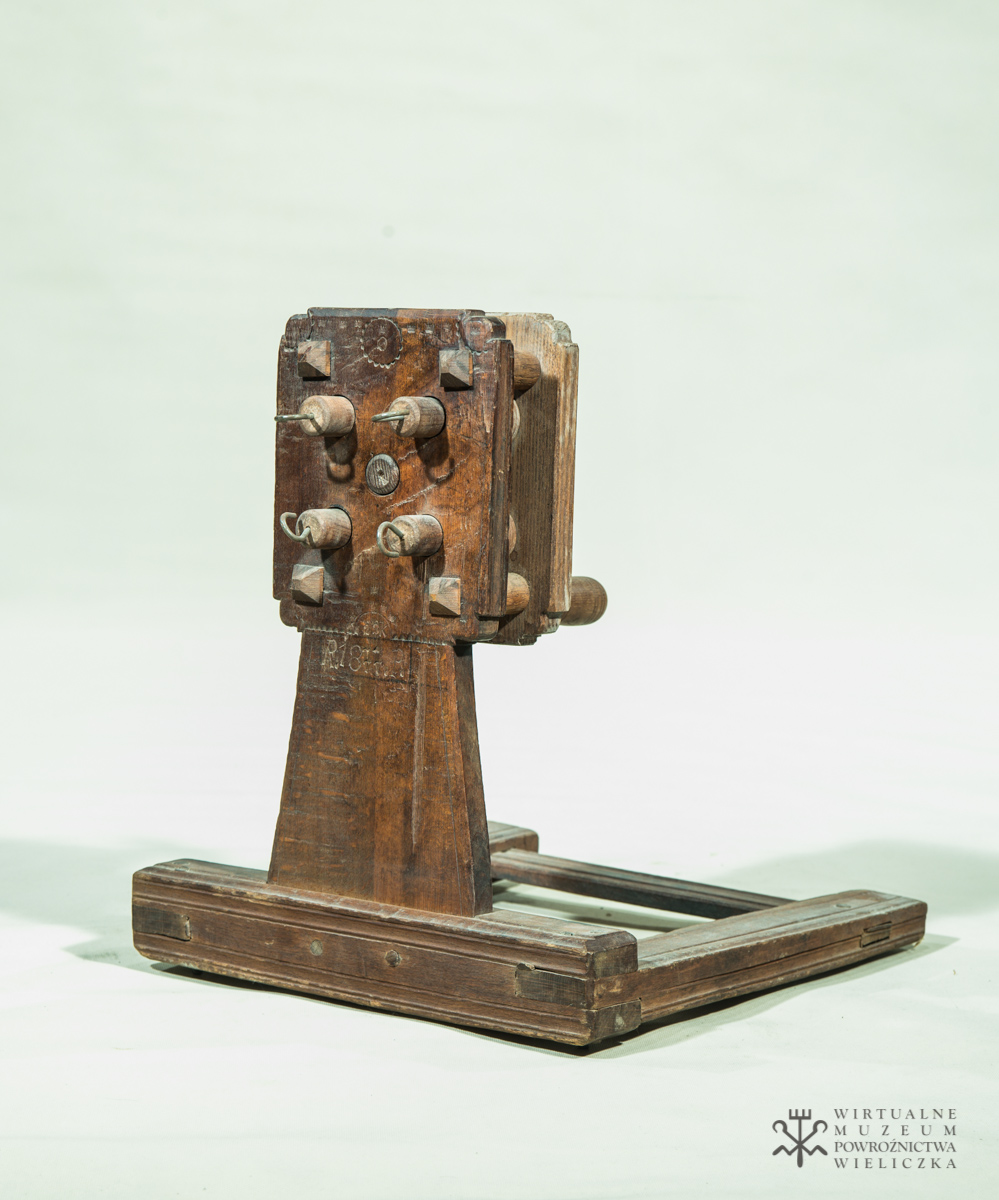
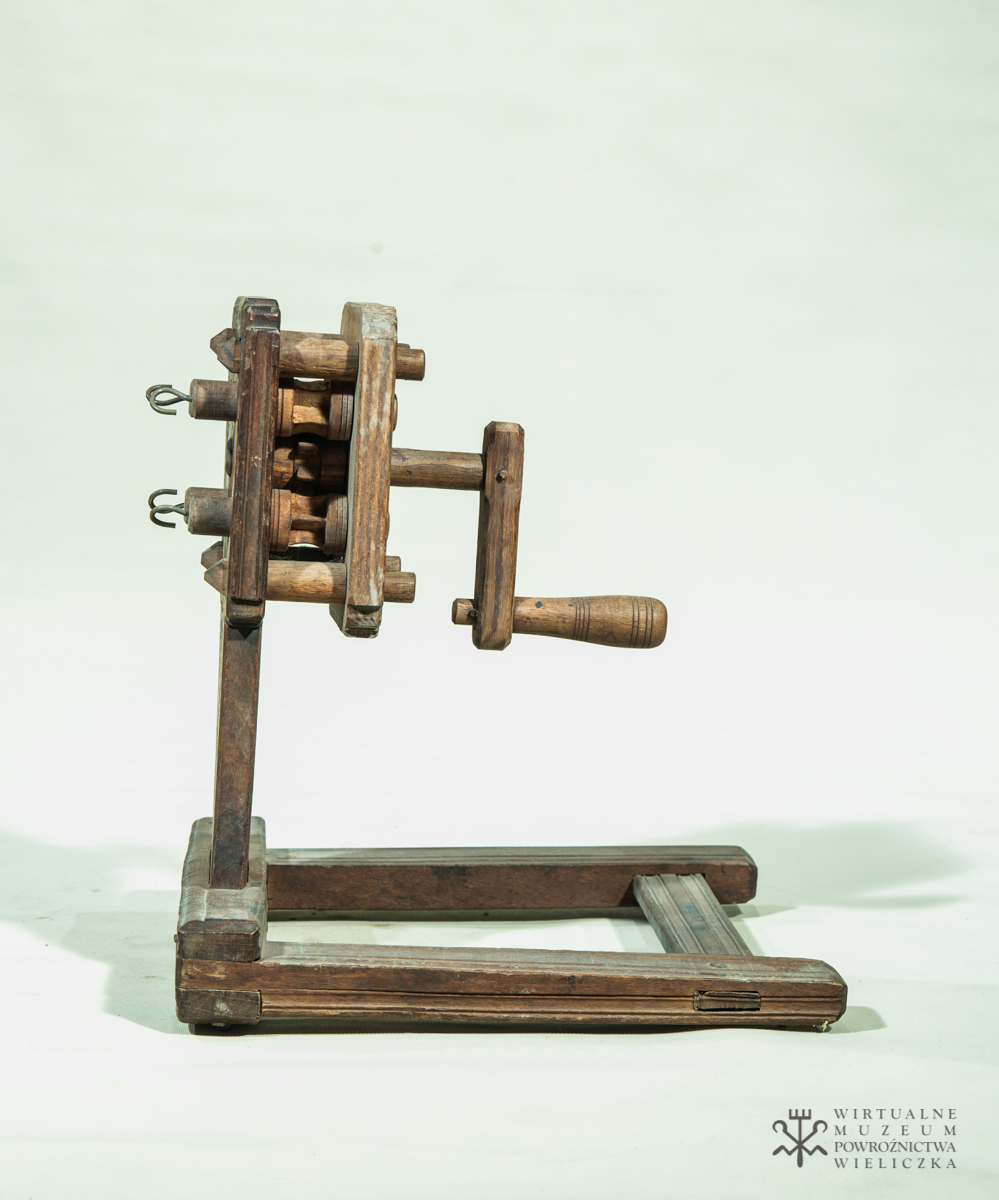
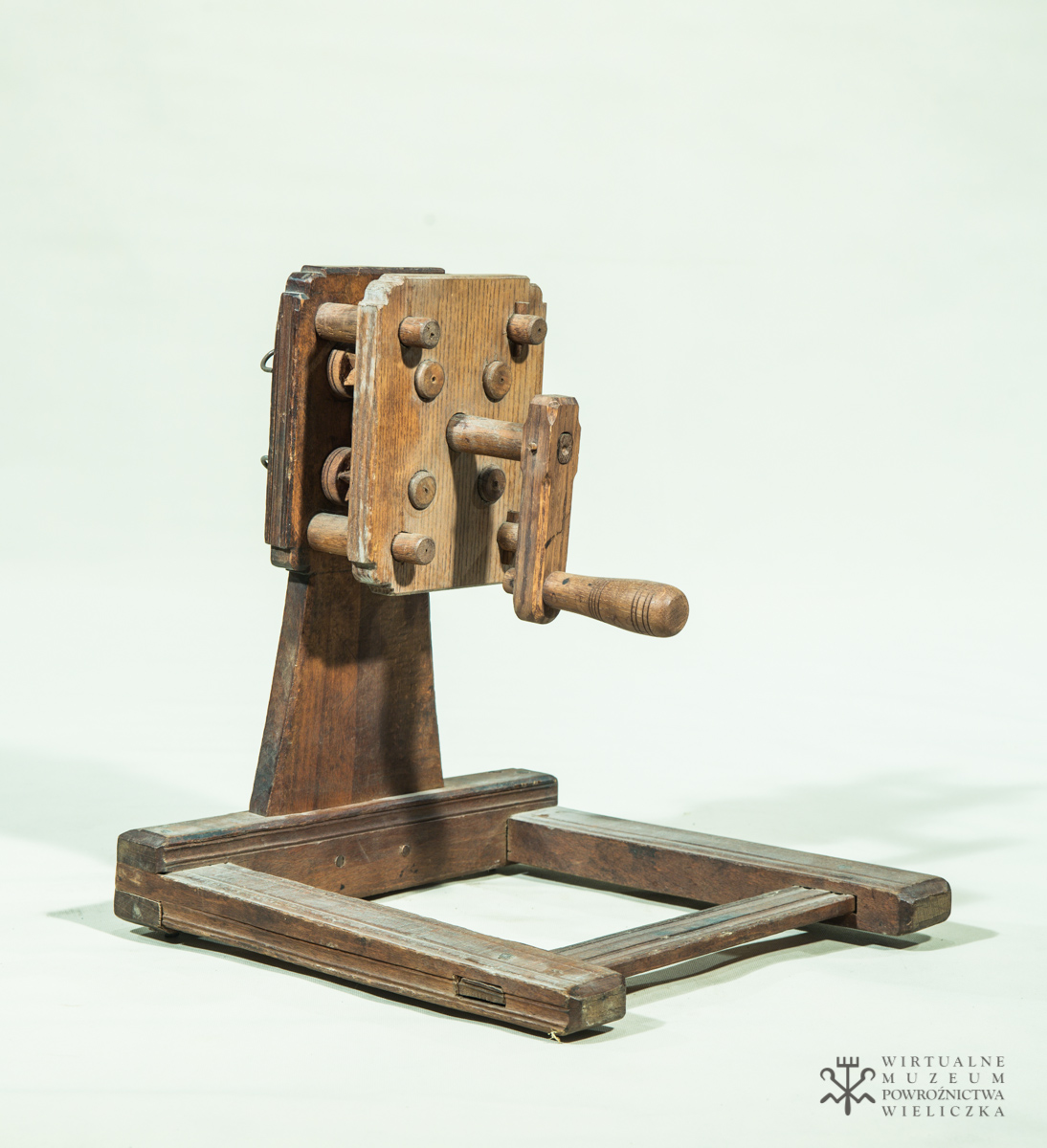
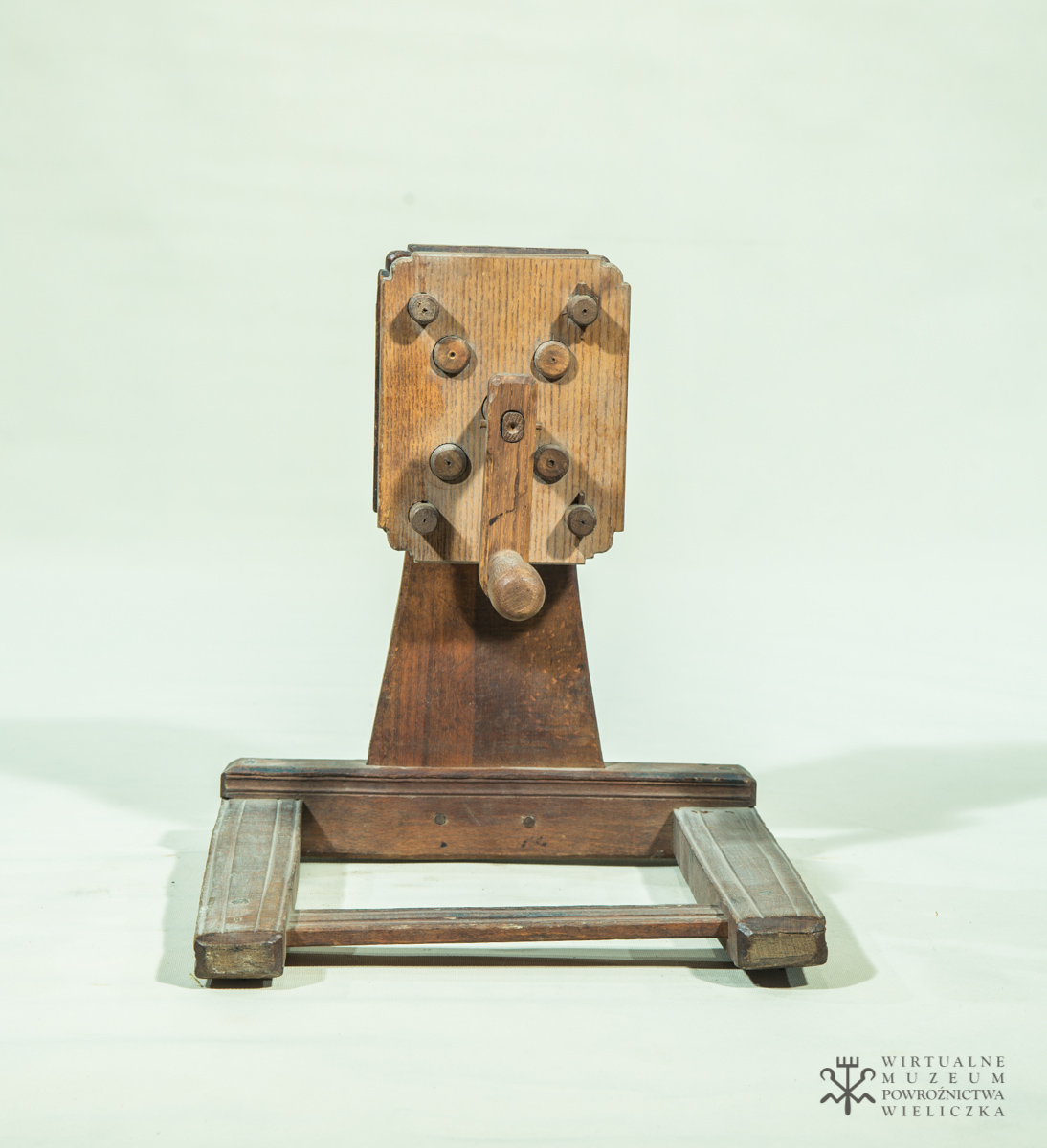
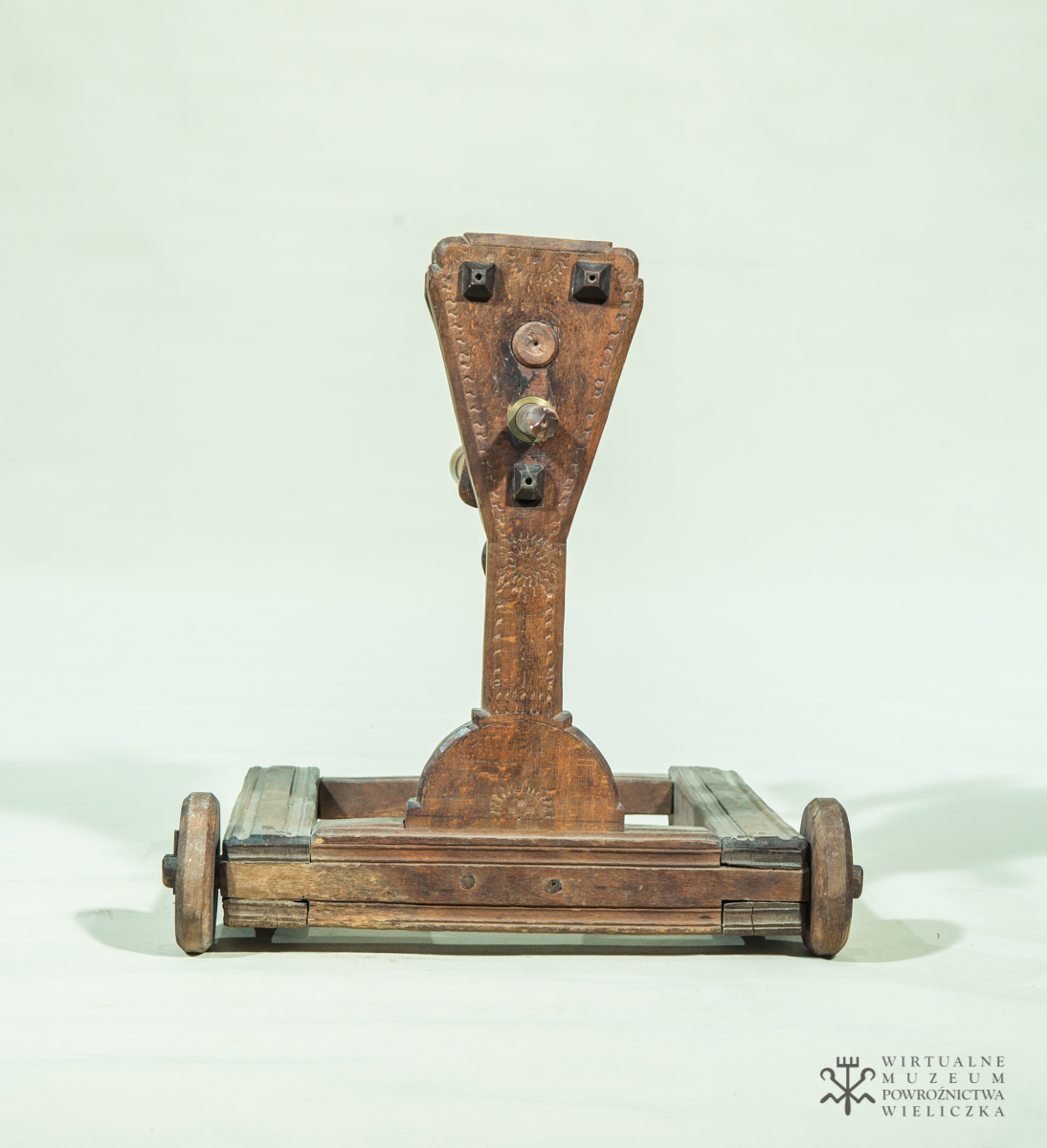
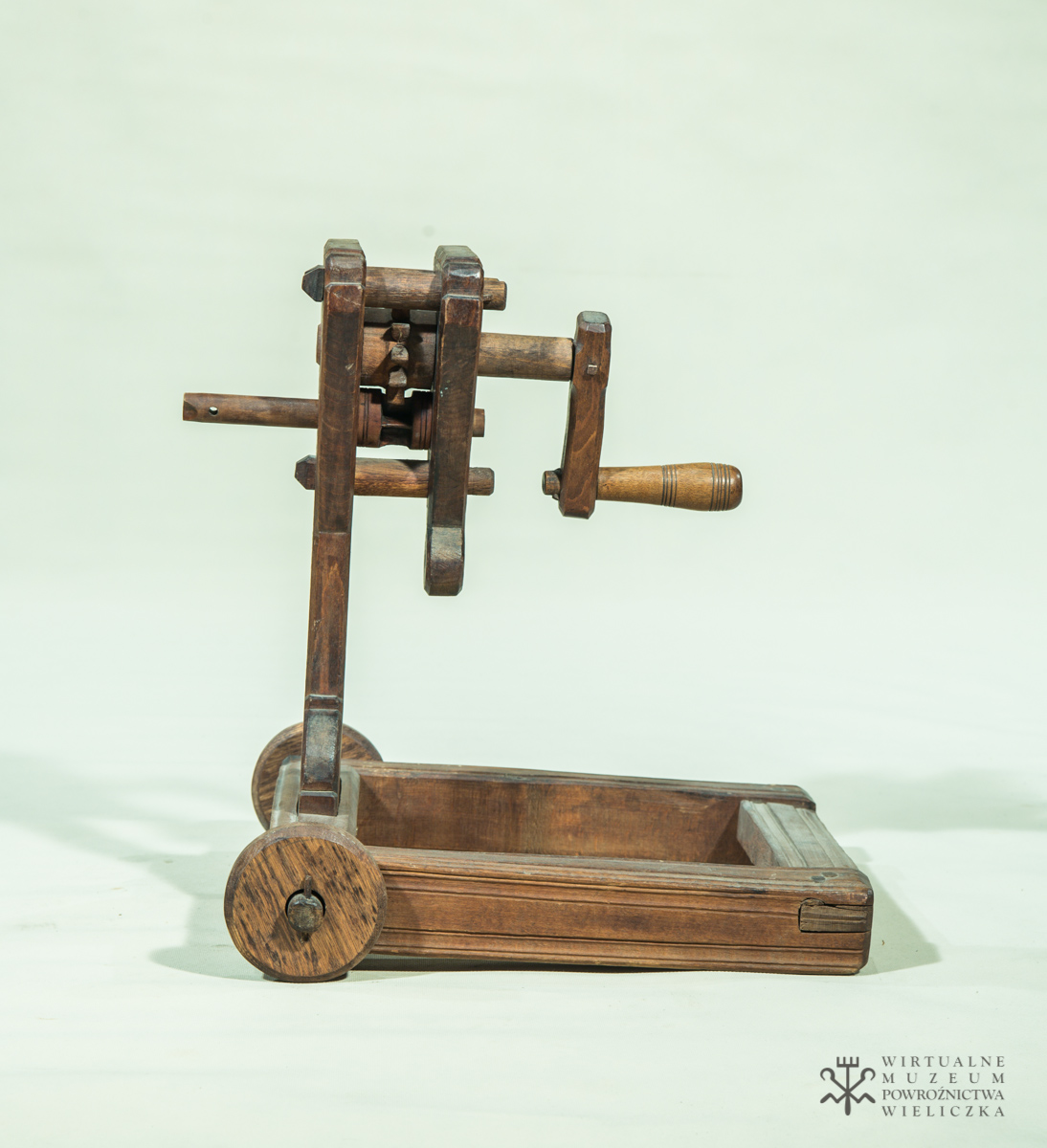
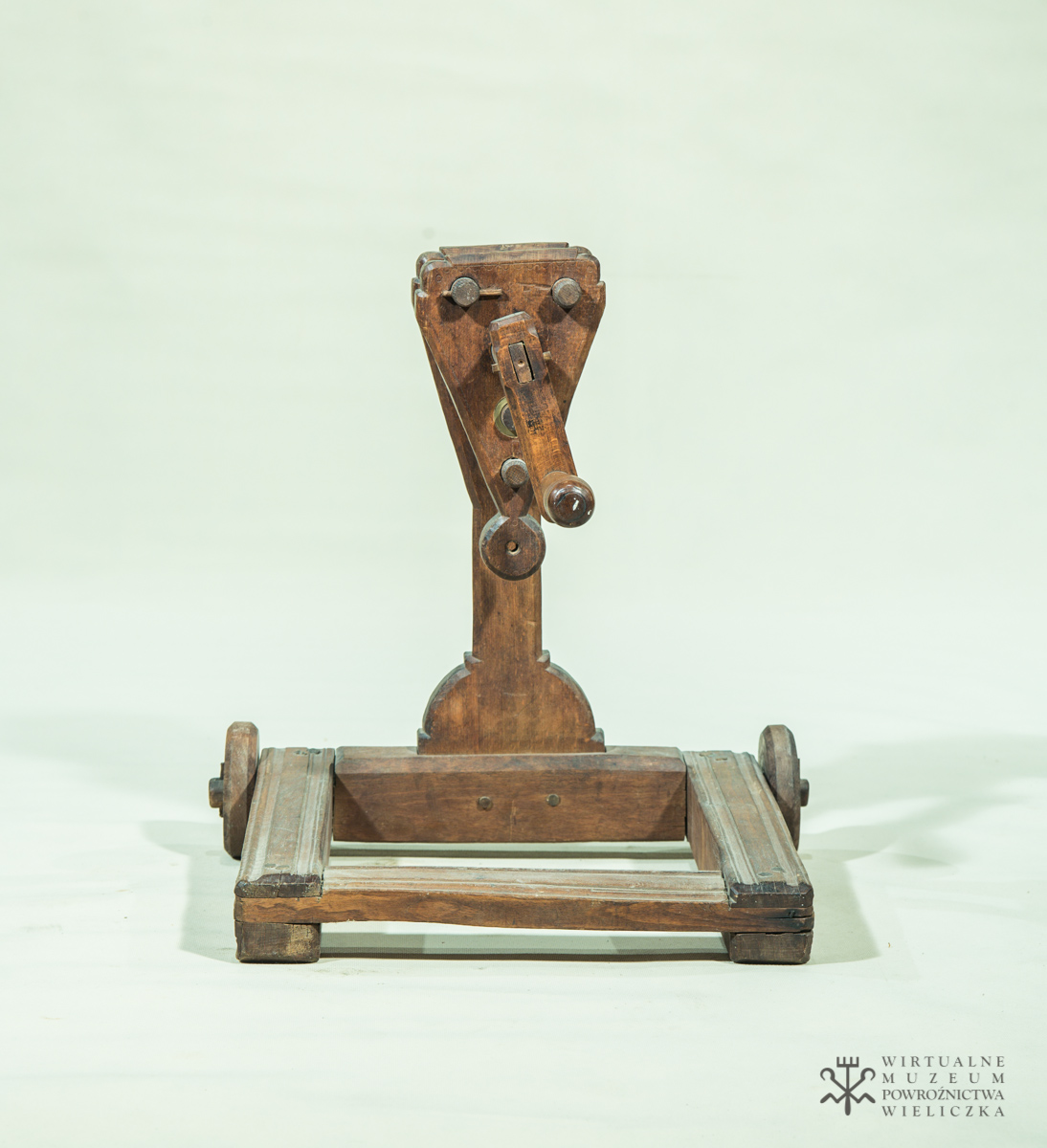
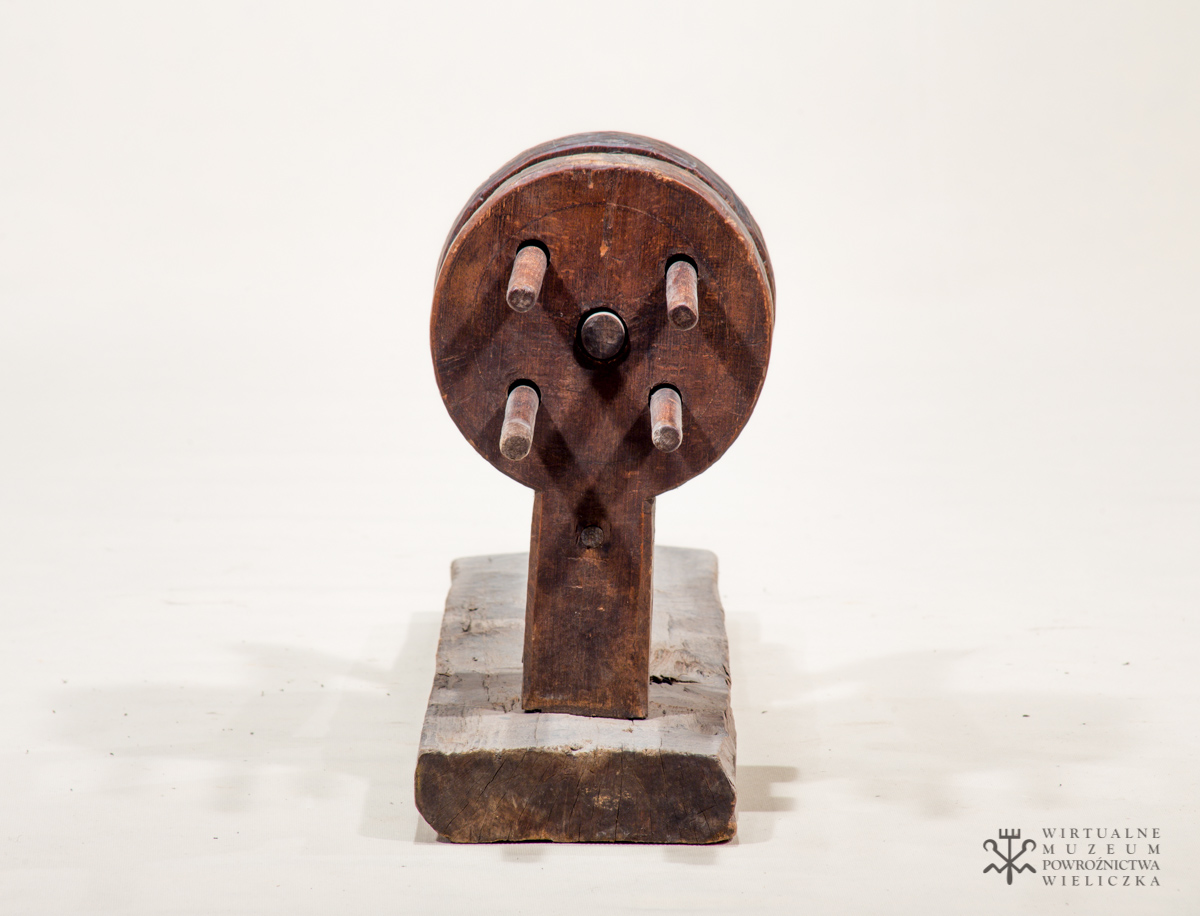
    A rope reel from a workshop in Bochnia

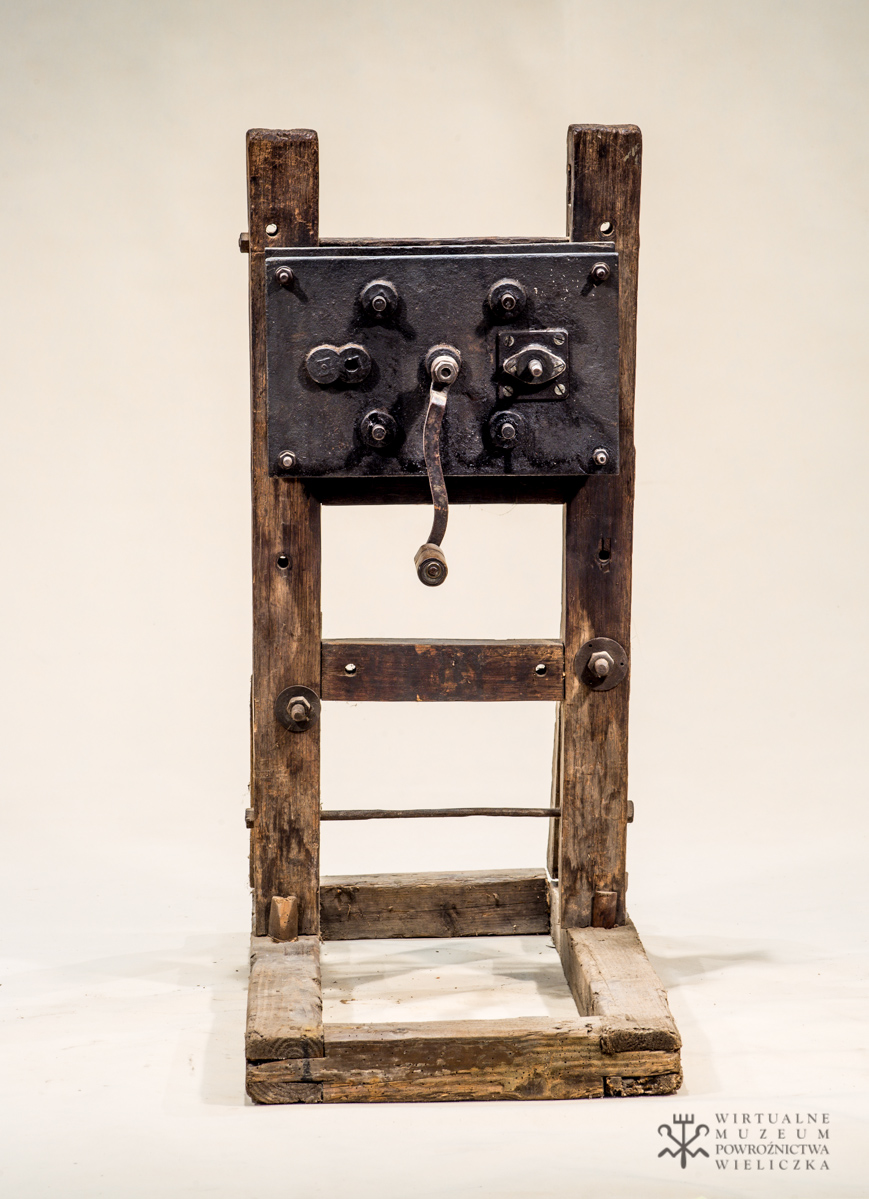
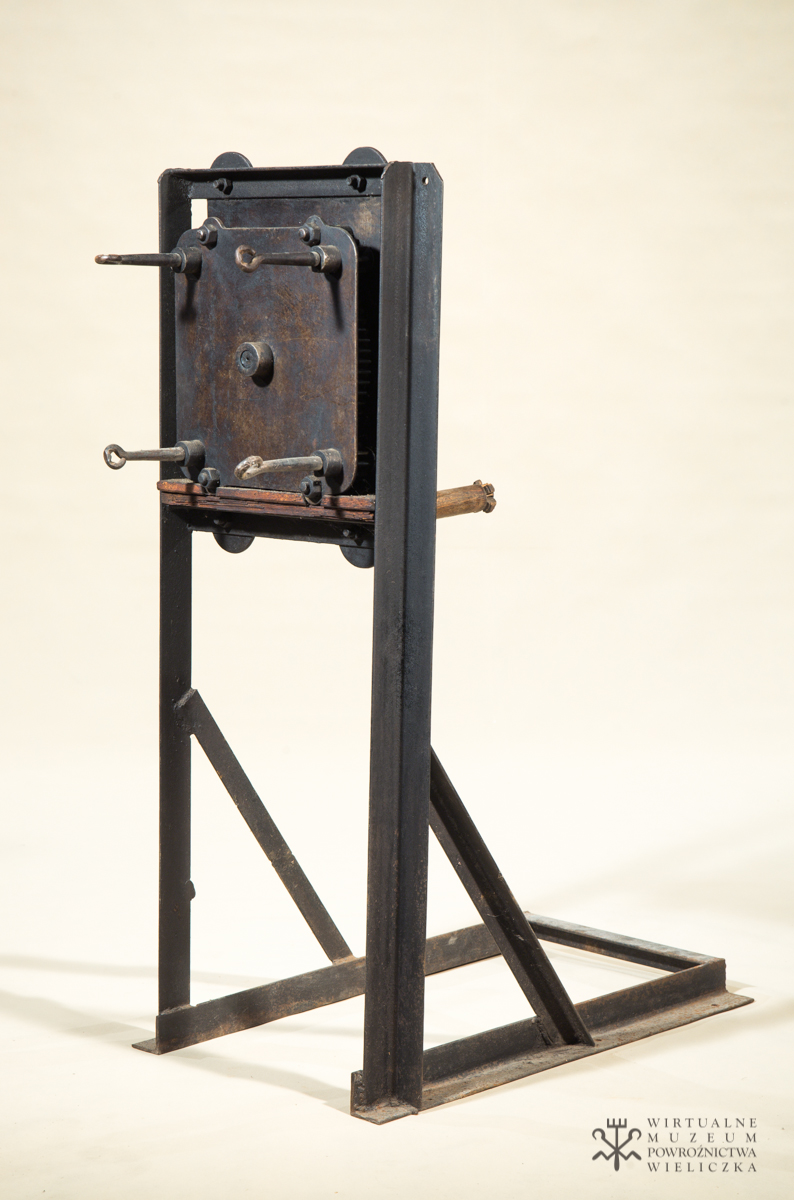
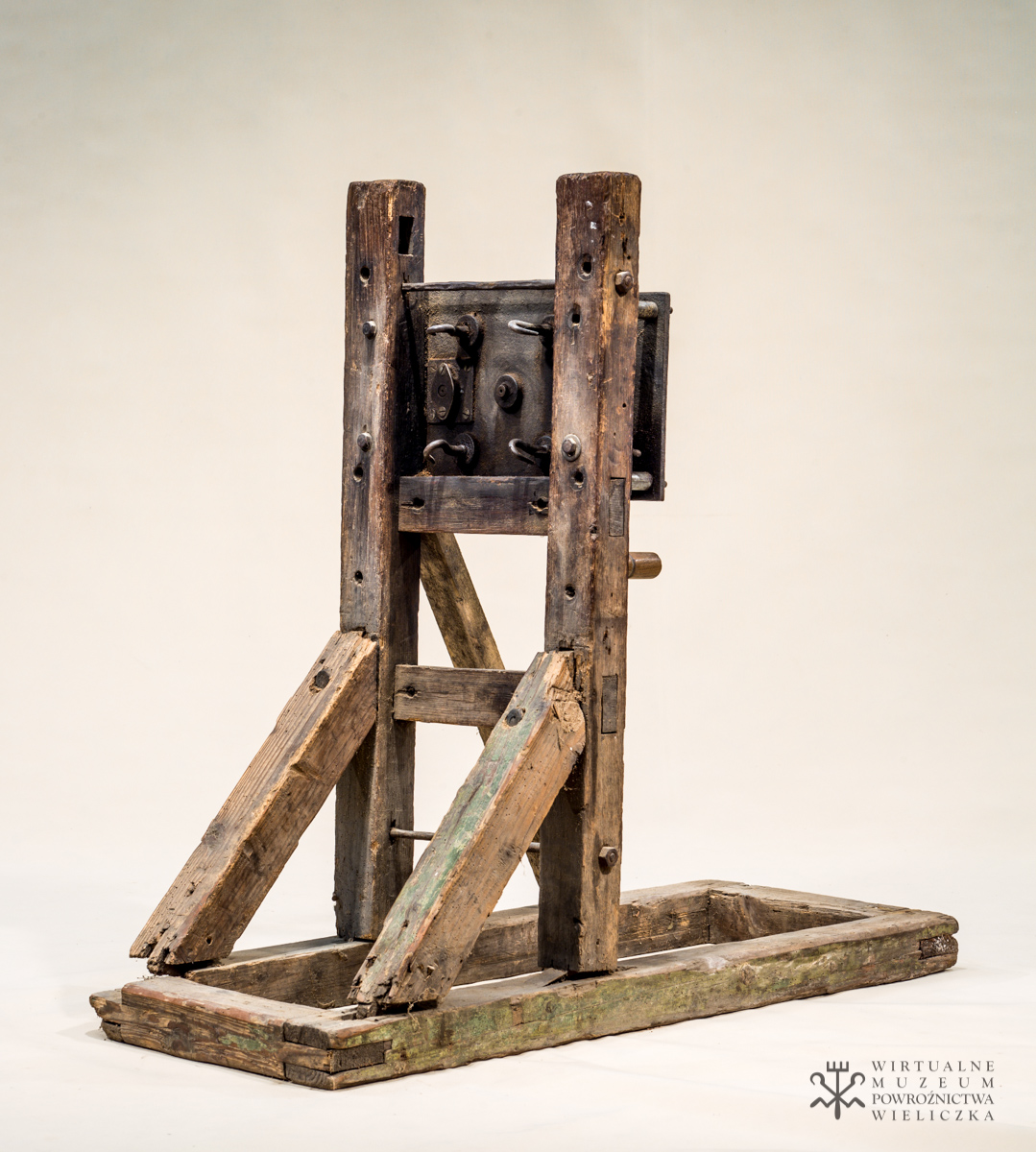
    The rope reel (giszer – from German Seilgeschirr, twister) consists of a metal mechanism moved by a crank, driving gears that transmit the drive to 4 hooks, and is set on a wooden structure. The machine comes from a cordage workshop in Bochnia run by Boleslaw Kosturkiewicz. Material: wood, iron Dimensions: height / length / width 104 cm / 114 cm / 45 cm

    See also


    XIX/XX w. / Germany (?)

    The ropemaking reel (giszer – from German Seilgeschirr, twister)

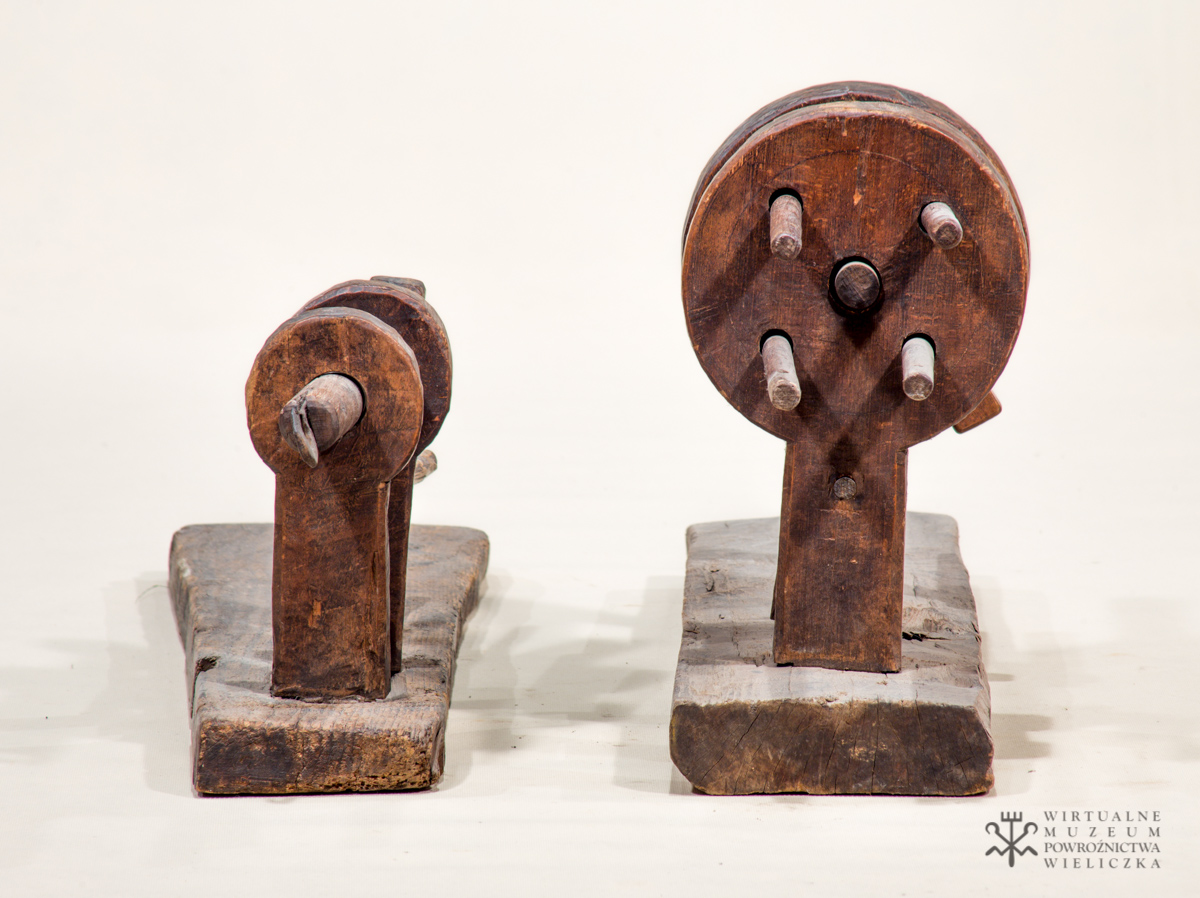
  • A ropemaking wheel from a workshop in Myslenice


    XIX/XX w. / Germany (?)

    A ropemaking wheel from a workshop in Myslenice

    A rope wheel – from a large flywheel moved by a crank, the drive by means of a string is transferred to spindles with hooks (three or more – in a fan-shaped arrangement). You can adjust the height of the upper part with rollers. The machine was purchased from a ropemaker running a workshop in Myslenice, who had previously bought it from a ropemaker in Bochnia.
    Material:
    wood, iron
    dimensions:
    height / length / width
    145 cm / 60 cm / 97 cm

    See also


    XIX/XX w. / Germany (?)

    The rope reel (giszer – from German Seilgeschirr, twister)

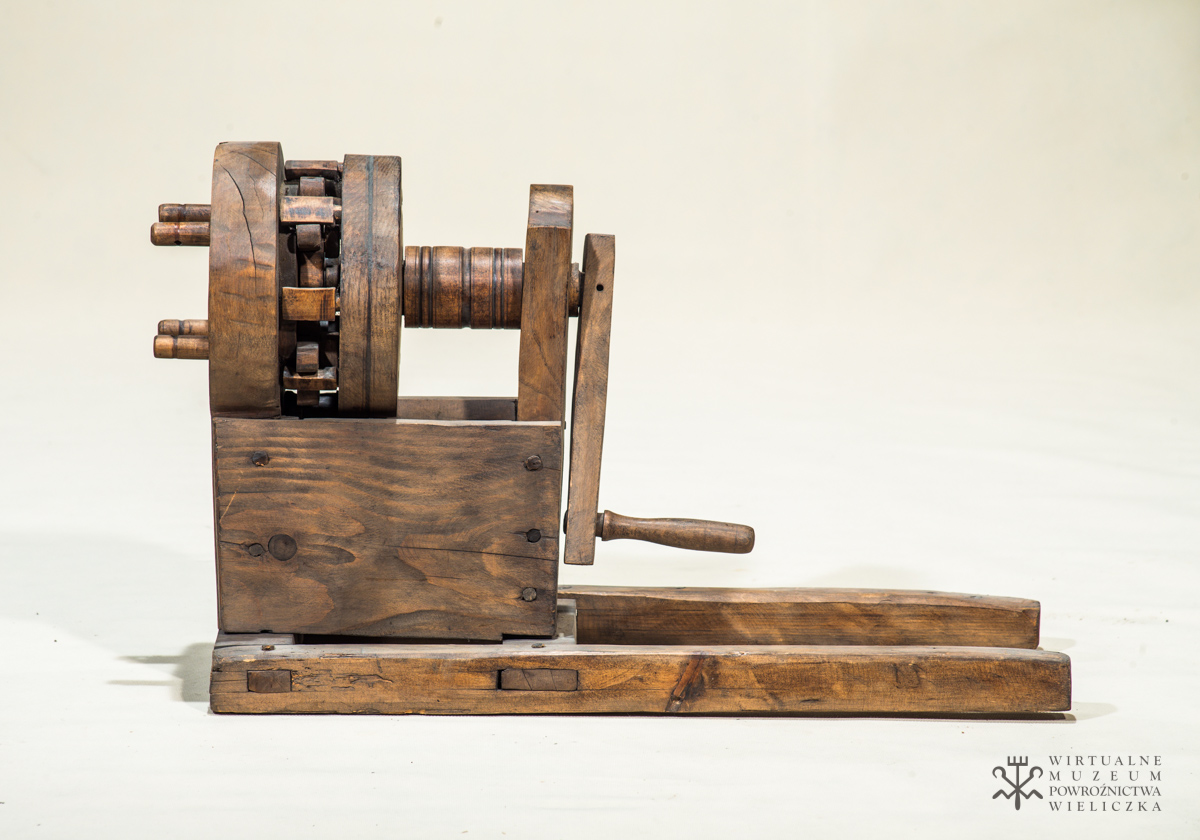
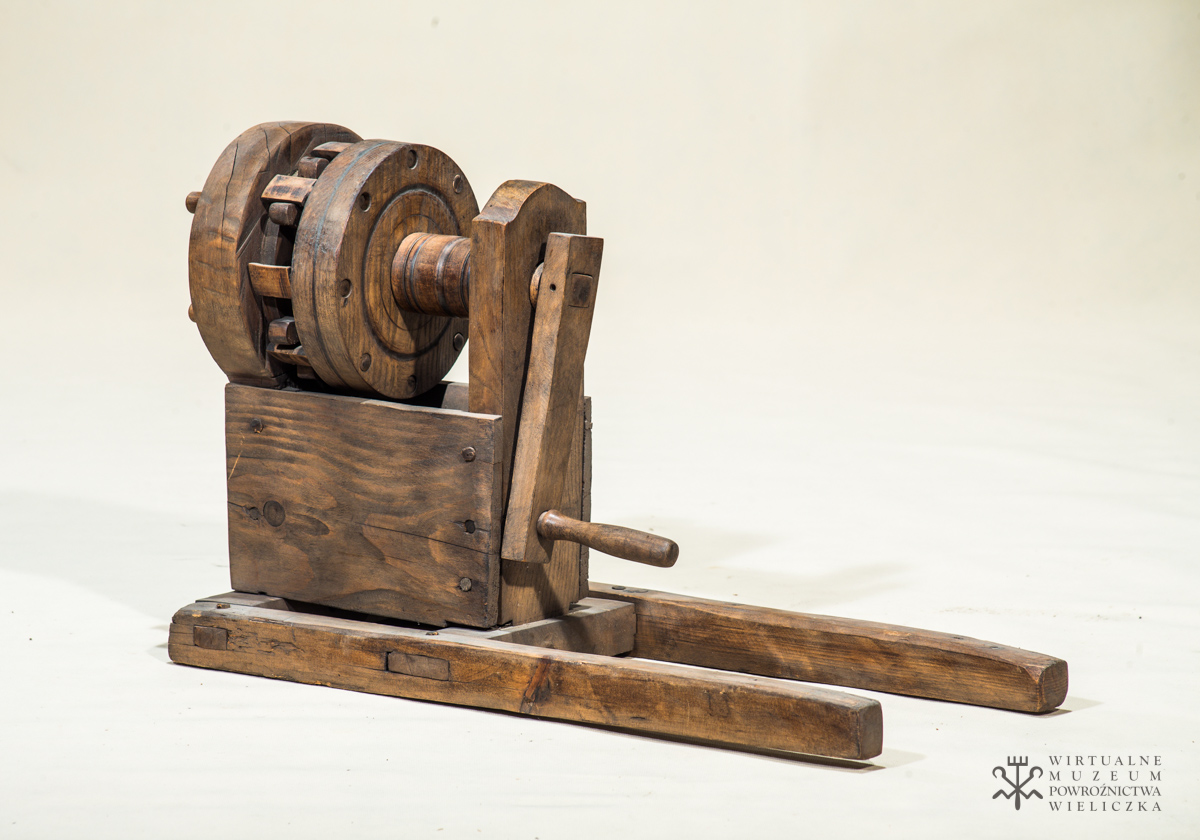
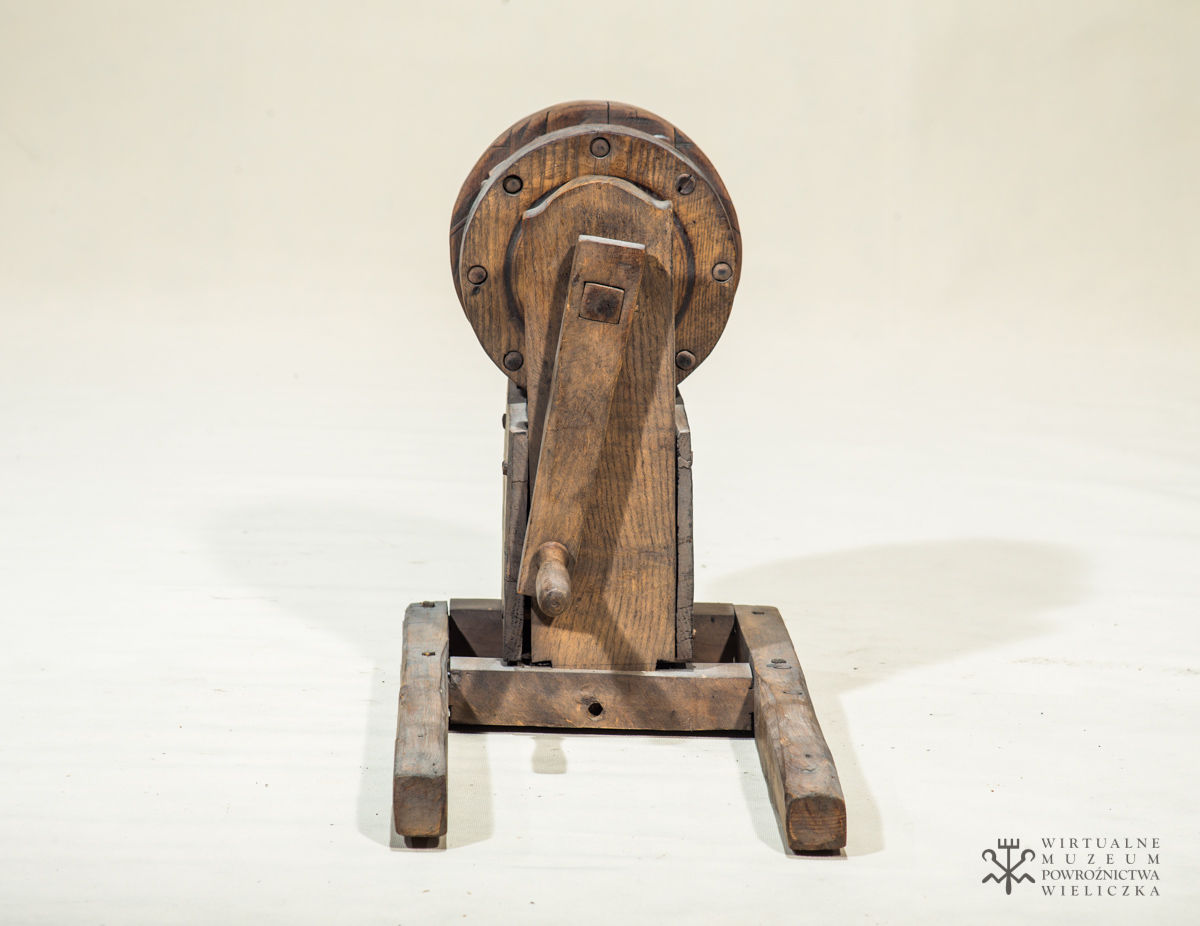
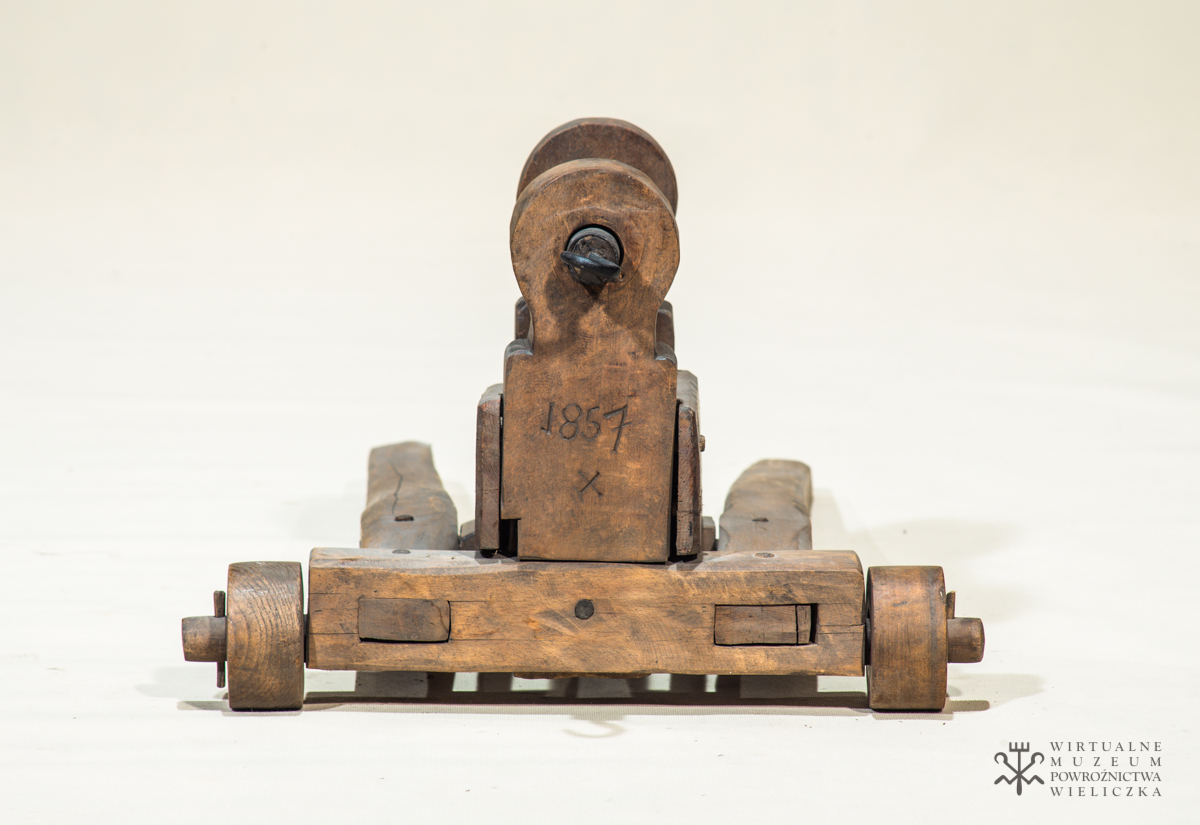
  • A set of cordage machines (reel and cart), folk


    1857 / Poland

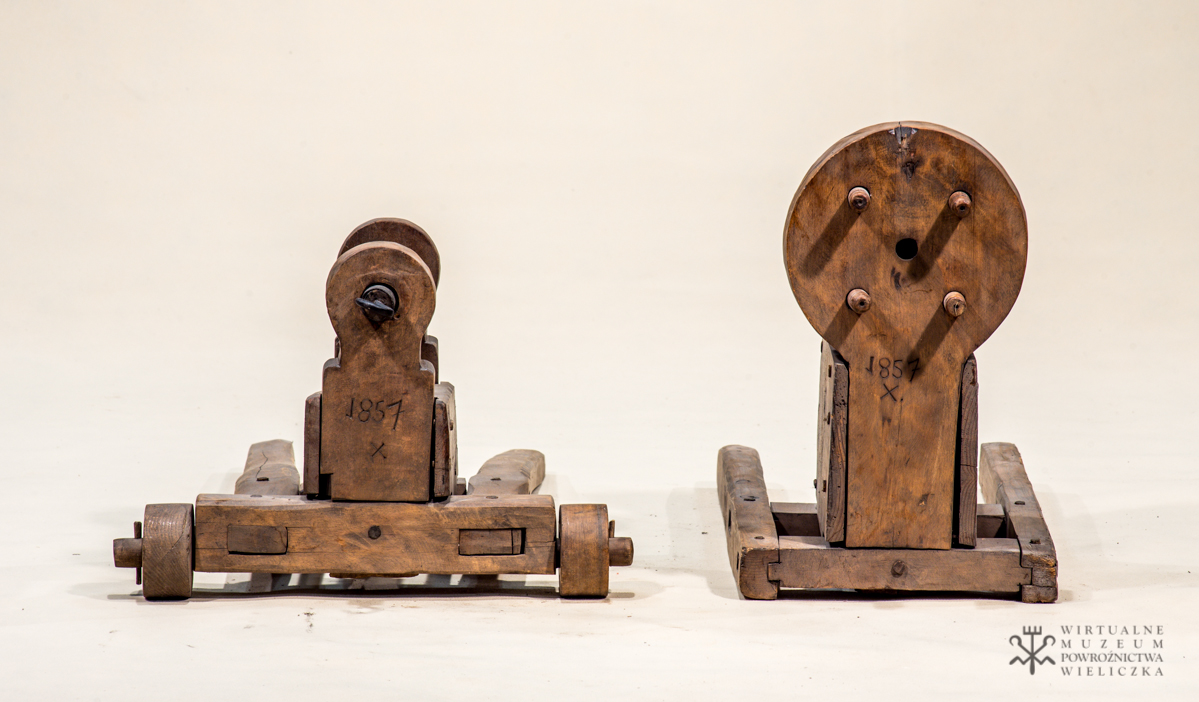
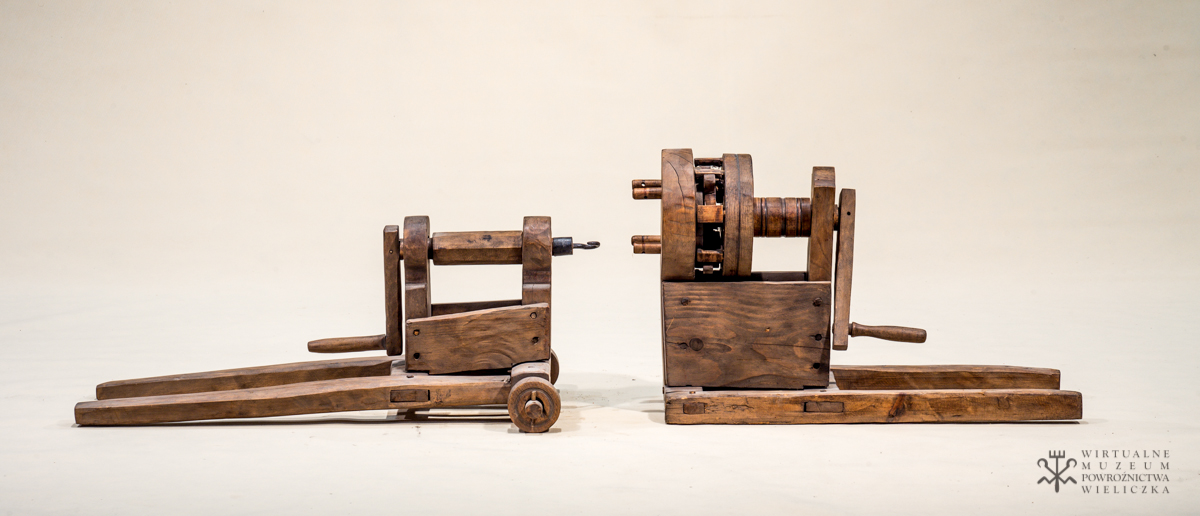
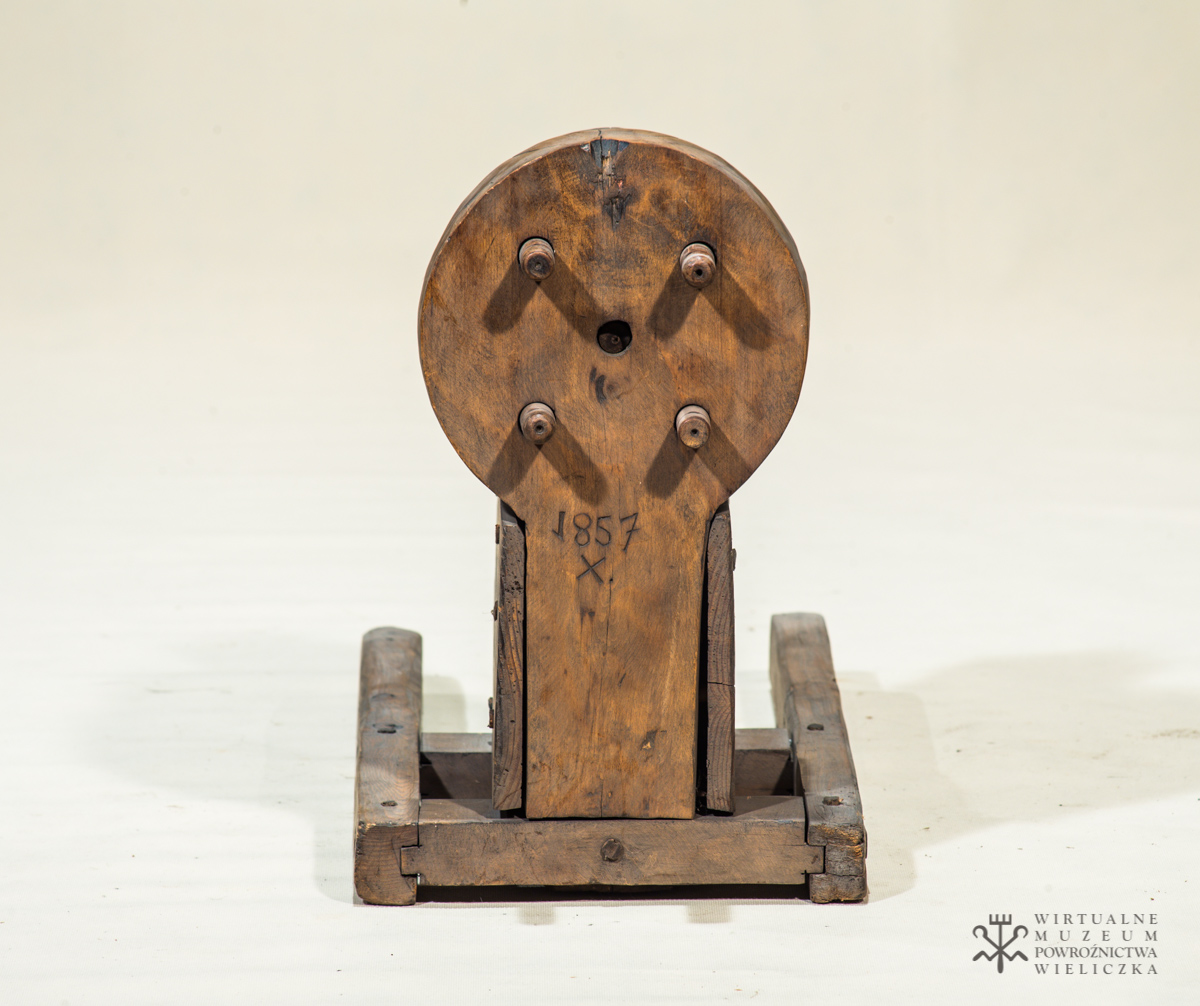
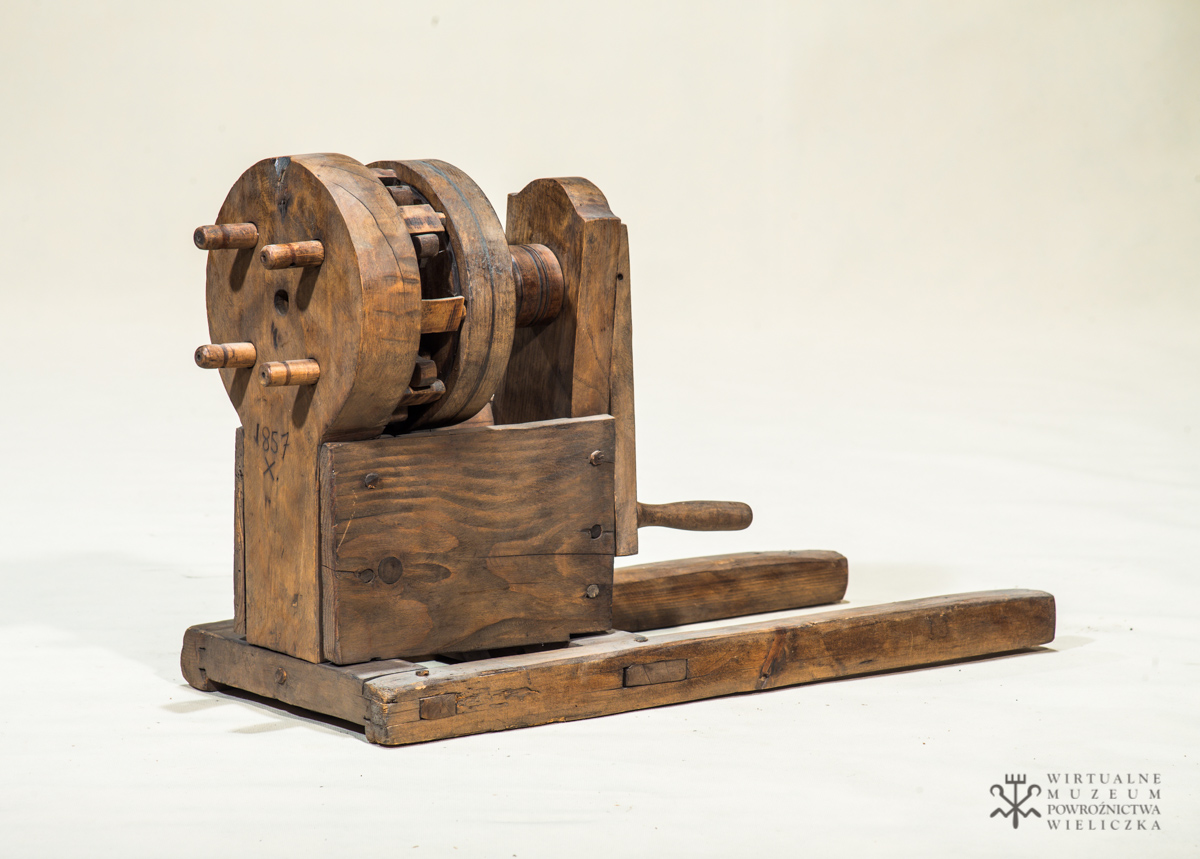
    A set of cordage machines (reel and cart), folk

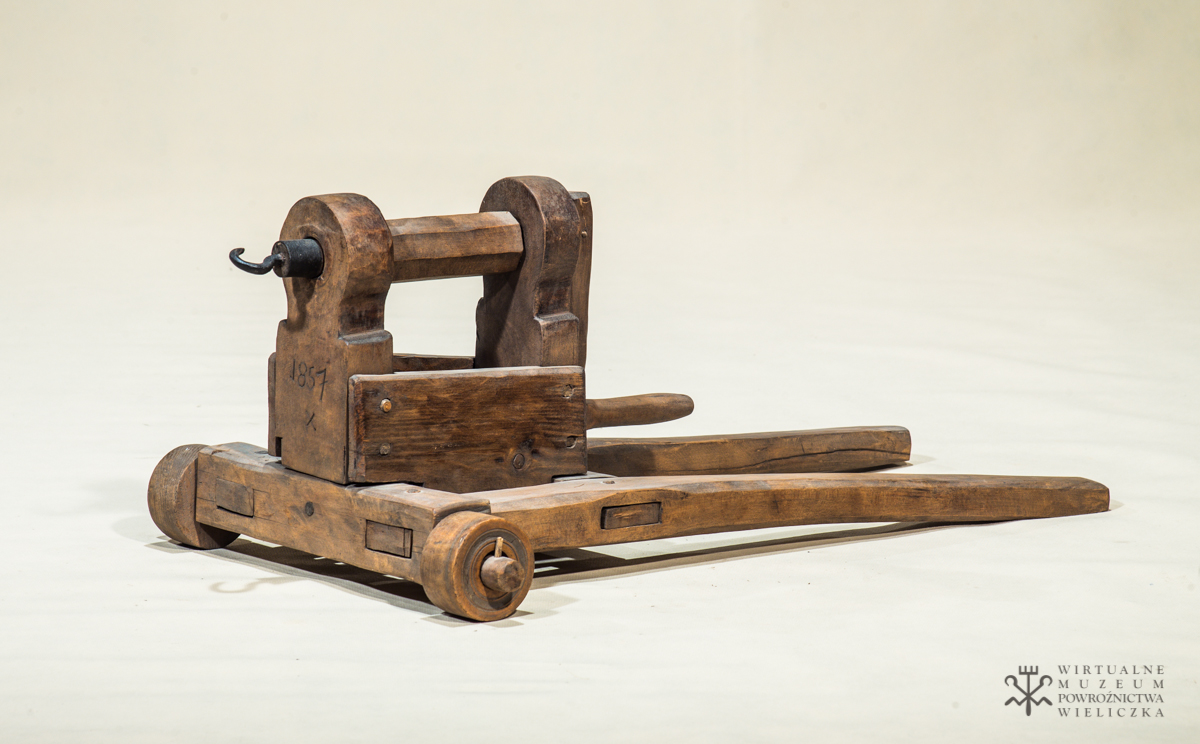
    The reel is driven by a crank, setting in motion cogwheels, connected to pegs to which a twisted cord was attached. The cart (with two wheels at the front) also has a crank, embedded in the structure, terminating in the front with an iron hook. Both machines are engraved with the date „1857” and „X”.
    material:
    wood, iron
    dimensions:
    height / length / width
    reel: 38 cm / 66 cm / 25 cm
    cart: 34 cm / 74 cm / 40 cm

    See also


    1877 / Spisz, Poland

    A set of ropemaking machines (reel and cart), folk


    XIX-XX w. / Poland

    A set of ropemaking machines (reel and cart), folk

  • A set of ropemaking machines (reel and cart), folk


    1877 / Spisz, Poland

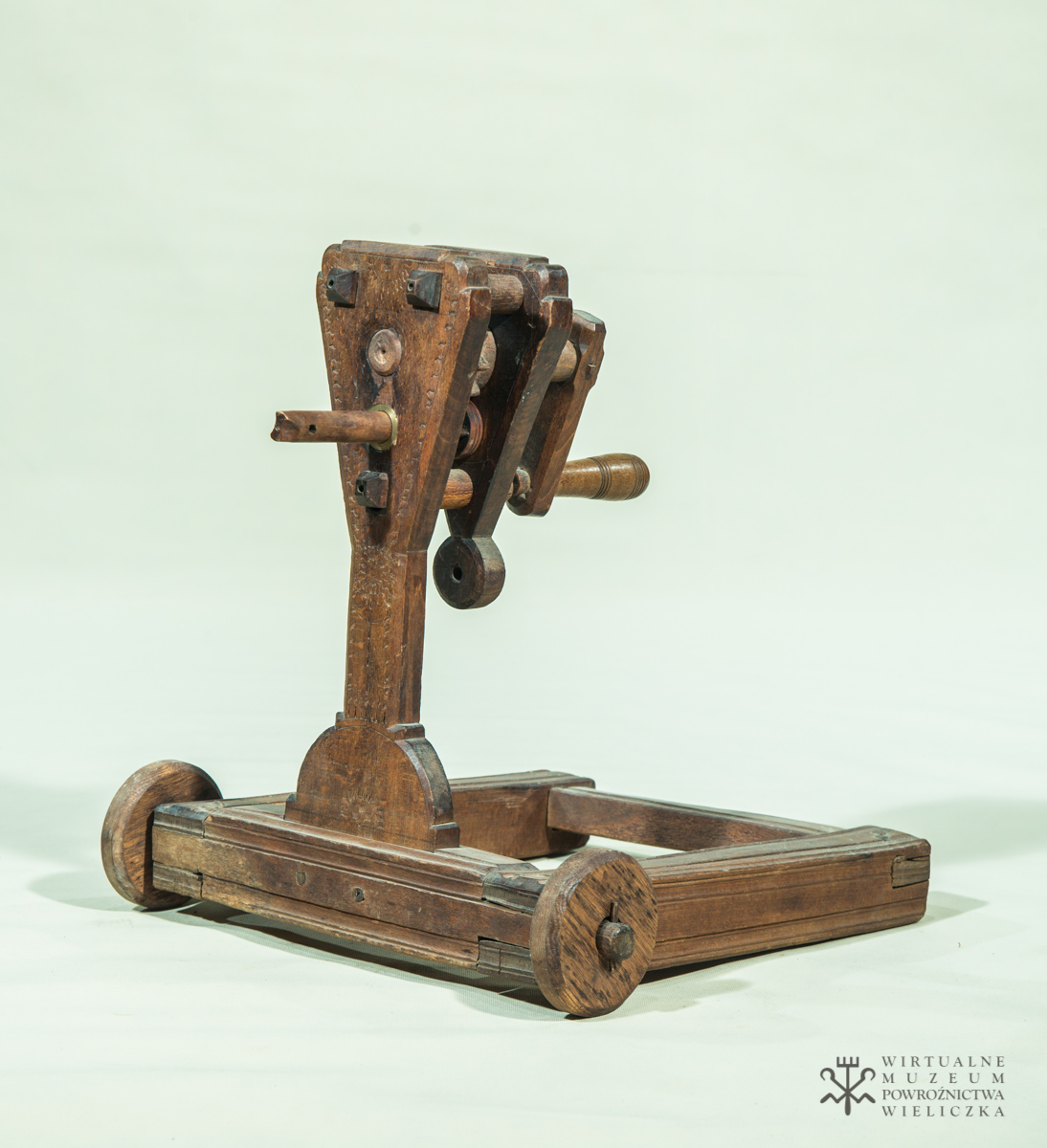
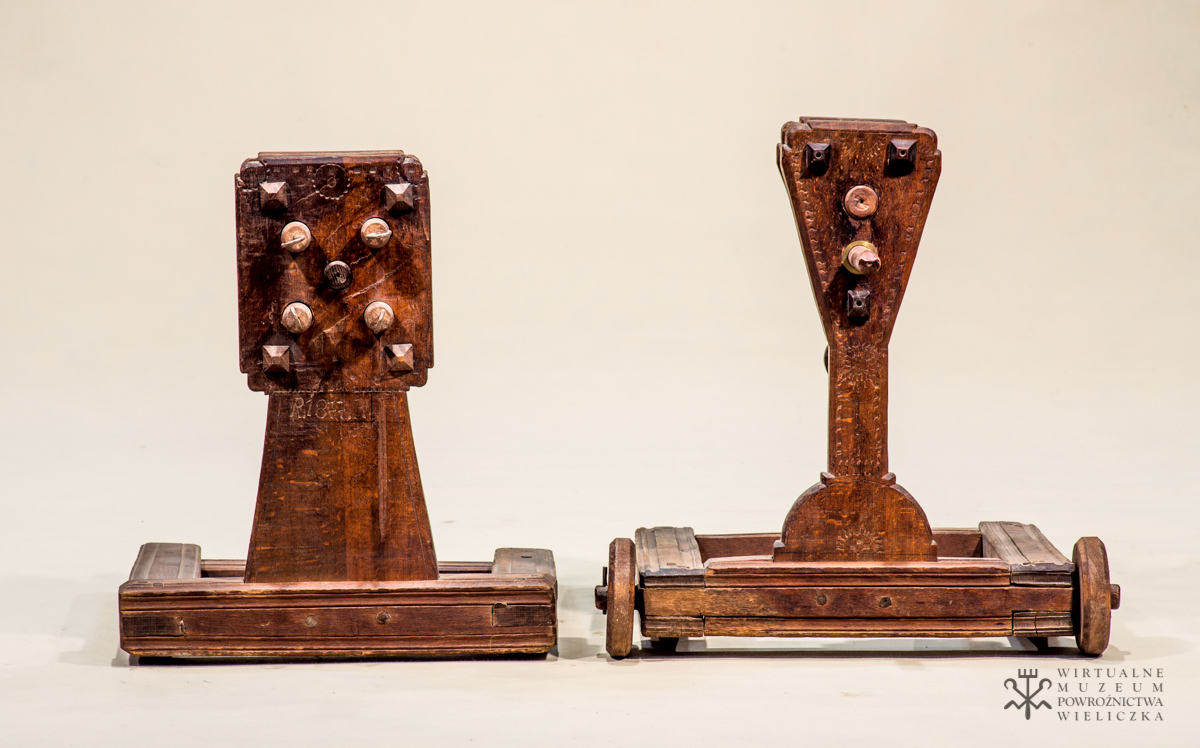
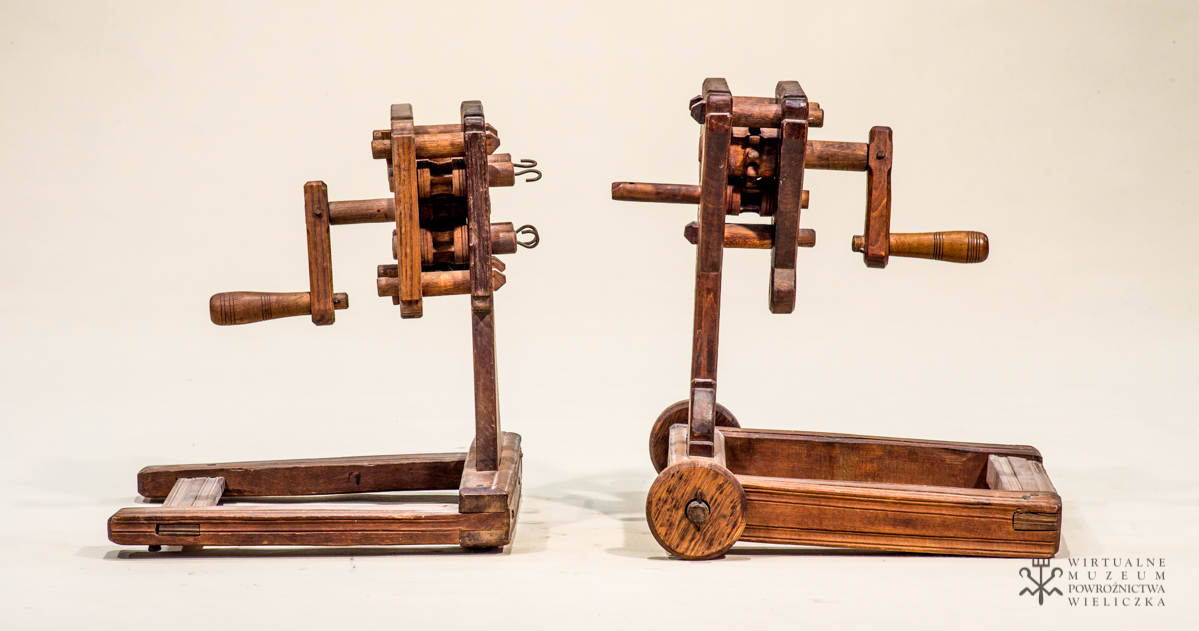
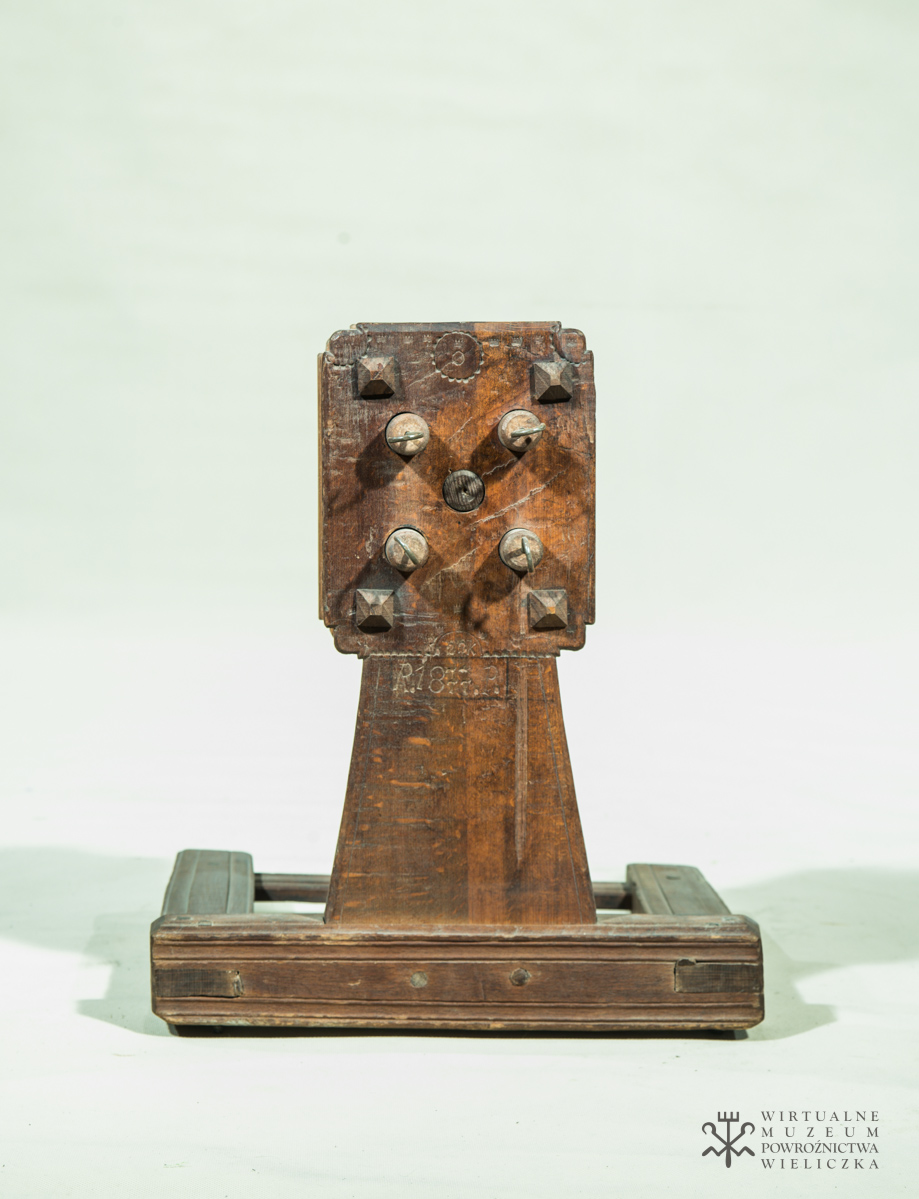
    A set of ropemaking machines (reel and cart), folk

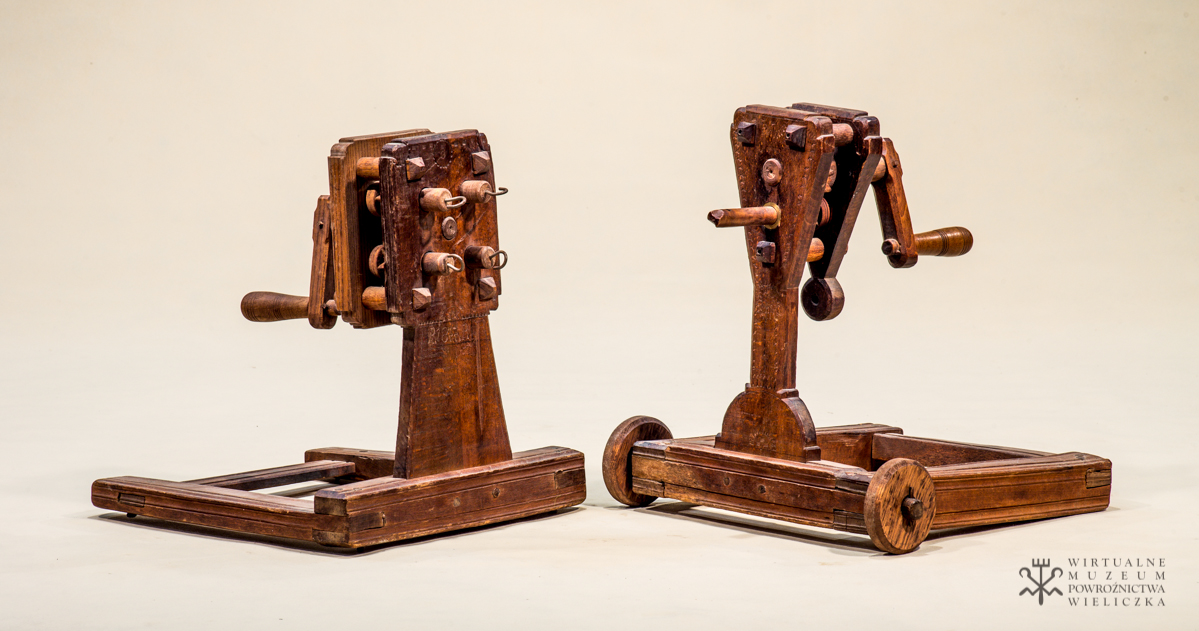
    The reel is driven by a crank, setting in motion gears, connected to pegs to which the twisted cord was attached. The cart (with two wheels at the front) also has a crank, embedded in the structure, with the drive translated into a peg to which the string was attached. The reel has an engraved date „YEAR R. 1877. P.” There are decorations on both machines: geometric ornaments and grooves. The machines come from the vicinity of Niedzica in Spisz. Some missing parts have been completed.
    material:
    wood
    dimensions:
    height / length / width
    reel: 43 cm / 39 cm / 37 cm
    cart: 45 cm / 43 cm / 43 cm

    See also


    1877 / Spisz, Poland

    A set of ropemaking machines (reel and cart), folk


    XIX-XX w. / Poland

    A set of ropemaking machines (reel and cart), folk

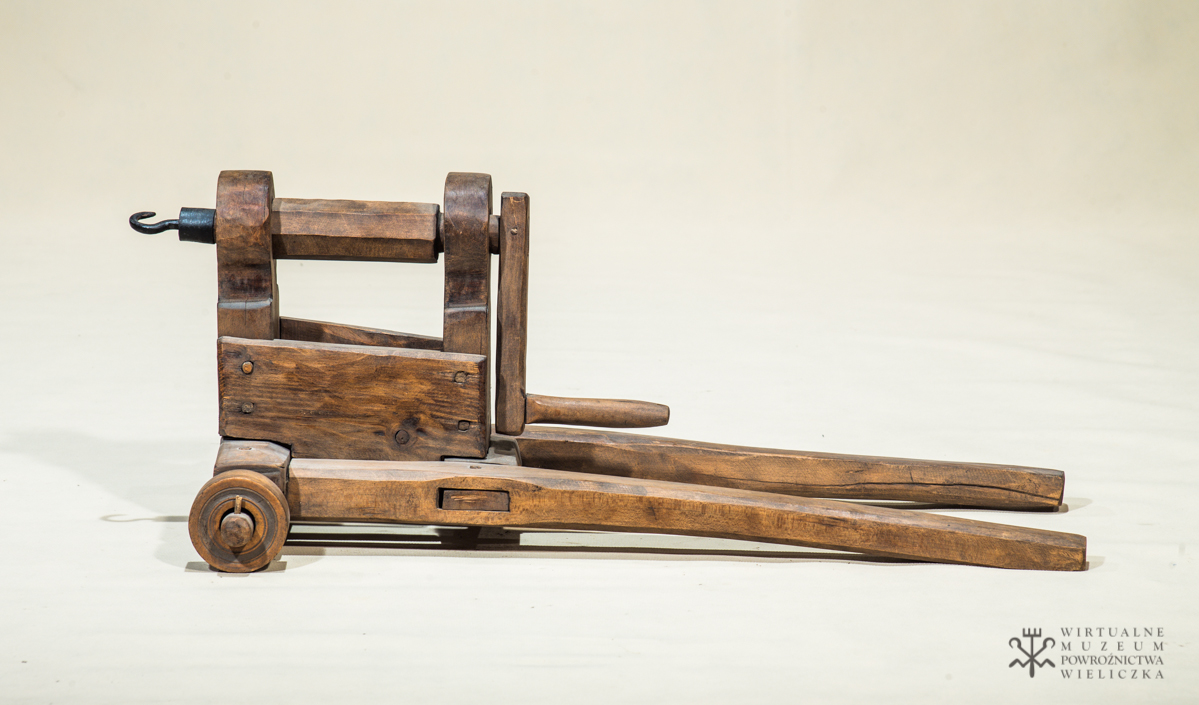
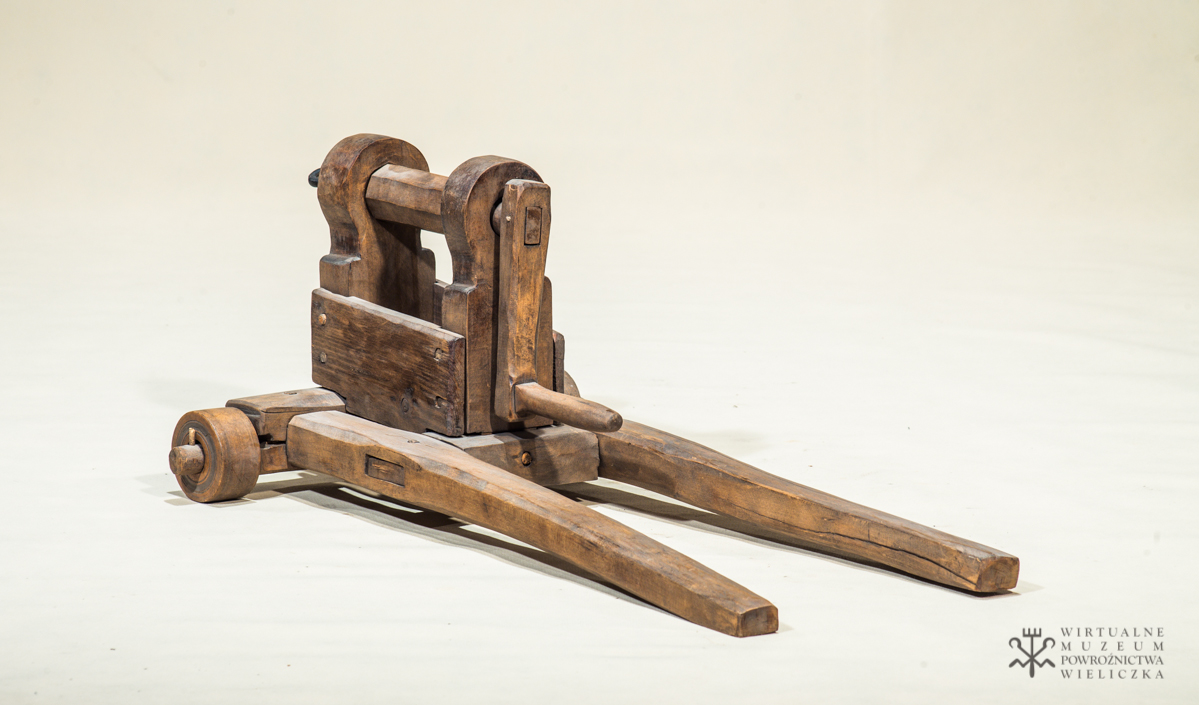
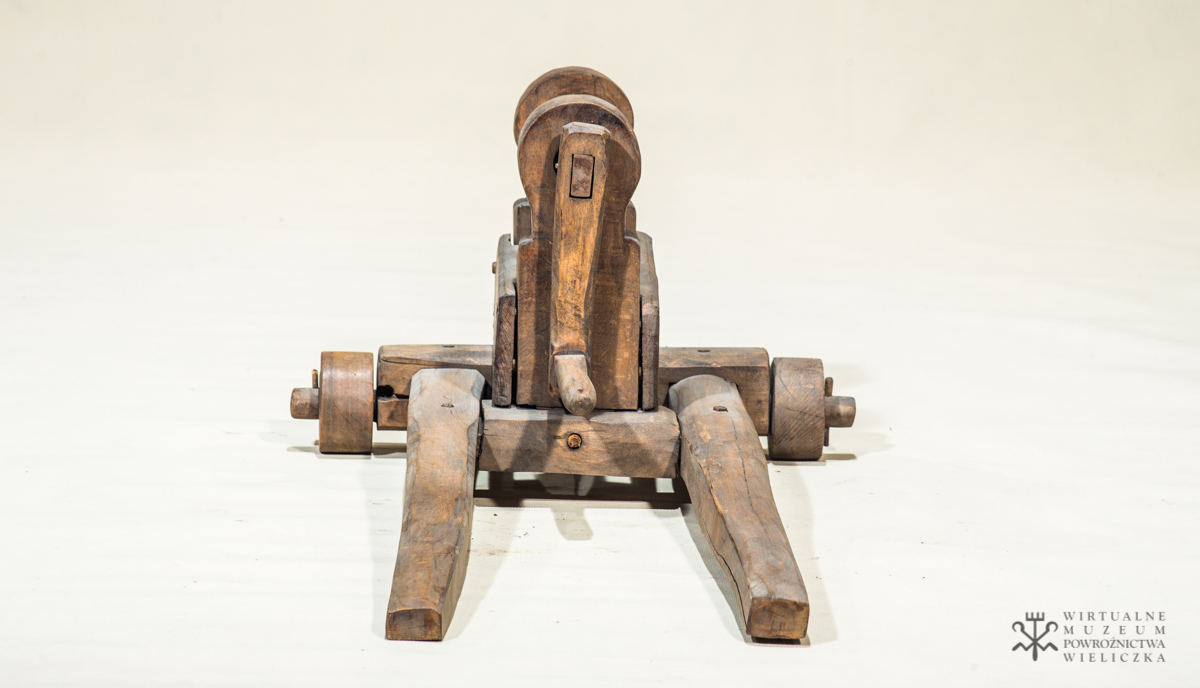
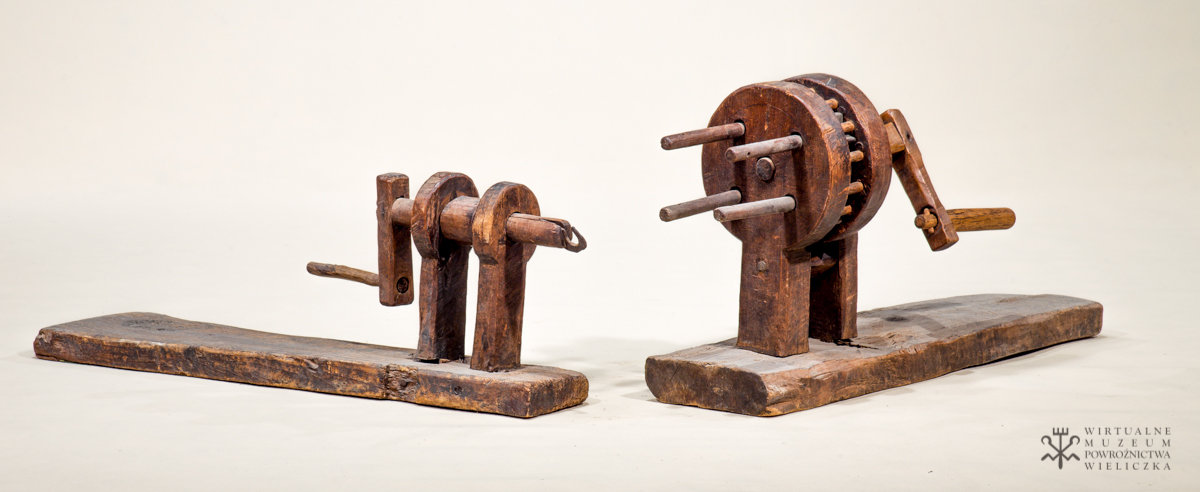
  • Set of ropemaking machines (reel and cart), folk


    XIX-XX century / Poland

    Set of ropemaking machines (reel and cart), folk

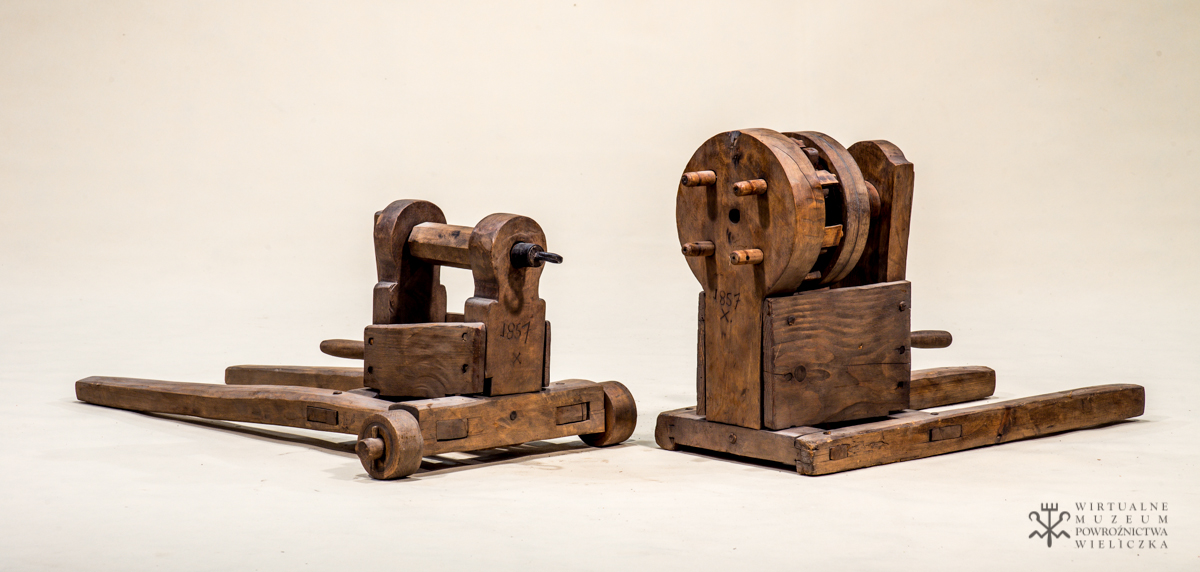
    The reel is driven by a crank, setting in motion cogwheels, connected to pegs to which a twisted cord was attached. The cart also has a crank, embedded in the structure, ending in the front with an iron hook.
    Material:
    wood, iron
    dimensions:
    height / length / width
    reel: 36 cm / 70 cm / 20 cm
    cart: 26 cm / 72 cm / 20 cm

    See also


    1877 / Spisz, Poland

    A set of ropemaking machines (reel and cart), folk


    XIX-XX w. / Poland

    A set of ropemaking machines (reel and cart), folk

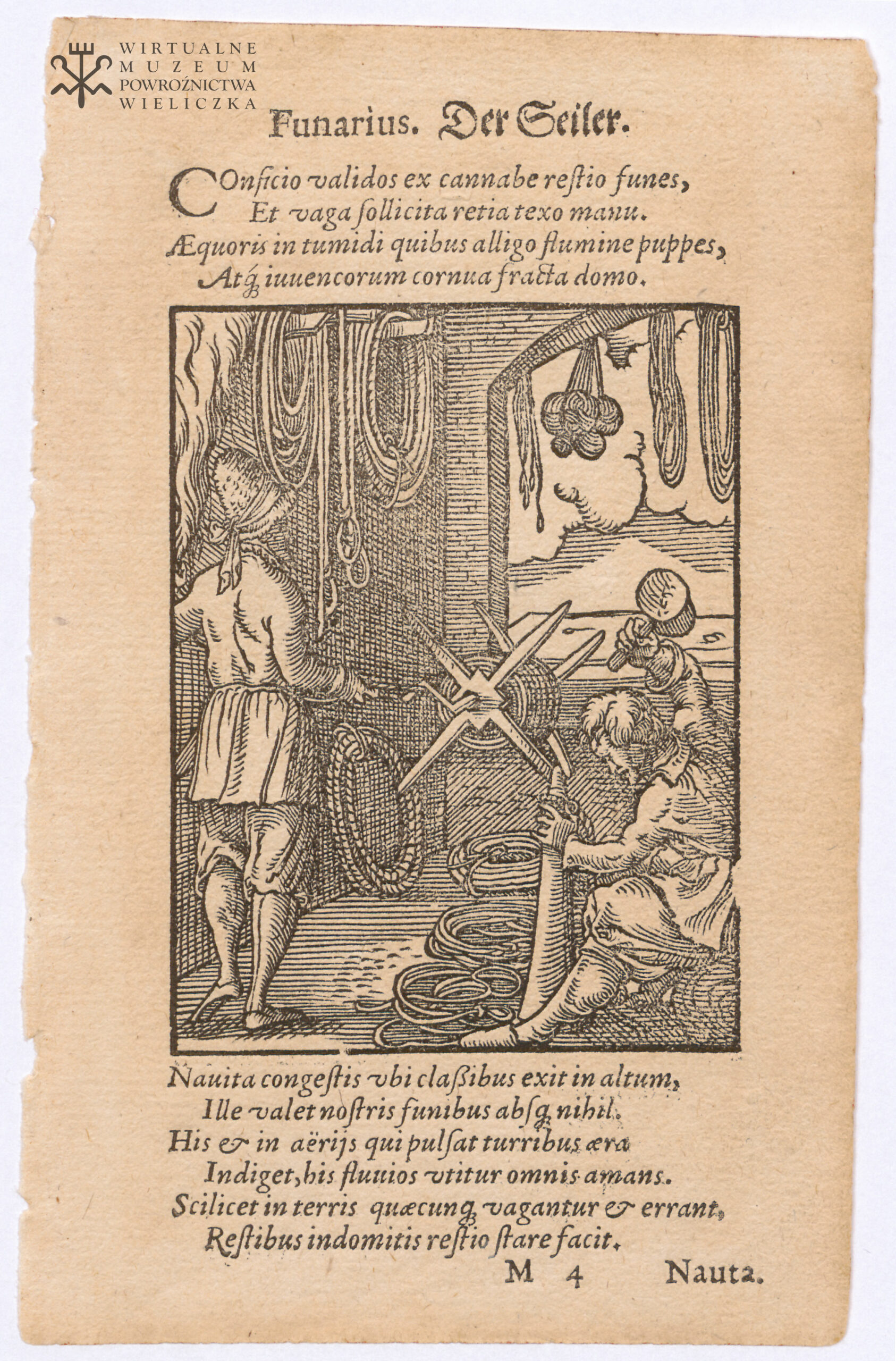
  • Funarius, Der Seiler


    1580 / Jost Amman / Frankfurt am Main, Germany.

    Funarius, Der Seiler

    Source: Hartman Schopper, Panoplia Omnium Liberalium Mechanicarum et Seden-tariarum Artium Genera Continens, Frankfurt am Main, 1568, p. 99.
    We take a look inside the ropemaker’s workshop. There are two ropemakers presented. They are dressed in modern costumes (the one on the left has a tall hat with a small brim on his head, tied with a ribbon). The man standing on the left is spinning thread. With his left hand, he reaches for the hemp fibers hanging from above. With his right hand, he twists the cord by moving the reel, on which is already wound the cord he had harnessed earlier. The ropemaker seated on the left probably makes a loop at the end of the rope, scooping it onto a tall conical peg standing in front of him – striking the cord with a wooden mallet. The workshop equipment is visible: the finished, coiled cords and ropes lie on the floor, stand leaning against the wall, hanging from pegs fixed high on the wall. Other cords – strung individually or in coils and coiled in round balls – hang from the window frame, suspended outside.
    In 1568, two richly illustrated works containing rhymed commentaries on the woodcuts appeared in print in Frankfurt am Main. Both show „all the professions in the world”. Panoplia Omnium Liberalium Mechanicarum et Seden-tariarum Artium Genera Continens with texts by Hartmann Schopper contains 115 woodcuts, while Eygentliche Beschreibung aller Stände auff Erden, hoher und nidriger, geistlicher und weltlicher, aller Künsten, Handwercken und Händeln… with poems by Hans Sachs illustrates 133 woodcuts. The same works by Jost Amman were placed in both works. Later, in 1585. , Tommaso Garzoni published another encyclopedic collection of professions – La piazza vniversale di tvtte le profesi del mondo. The work was translated into German and then published in print (it had several editions). The 1641 edition reinserted Jost Amman’s woodcuts, which had previously appeared in the Ständebuch. In all three old prints, a ropemaker can be found among other more than a hundred professions.
    Jost Amman (1539-1591) was a Swiss painter, printmaker and the most prolific book illustrator of the 16th century. He made some 1,500 prints – illustrating more than 50 books. He trained in Zurich, later worked in Basel, and in 1561 opened a workshop in Nuremberg, where he settled permanently. He specialized in woodcut book illustration and map engraving. He also produced portraits and stained glass designs. He was an illustrator of the customs and costumes of his era. He represented the artistic style known as Mannerism.
    Funarius. Der Seiler
    Ropemaker
    Conficio validos ex cannabe restio funes,
    Et vaga sollicita retia texo manu.
    Æquoris in tumidi quibus alligo flumine puppes,
    Atq iuuencorum cornua fracta domo.
    Nauita congestis vbi claßibus exit in altum,
    Ille valet nostris funibus absq nihil.
    His ex in aerijs, qui pulsat turribus æra
    Indiget, bis fluuios vtitur omnis amans.
    Scilicet in terris quæcunq vagantur ex errant,
    Restibus indomitis restio stare facit.
    material / technique
    paper, colored woodcut
    dimensions:
    height / width
    11.6 cm (16.2 cm) / 29 cm (30.5 cm)

    Zobacz także 


    1877 / Spisz, Polska

    Zestaw maszyn powroźniczych (kołowrotek i wózek), ludowy

    XIX-XX w. / Polska

    Zestaw maszyn powroźniczych (kołowrotek i wózek), ludowy

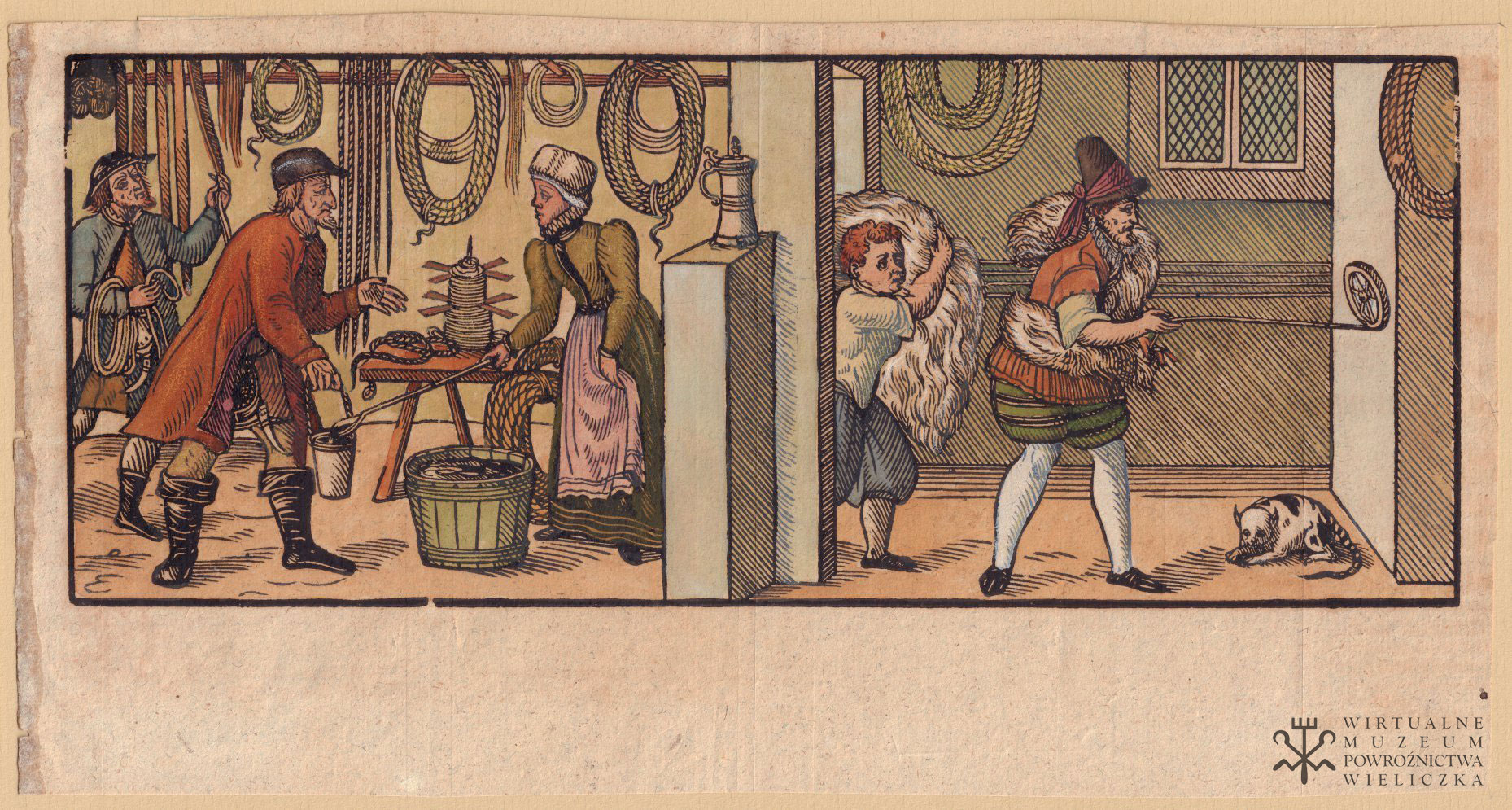
  • Ceremoniel der Seiler


    1708 / Friedrich Frisius / Leipzig, Germany

    Ceremoniel der Seiler

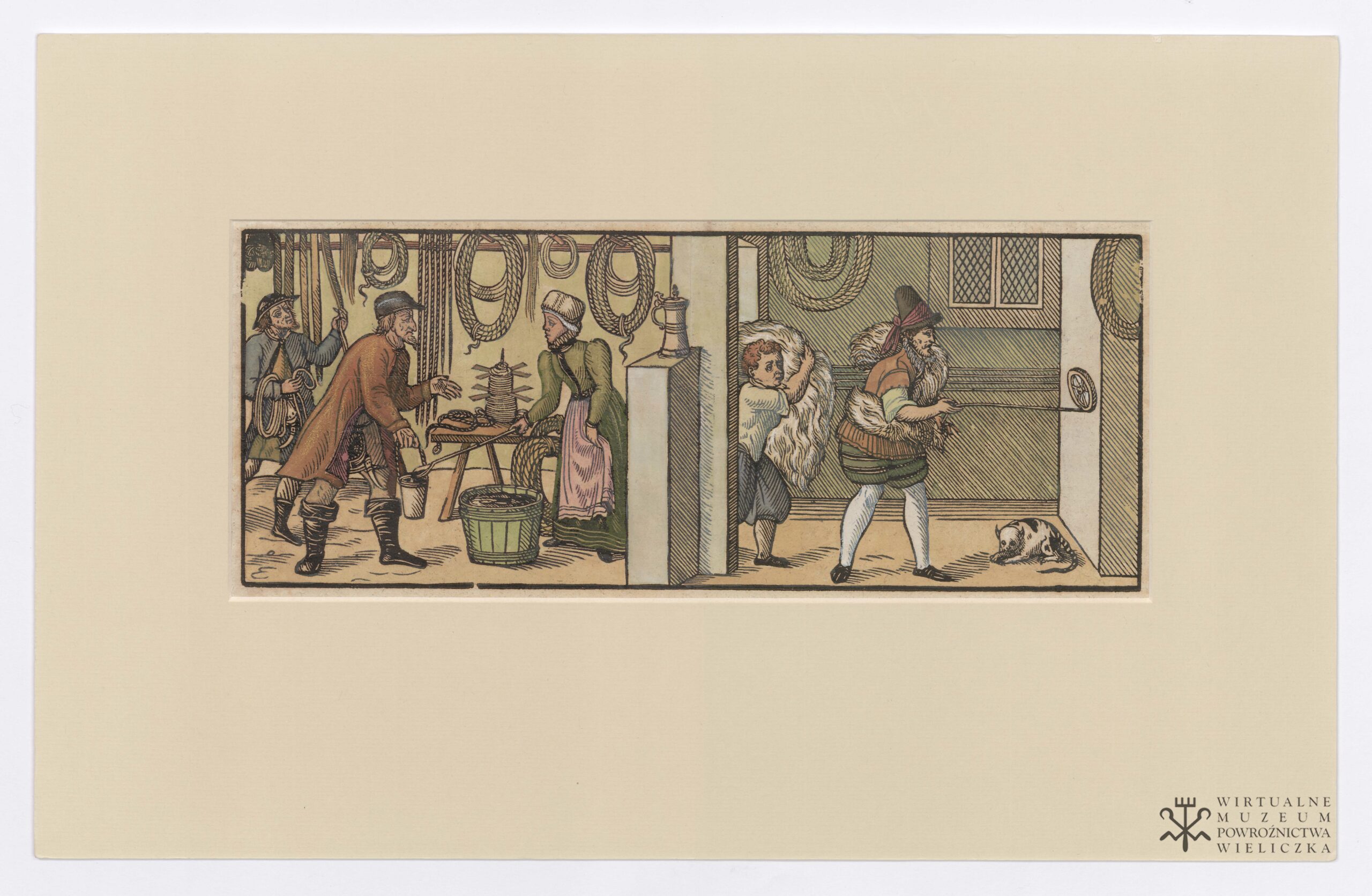
    The woodcut is from the publication: Friedrich Frisius, Der vornehmsten Künstler und Handwercker Ceremonial-Politica, Leipzig 1708. It is an illustrated presentation of various crafts, guilds, and jobs, among which ropemaking is also described.
    The ropemaking workshop is divided into two rooms. On the right, a ropemaker, with the help of a reel fixed on the wall, spins thread, pulling out hemp fibers, which he has wrapped around his waist and on his left arm. Behind him, a young helper brings a new batch of fibers. Coiled ropes hang on the walls. On the floor lies a cat (?).You can see a section of the window and the entrance to the adjacent room. On the left, a woman pours with a ladle a dark liquid from a bale into a bucket held by a man – perhaps a customer. Presumably this is a substance for impregnating ropes (tar, pitch, „oily”). Behind him, a second customer is selecting ropes. On pegs against the wall hangs the goods on offer: cordage, ropes, ropes and ropes (dangling or hanging freely). Some ropes lie on the bench, or are leaning against it. A tin watering can is also visible. The costumes of the five people are varied, characteristic of the 16th rather than early 18th century.
    A graphic print with this depiction, which is in the Graphic Collection of the German National Museum in Nuremberg, dates to around 1550.
    material / technique
    paper, colored woodcut
    dimensions:
    height / width
    11.6 cm (16.2 cm) / 29 cm (30.5 cm)

    Zobacz także 


    1877 / Spisz, Polska

    Zestaw maszyn powroźniczych (kołowrotek i wózek), ludowy

    XIX-XX w. / Polska

    Zestaw maszyn powroźniczych (kołowrotek i wózek), ludowy

  • Der Seiler


    <1699 / Abraham Santa / Nuremberg, Germany

    Der Seiler

    Source: Abraham a Sancta Clara, Etwas für Alle/ Das ist: Eine kurtze Beschreibung allerley Stands- Ambts- und Bewerbs-Persohnen / Mit beygedruckter Sittlichen Lehre und Biblischen Concepten… published by Christoph Weigel, 1699, p. 500.

    It is dated to circa 1730.

    The engraving shows an open ropemaker’s workshop building and the square in front of it (the so-called ropemaker’s track – without a roof). Several ropemakers (one in the foreground, right) are spinning threads from hemp fibers, which they have wrapped around their waist. As they work, they step back. Some ropes are suspended from hooks attached to tall poles. On the left you can see a ropemaking machine loaded with stones, operated by several ropemakers. Two of them turn a crank, twisting the thick rope. During this process, the machine moves forward, gouging ruts in the ground. This happens because the twisted rope shortens.

    Above the representation are the words:

    “Der Seiler

    Der Gang sey schlecht,

    Das Werck nur recht.”

    Powroznik

    Maybe his gait bad

    But the work – good.

    Below the performance is a poem:

    “Der Frommen Wandel scheint nichts werth

    In Augen, die ihn nicht verstehen:

    doch so kann man zum Himmel gehen,

    Wann man der Welt den Rucken kehrt,

    und seine Augen fleissig wendet,

    dahin, wo unser Werck sich endet.”

    The fate of the pious worth nothing sometimes

    When the world cannot understand him:

    However, by this road he will reach heaven,

    Who turns his back to the world

    And on his work he diligently ponders

    Until the end crowns our work.

    (translated by Ewa Dybczynska)

    Abraham a St. Clara’s work, Etwas fur Alle (in German) or Iets voor Allen (in Dutch) – Something for Everyone – was an imitation of an older publication. In 1694, Amsterdam artists Jan and Casper Luyken published Spiegel van het Menselyk Bedryf, a collection of one hundred engravings depicting arts and crafts. The graphic representations were accompanied by the name of the profession, a short sentence (above) and a six-line poem (below). The book was a great success and was reprinted many times (until 1767). Other printers and booksellers also tried to profit from the popular bestseller. The 1699 version by Abraham de St. Clara had as many as 200 engravings.

    Abraham a Santa Clara (1644-1709) – was an Austrian Augustinian monk, preacher and author of popular devotional books, known for his great eloquence.

    material / technique

    paper, copperplate

    dimensions:

    height / width

    17.7 cm / 9.5 cm

    Link1

    Zobacz także 


    1877 / Spisz, Polska

    Zestaw maszyn powroźniczych (kołowrotek i wózek), ludowy

    XIX-XX w. / Polska

    Zestaw maszyn powroźniczych (kołowrotek i wózek), ludowy

  • Der Seiler


    before 1724 / Jeremias Wolff / Augsburg, Germany

    Der Seiler

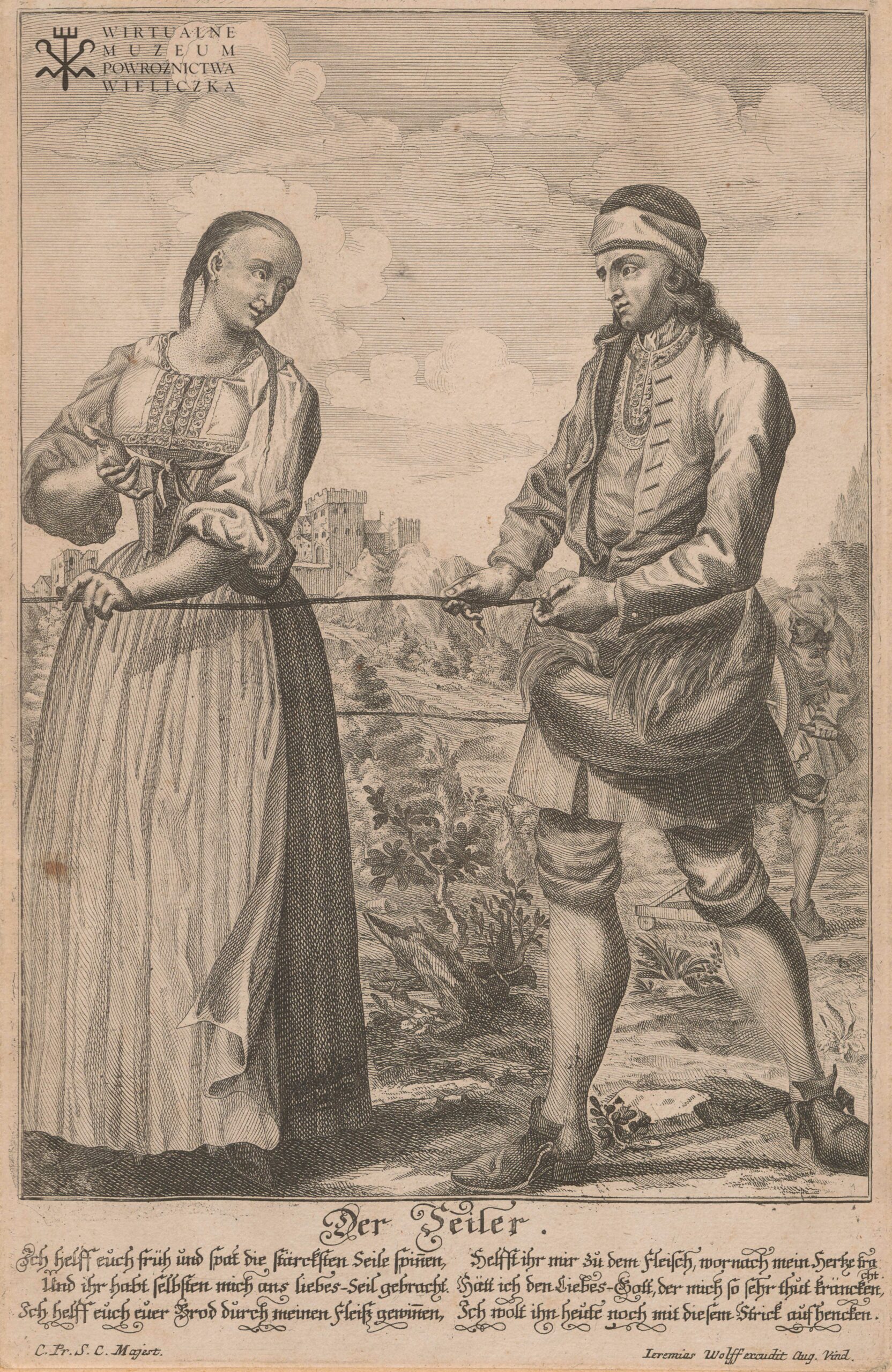
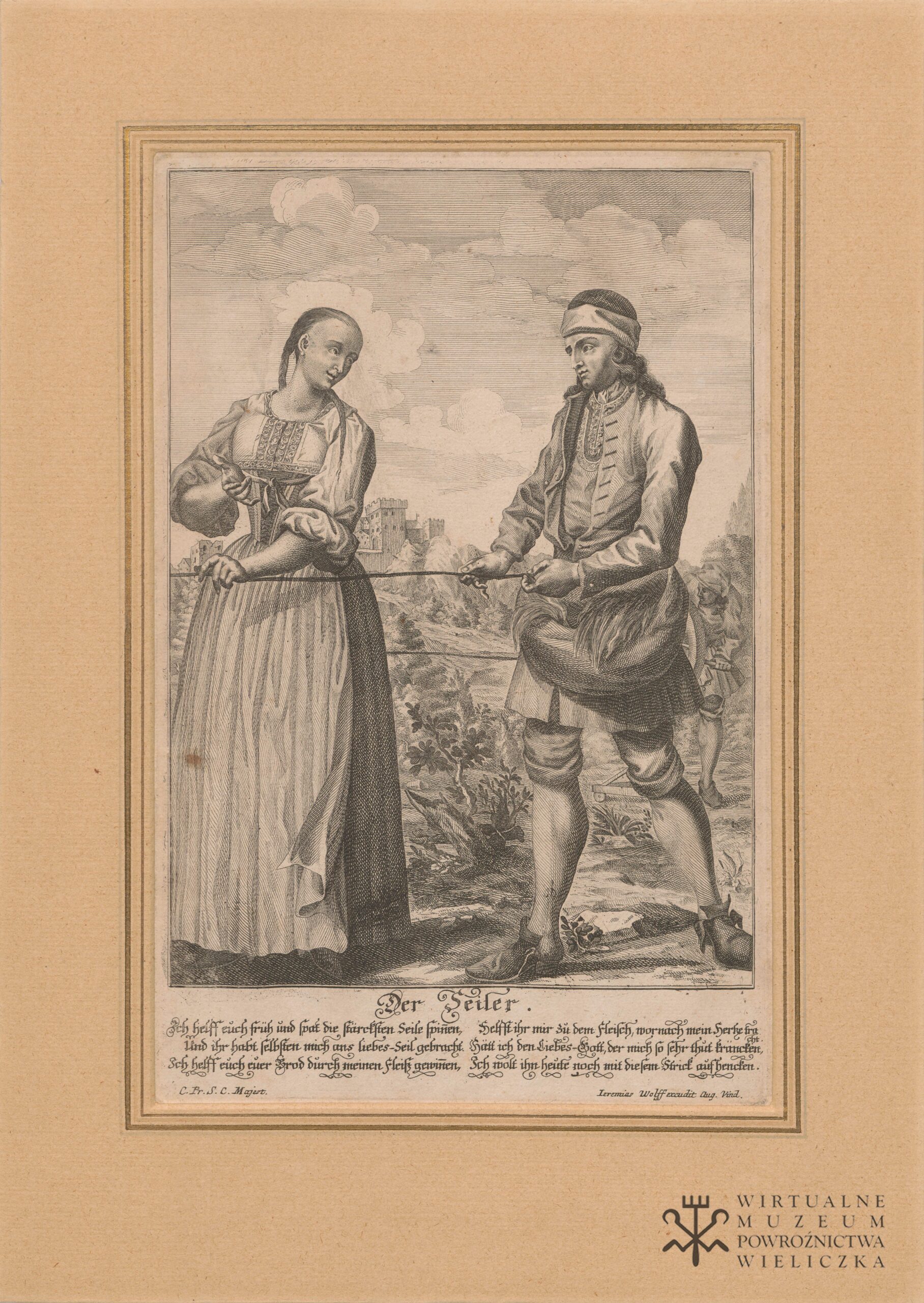
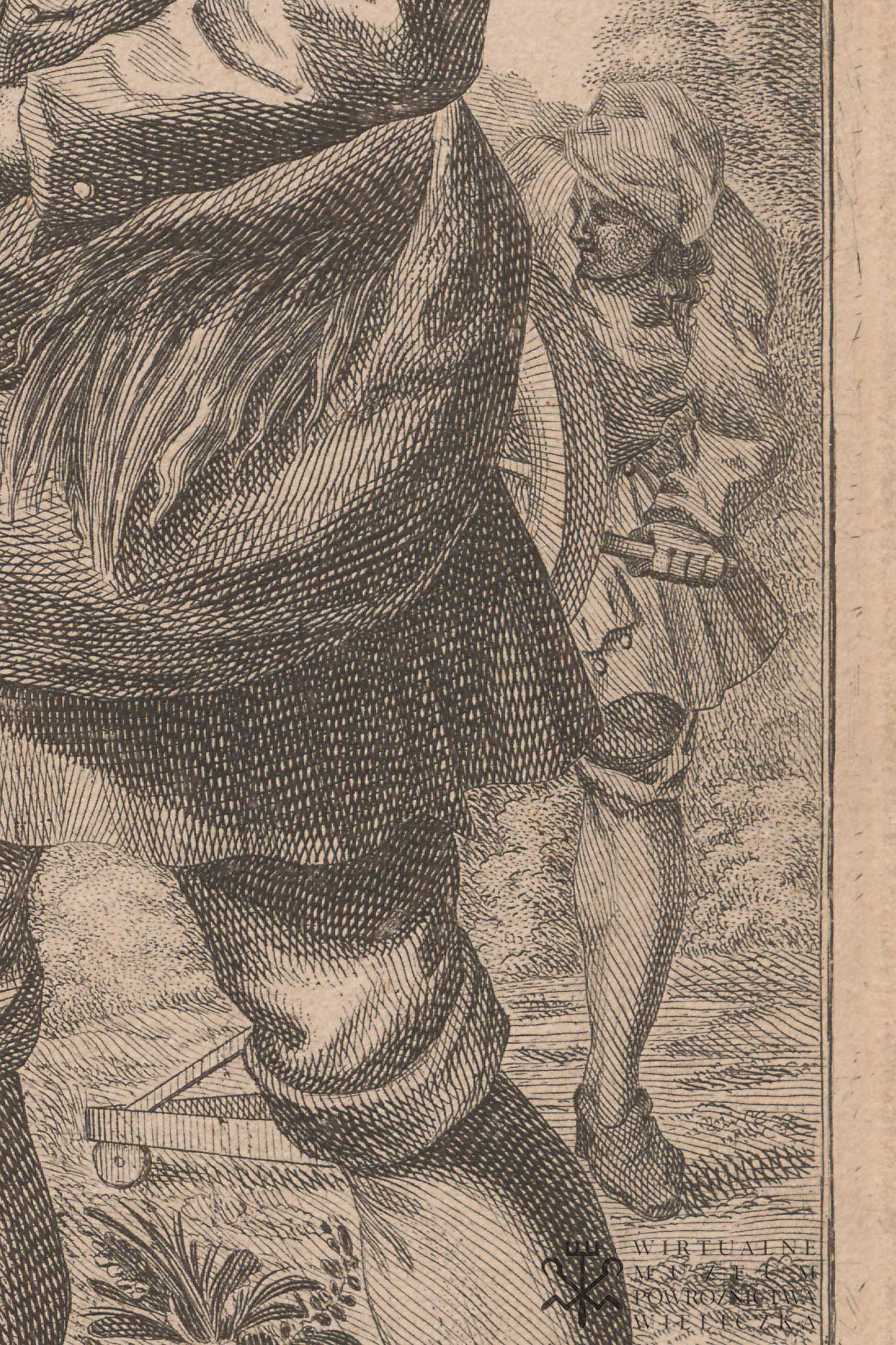
    The engraving shows a ropemaker (right) spinning thread from hemp fibers, which he has wrapped around his waist, wrapped in an apron. Standing next to him is a woman (left), who, according to the text below, is the owner of a ropemaking workshop, assisted by a man in love with her. The second ropemaker turning the crank of the machine (the ropemaking wheel) can be seen slightly behind the first ropemaker. Actually, they should be facing each other, but perhaps the author made such a move for compositional reasons. A castle on a hill is visible in the background.

    Der Seiler.

    Ich helff euch früh und spat die stärcksten Seile spinnen

    Und ihr habt selbsten mich ans liebes-Seil gebracht.

    Ich helff euch euer Brod durch meinen Fleiß gewinnen,

    Helfft ihr mir zu dem Fleisch, wornach mein Herzte tracht.

    Hätt ich den Liebes-Gott, der mich so sehr thut kräncken,

    Ich wolt ihn heute noch mit diesem Strick aufhencken.

    Ropemaker

    I help you from dawn till night to spin the strongest ropes

    And You alone lead me on a love cord.

    I help You through my toil to gain Your bread,

    Let me gain the carnal reward my heart craves.

    If I had this idol of love that experiences me so much,

    I would still like to hang it today on this here cord.

    (Translated by Ewa Dybczynska)

    On the left: “C. Pr. S. C. Majest.” [Cum Privilegio Sacræ Caesareæ Maiestatis – by permission of the Holy Imperial Majesty]. On the right: “Ieremias Wolff excudit Aug. Vind.” [Jeremias Wolff engraved, Augusta Vindelicorum = Augsburg].

    Jeremias Wolff (1663-1724) – Augsburg copperplate engraver and publisher; built the largest art publishing house of the 1st half of the 18th century, which employed the best engravers of its time.

    material / technique

    paper, copperplate

    dimensions:

    height / width

    35 cm / 23 cm

    Zobacz także 


    1877 / Spisz, Polska

    Zestaw maszyn powroźniczych (kołowrotek i wózek), ludowy

    XIX-XX w. / Polska

    Zestaw maszyn powroźniczych (kołowrotek i wózek), ludowy

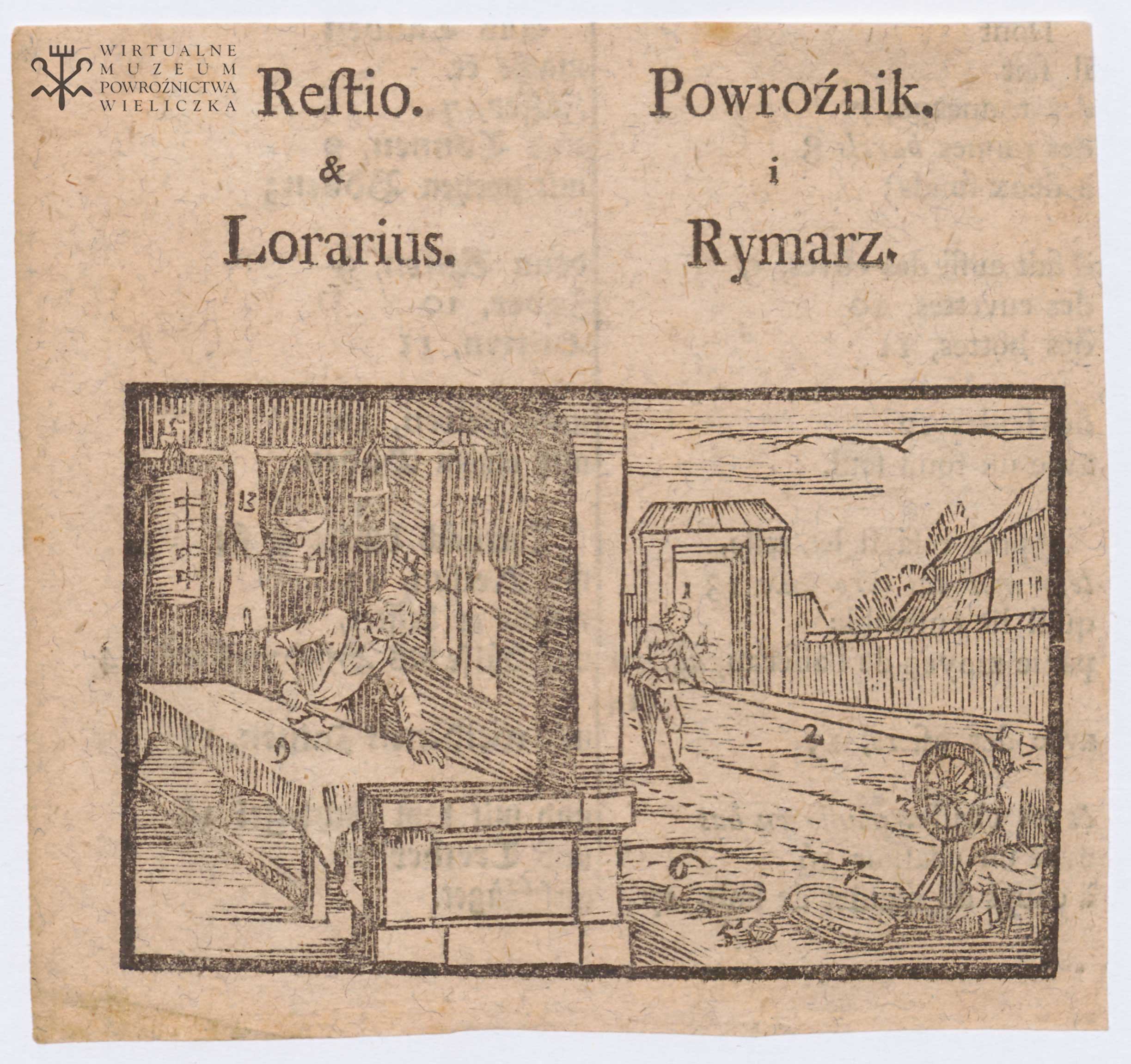
  • Restio & Lorarius / Ropemaker & Saddler


    1770 / Iohannes Amos Comenius / Warsaw

    Restio & Lorarius / Ropemaker & Saddler

    The card comes from the publication: Jan Amos Comenius, Świat rzeczy pod zmysły podpadających we czterech językach odmalowany y poprawiony, (Joh[annes]. Amos Comenii, Orbis sensualium pictus quadrilinguis emendatus), Warsaw 1770, pp. 312-315.

    The graphic representation shows the interior of the saddler’s workshop (left) and the workspace of the ropemakers (right). Two ropemakers are spinning thread from hemp. A ropemaker (1) spins thread (2) from hemp fibers (4) wrapped around himself. The second ropemaker, sitting on a stool, turns a crank to move the ropemaking wheel (3). The drive is translated to a spinning hook on which the thread is attached. The work is done on a ropemaking track, along which the first ropemaker moves backwards, bounded by a fence, with a gate in the background. In the foreground are arranged the coiled yarn (5), cordage or cordage (6) and ropes (7).

    (312)
    LXXXI.
    Restio & Lorarius
    The Ropemaker and the Saddler
    Graphic representation of a saddler’s workshop and ropemakers working on the ropemaking circuit.
    Below and on the following pages were texts (known from other copies):
    Restio, 1 m. 3. ropemaker, 1
    contorquet spins
    funes, 2 ropes, 2 (cordage) funis, m. 3. rope.
    agitatione turning
    rotulæ, 3 pegs, 3 rotula, f. 1. peg.
    e stupa, 4 with carding, 4 stupa, f. 1. carding.
    vel cannabi, or hemp cannabis, f. 3. hemp.
    quamfibi circumdat. which ties around himself.
    (313)
    LXXXI
    Im Buch der Richter Cap. XVI. V. 7. 9 [Book of Judges, 16, 7-9].
    [Latin text].
    And Samson answered her, if they had bound me with seven strands of raw threads, which have not yet withered, then I shall wither, and be as another man: but he hath broken off the threads, and as one would break off a thread that is scorched with fire: and the power thereof was not known.
    [French and German text].
    Le Cordier & le Ceinturier.
    Der Seiler und Riemer.
    Le cordier, 1 Der Seiler 1
    En tournant drehet
    Ion rouet, 2 Seile, 2
    retord, cable durch Umdrehung
    toutes fortes de Ordes, cordages 3 des Rads, 3
    d’étouppe, 4 aus Werd, 4
    ou de chanvre, orer hanff,
    gu’il a mis autur de lui. So er um sich leget.
    (314)
    Sic fiunt Thus they make themselves
    Primo forward
    funiculi, 5 yarns, 5
    tum restes, 6 then powroz, 6 (poitronki) reftis, f.3.
    powroz.
    tandem at the end
    rudentes. 7 well or sailing ropes, 7 rudens, m. 3. Rope

    [Further on Saddler]
    Orbis Sensualium Pictus (The Sensual World in Pictures) published in 1658 in Nuremberg is the first book written with children in mind,. The author was Jan Ámos Komenský, also known as Komenius (1592-1670). He was a philosopher, reformer and Protestant thinker, but first and foremost a renowned Czech educator. He devoted his entire life to practical educational activities, compiling school textbooks and theoretically developing pedagogical and didactic issues, thus laying the foundation for modern pedagogical principles.
    His best-known and highly regarded work Orbis sensualium pictus is an illustrated primer for the youngest children, published in Latin and German. The book was originally intended to be an improved version of the Latin reading book Janua linguarum reserata, designed to facilitate the mastery of Latin. However, when creating Orbis pictus, Jan Amos Komenský used for the first time a modern method combining a written text with a graphic representation of it in the form of numerous illustrations. This method was intended to simplify the process of transmitting knowledge to young students.
    Orbis pictus was translated into many languages. The first four-language edition (Latin, German, Italian, French) appeared in 1666. A year later, a Polish translation came out of the printers. The book was also published in English, Czech and Hungarian. For a century after its publication, it was the most popular textbook in Europe and the prototype of modern language learning materials.
    material / technique
    paper, woodcut
    dimensions:
    height / width
    9.3 cm / 10 cm
    A. Fijałkowski, Orbis Pictus świat malowany Jana Amosa Komeńskiego, Warszawa 2008,
    A. Fijałkowski, Tradycja i nowatorstwo w Orbis sensualium pictus Jana Amosa Komeńskiego, Warszawa 2012,
    A. Fijałkowski, Jan Amos Komeński Świat w obrazach rzeczy dostępnych zmysłom, Warszawa 2015, Komenský Jan Amos.
    Świat w obrazach opisany po polsku w dziele Jana Amosa Komenskiego wydanym w Brzegu w 1667 roku, Brzeg 2017,

    Zobacz także 

    1877 / Spisz, Polska

    Zestaw maszyn powroźniczych (kołowrotek i wózek), ludowy
    XIX-XX w. / Polska

    Zestaw maszyn powroźniczych (kołowrotek i wózek), ludowy