Witamy w WordPressie. To jest twój pierwszy wpis. Edytuj go lub usuń, a następnie zacznij pisać!
Autor: Grzegorski2023
-
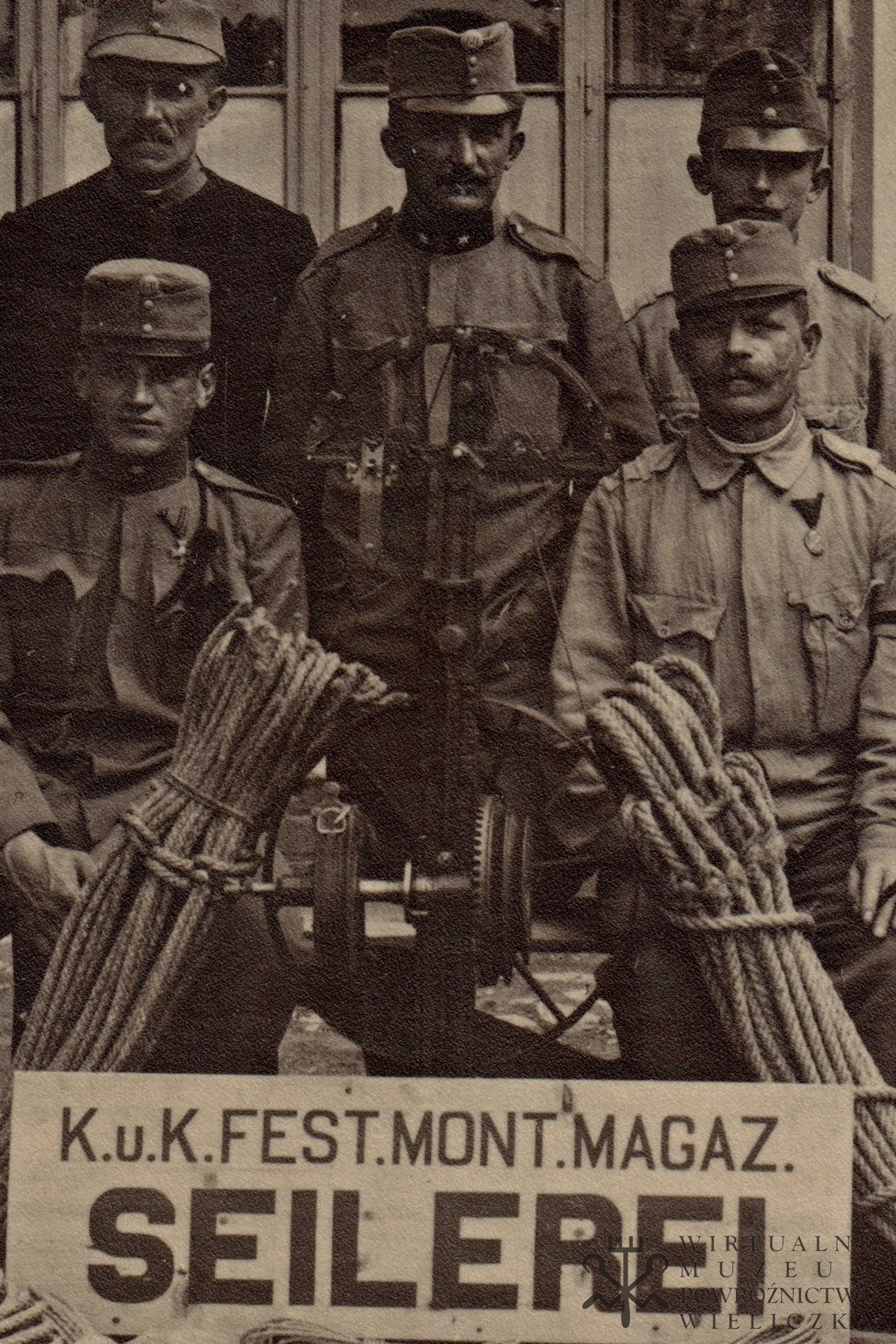
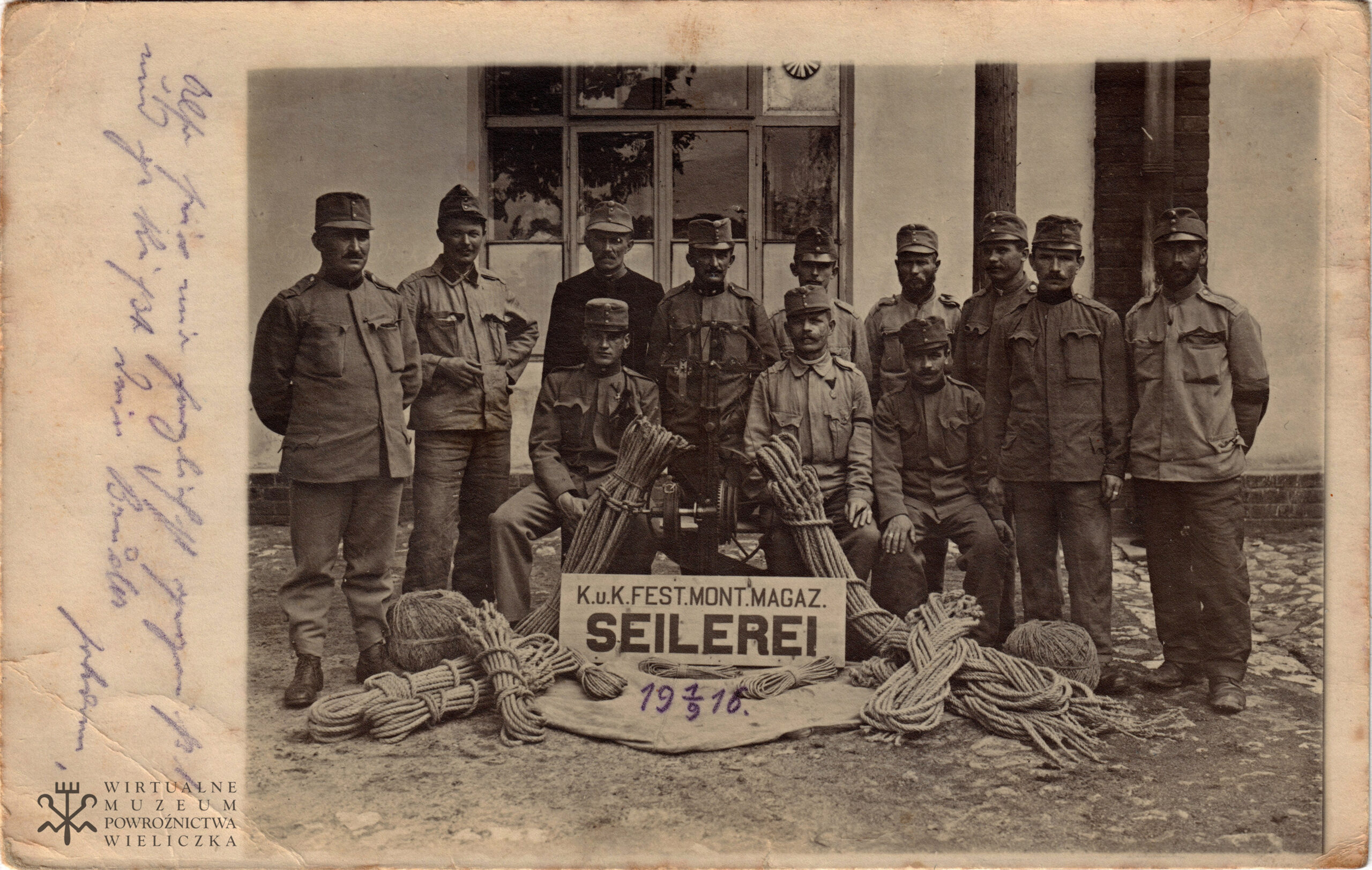
Soldiers-troopers from the Krakow Fortress
1916 / Kraków
Soldiers-troopers from the Krakow Fortress
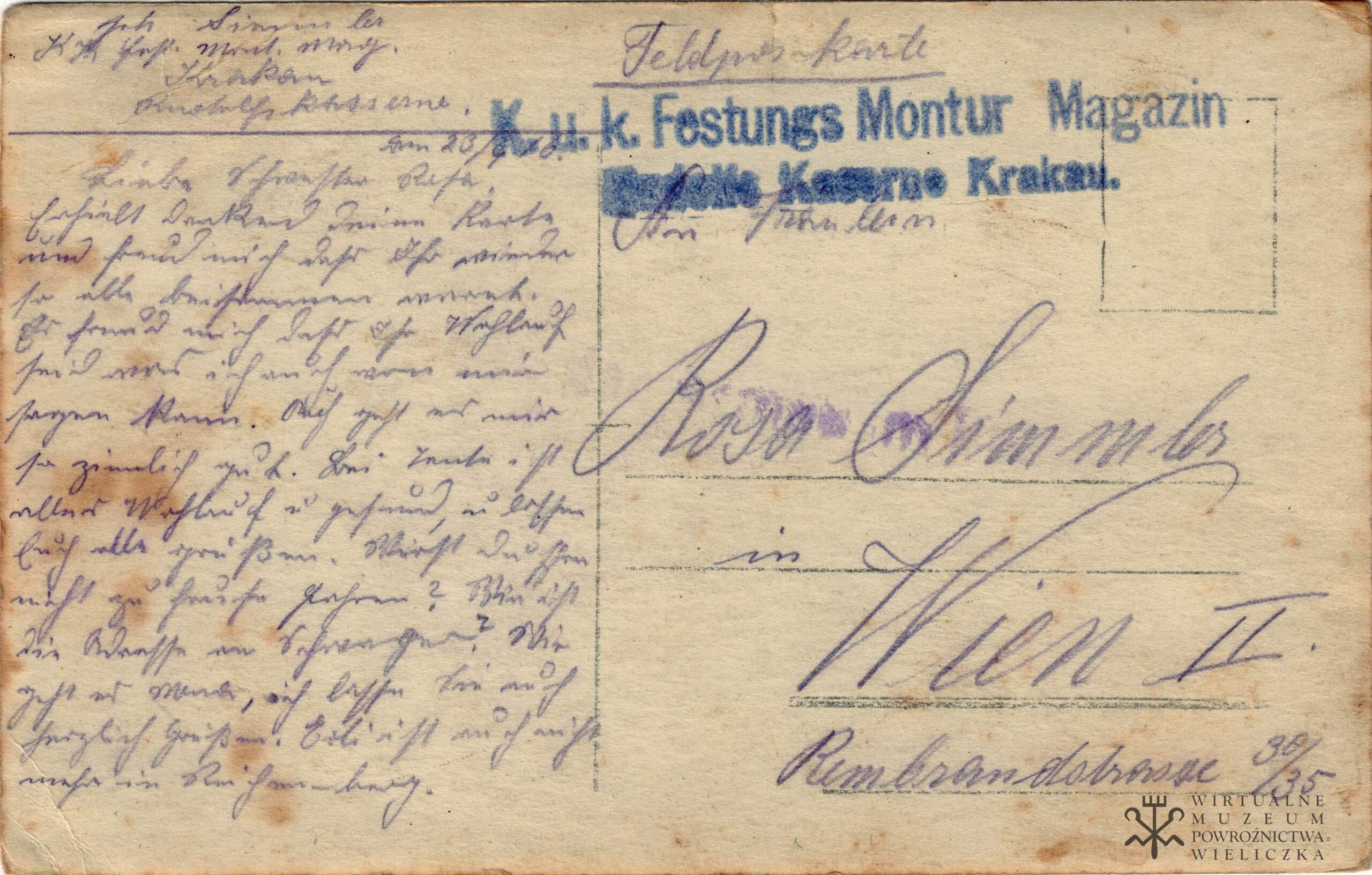
Postcard sent to Vienna on 23/9 1916. Photograph shows 12 soldier-carvers, a plaque with the name of the workshop, a machine and carpentry products.
On the board the inscription: „K.u.K. FEST. MONT. MAGAZ. SEILEREI” with added date: „1/9 1916”.
On the reverse side a stamp: „K.u.k. Festungs Montur Magazin Rudolfs Kaserne Krakau”
Among the many industrial facilities in the Krakow Fortress that were established during the war, the Fortress Uniform Depot (Montur-magazin), with its numerous workshops and related enterprises, occupies one of the first places. The establishment of the depot dates back to the beginning of the war. Before the outbreak of the war, the fortress had only a modest stock of uniform and linen sorts in the replenishment warehouse, in the barracks on Grodzka Street (Grodzkakaserne). In the first days of August 1914, troops and field workshops left the fortress to face the enemy. The replacements stationed in the fortress went inland, and numerous Landsturm formations and labor troops arrived in the fortress. The fortress was therefore given the task of establishing a central depot – to maintain self-sufficiency – which would have to take care of the fortress garrison and supply the close front.
Quartermaster-Intendant Vesely, Inventory of the Krakow Fortress, 1917, Lt. Res. Bruno Färber, Fortress Uniform Depot at Rudolf Barracks and its development since the beginning of the war
In order to supply the artillery depot and the artillery formations stationed in the fortress with ropes, the price of which had risen immeasurably due to a shortage of raw materials, a cordage workshop (Seilerei) was established next to the uniform depot in February 1916 by order of the Head of the Fortress Intendant. With the help of several machines, partly purchased and partly made in-house, from old, unusable bags and jute waste, with the addition of hemp, about 4,000 ropes were produced per month. 50% of the old material was used in the production process, which did not reduce the durability of the rope. Laufstränge and Zugstränge were produced (specialized types of cordage and post-strings, used as part of rather complex draft horse harnesses for transporting military equipment) and probably Leitseile (cordage reins).
Direktiven für Benützung von Karrenfuhrwerken Und Karren-Trainzuggeschirren, Vienna 1915
material / technique:
paper, photography
dimensions:
height / width
8.8 cm / 14 cm -
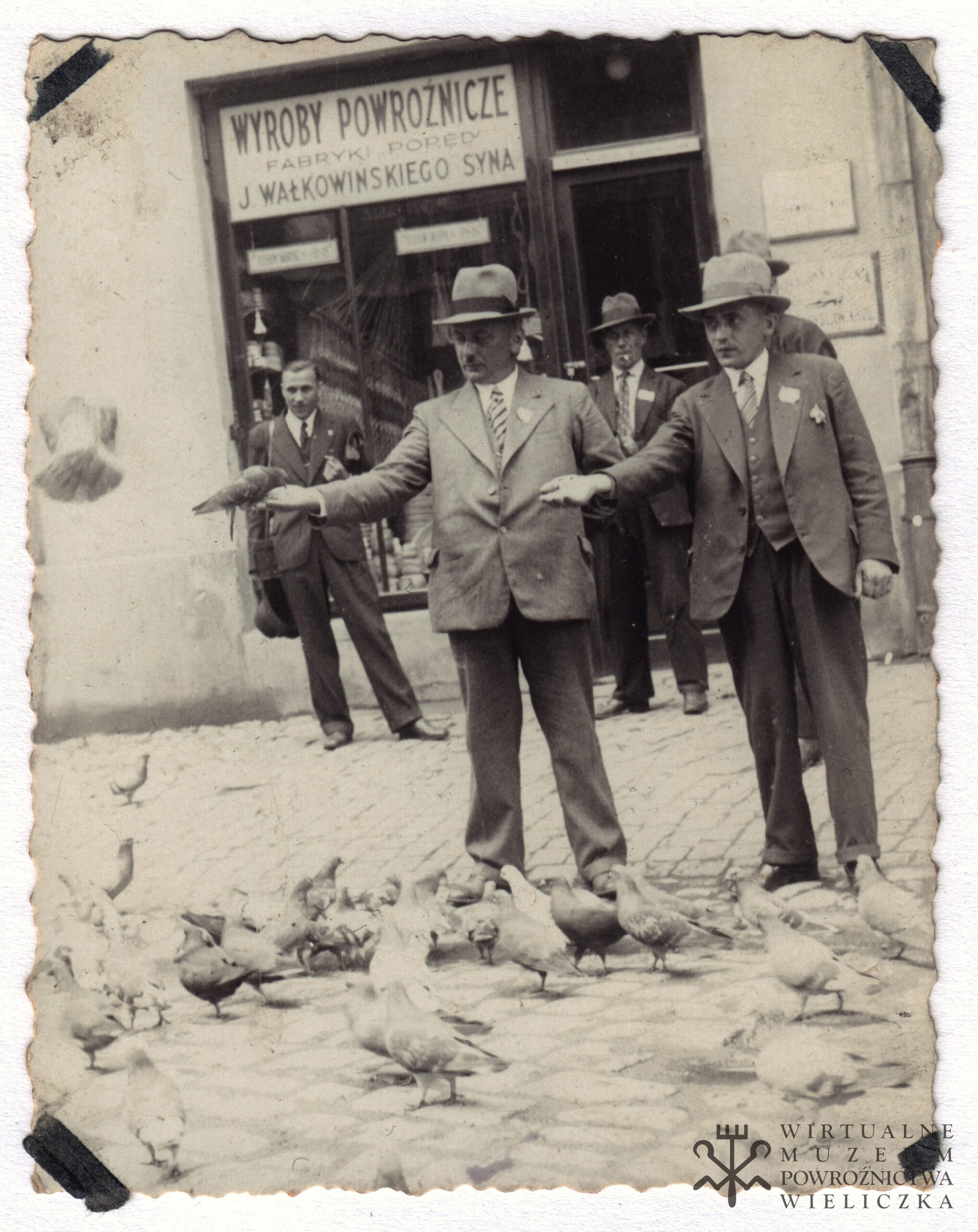
The ropemaker store in Cracow, 8 Mariacki Square
1920s – 1930s / Cracow
The ropemaker store in Cracow, 8 Mariacki Square
Photograph shows men feeding pigeons in front of a ropemaking store in Kraków, 8 Mariacki Square (7). Visible in the background is the store window with the signboard: „ROPEMAKING PRODUCTS OF POPĘD J. WAŁKOWINSKI SYN FACTORY”. The products on offer are displayed behind the glass.
Jozef Walkowinski’s ropemaking factory (Rynek Dębnicki 14/15), established after 1920, was the largest ropemaking factory in Cracow. It produced twine, rope, cordage and other hemp and wire products. The factory’s name „Popęd” was a synonym for the word drive used at the time – as flat ropes were often used as transmission belts in factories or mills. The factory had a company store at 8 St. Mary’s Square.
(Information from: upadektechnikikrakowa.blogspot.com)
Earlier, at the end of the 19th century, Karol Walkowiński’s Hemp and Wire Rope Factory in Krakow (Pędzichów 17). It supplied cordage products to, among others, Salina in Wieliczka.
material / technique:
paper, photography
dimensions:
height / width
8.5 cm / 6.8 cm -
A rope and mat factory in Seville
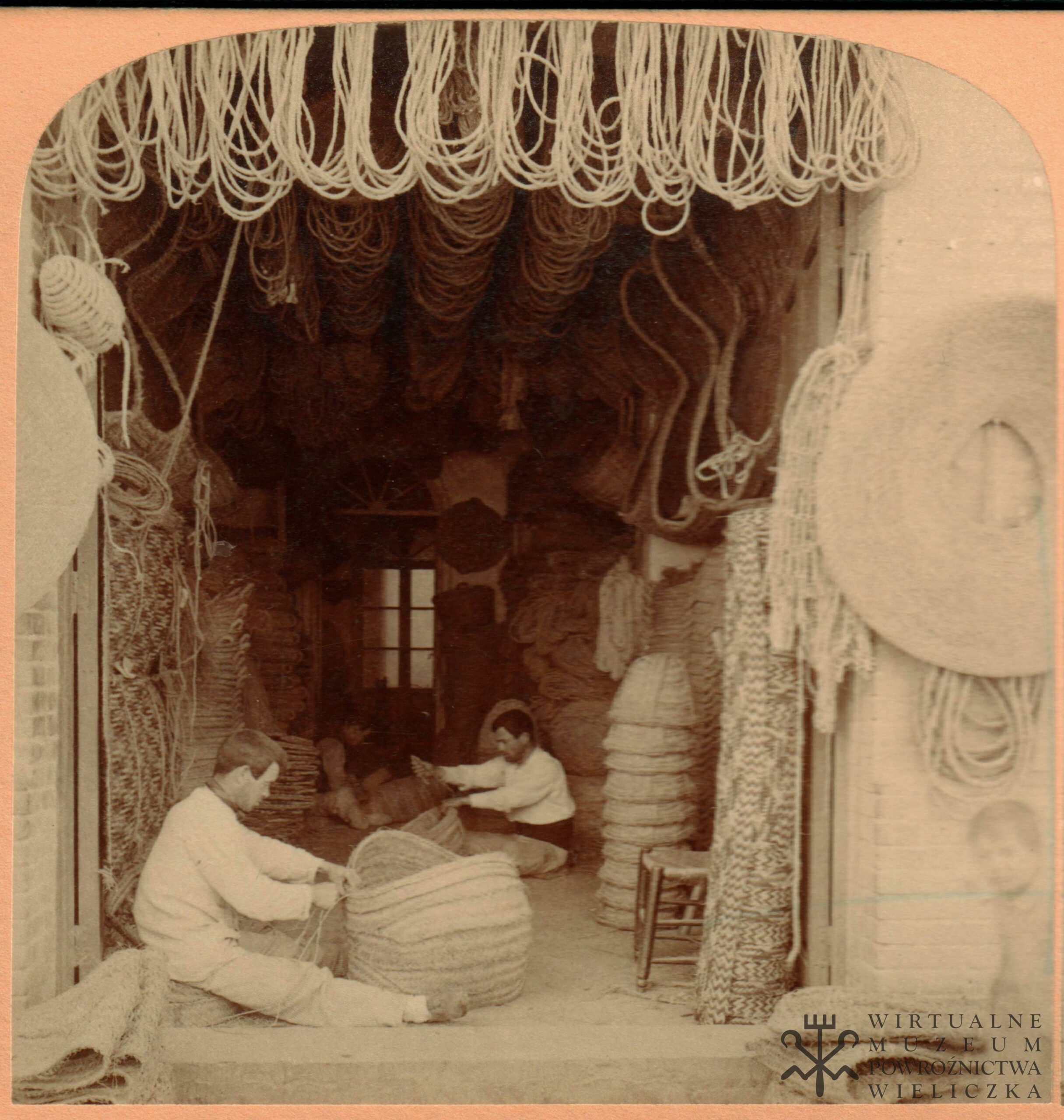
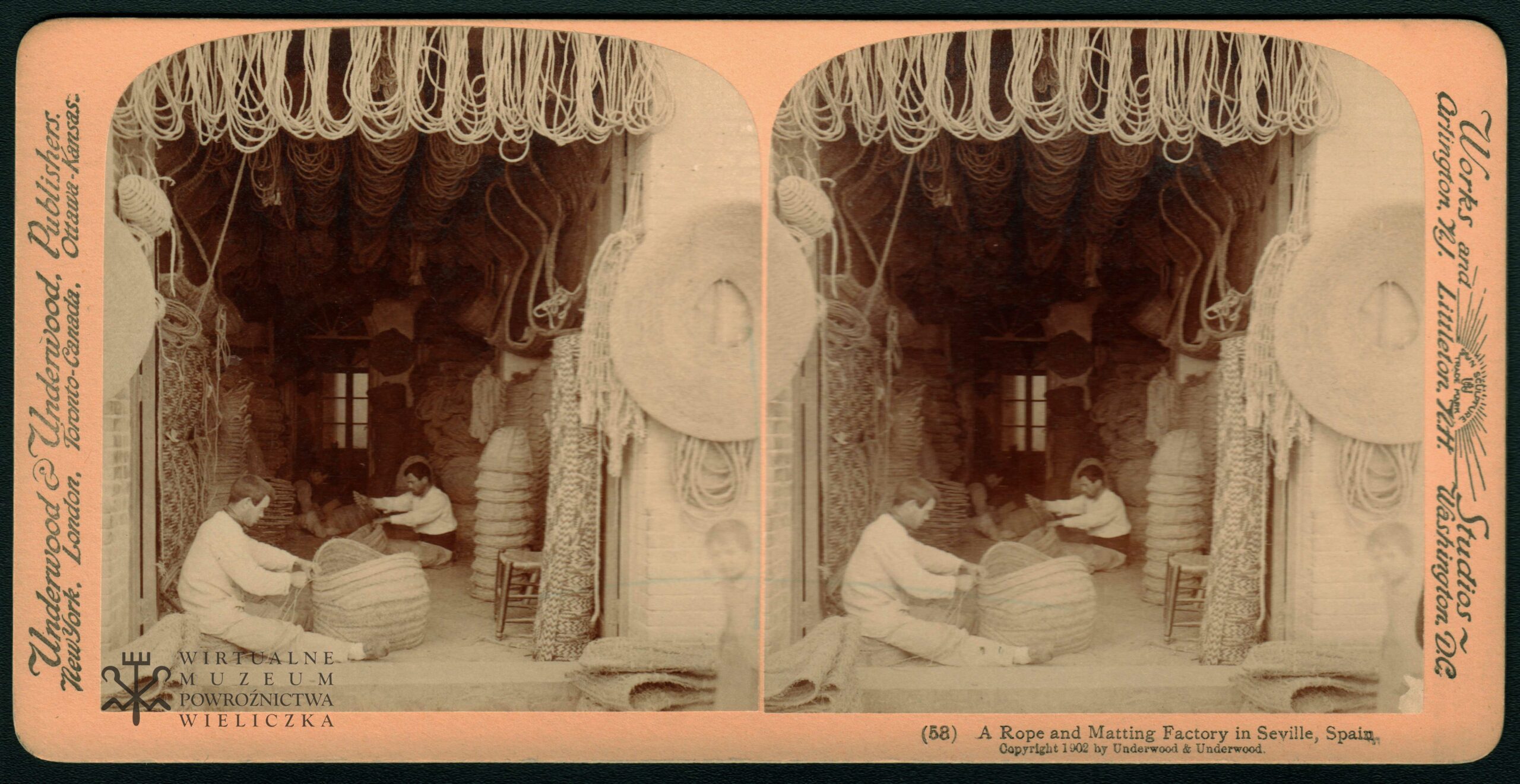
1902 / Sewilla, Spain
A rope and mat factory in Seville
Inside the workshop, men are making (presumably also selling) ropes, mats and baskets made of esparto (a fiber made from the grass of sturdy holly).
Photo captioned: A Rope and Matting Factory in Seville, Spain. Also marked is the manufacturer: Underwood & Underwood Publishers. New York, London, Toronto-Canada, Ottawa-Kansas.
material / technique:
paper, stereoscopic photography
dimensions:
height / width
8.8 cm / 17.8 cm -
A ropemaker at a ropemaking wheel in France
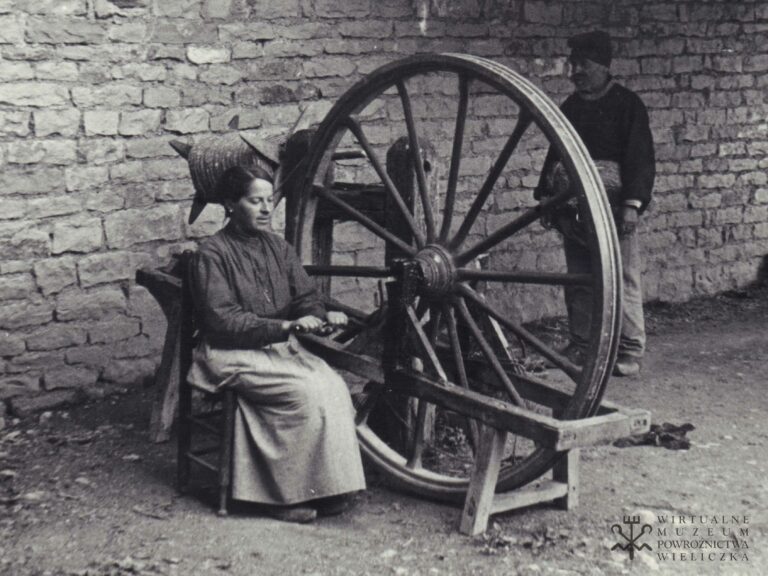
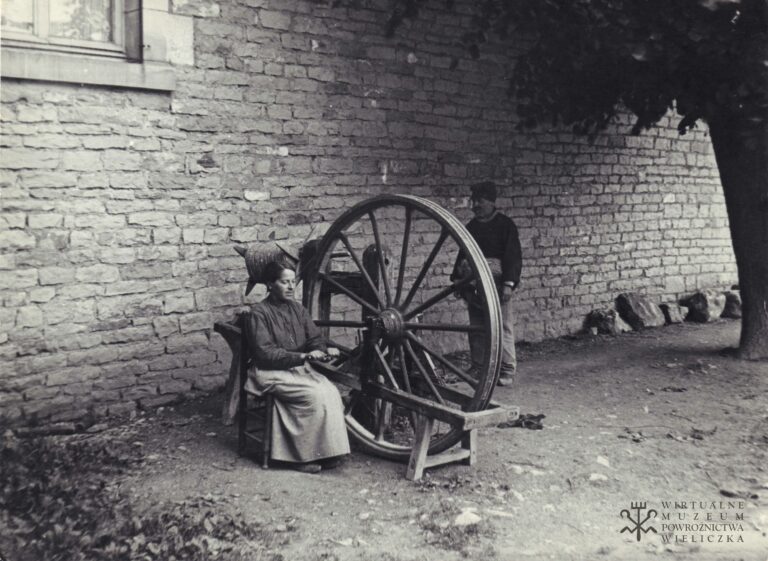
1910/ca. 1950 / Côte d’Or, France
A ropemaker at a ropemaking wheel in France
A ropemaker (Cordière) sits on a chair at the machine, which she drives by turning a crank. A cord is attached to a large flywheel that sets the hook (or hooks) in motion. A ropemaker stands in front of the flywheel. He has hemp fibers wrapped around his waist, indicating that he intends to spin the thread by hooking the fibers onto the machine’s hook. Also attached to the machine’s structure is a motowid with the threaded rope. The ropemakers are working next to a stately stone-built building under a tree. The photo was taken in the Côte d’Or region, France.
The negative is dated circa 1910, the photograph was developed circa 1950.
The maker (stamp on the reverse): „PHOTO GOLDNER / 4, Square Claude Debussy, 4 / PARIS-17e / CARNOT 43-81”.
Handwritten inscription on the reverse: „Cordiere / Côte d’Or / 1910”.
material / technique:
paper, photography
dimensions:
height / width
17.6 cm / 24.2 cm -
A ropemaker workshop in Sicily
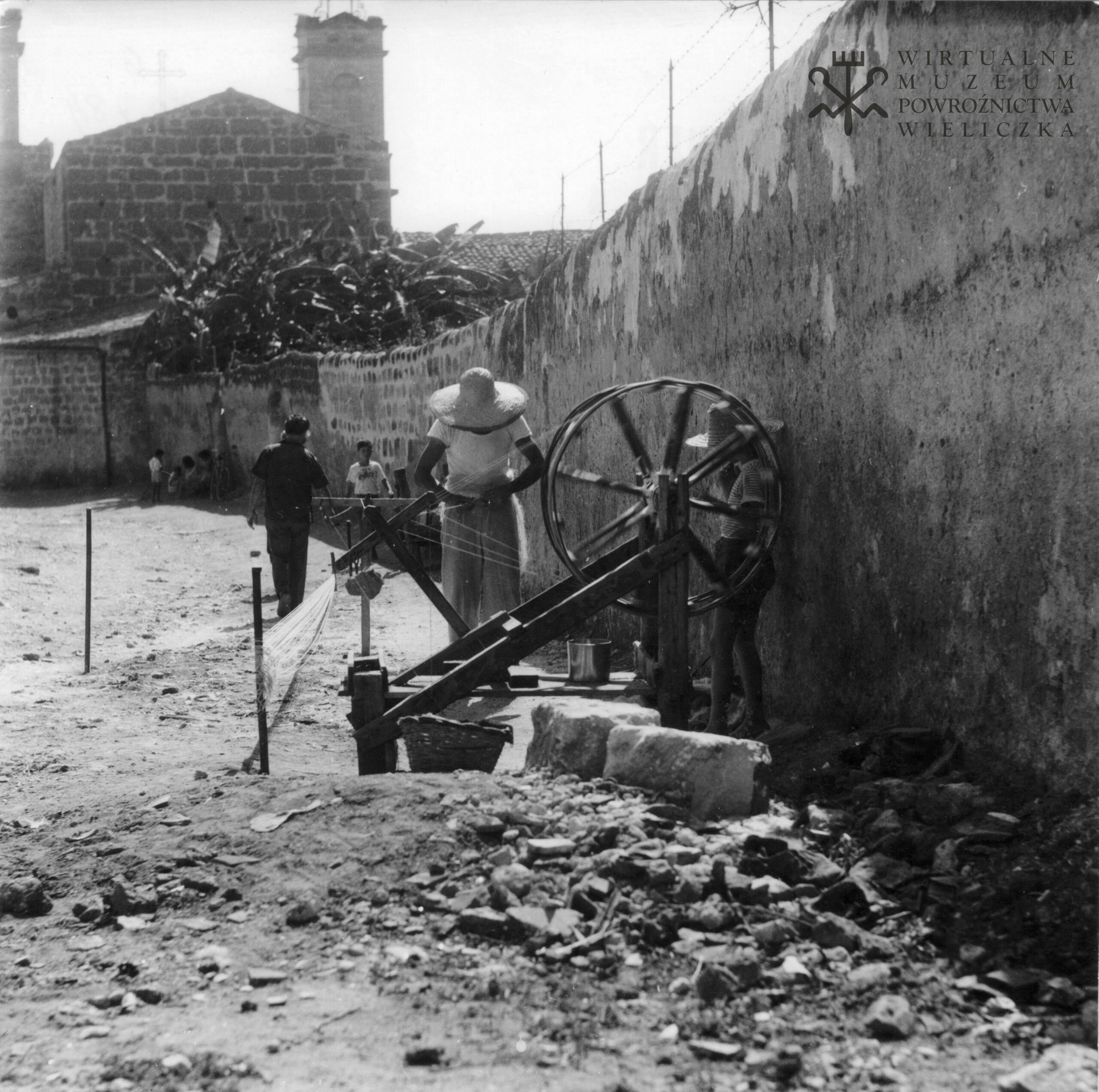
1950 / Solunto, Sycylia, Italy
A ropemaker workshop in Sicily
The photograph shows a ropemaker stretching a thread between a ropemaking wheel and a peg, supported by a ropemaking rake. Also visible in the photo are two boys, one of whom is turning a crank to move the rope wheel. Along the stretched strings walks a man dressed in black. The cordage track (the place where the cords are twisted) is located along the wall.
The factory (stamp on the reverse): „PHOTO GOLDNER / 4, Square Claude Debussy, 4 / PARIS-17e / CARNOT 43-81”.
Handwritten inscription on the reverse: „Sicile / un cordier à Solunto”.
material / technique:
paper, photography
dimensions:
height / width
17.8 cm / 18 cmSee also
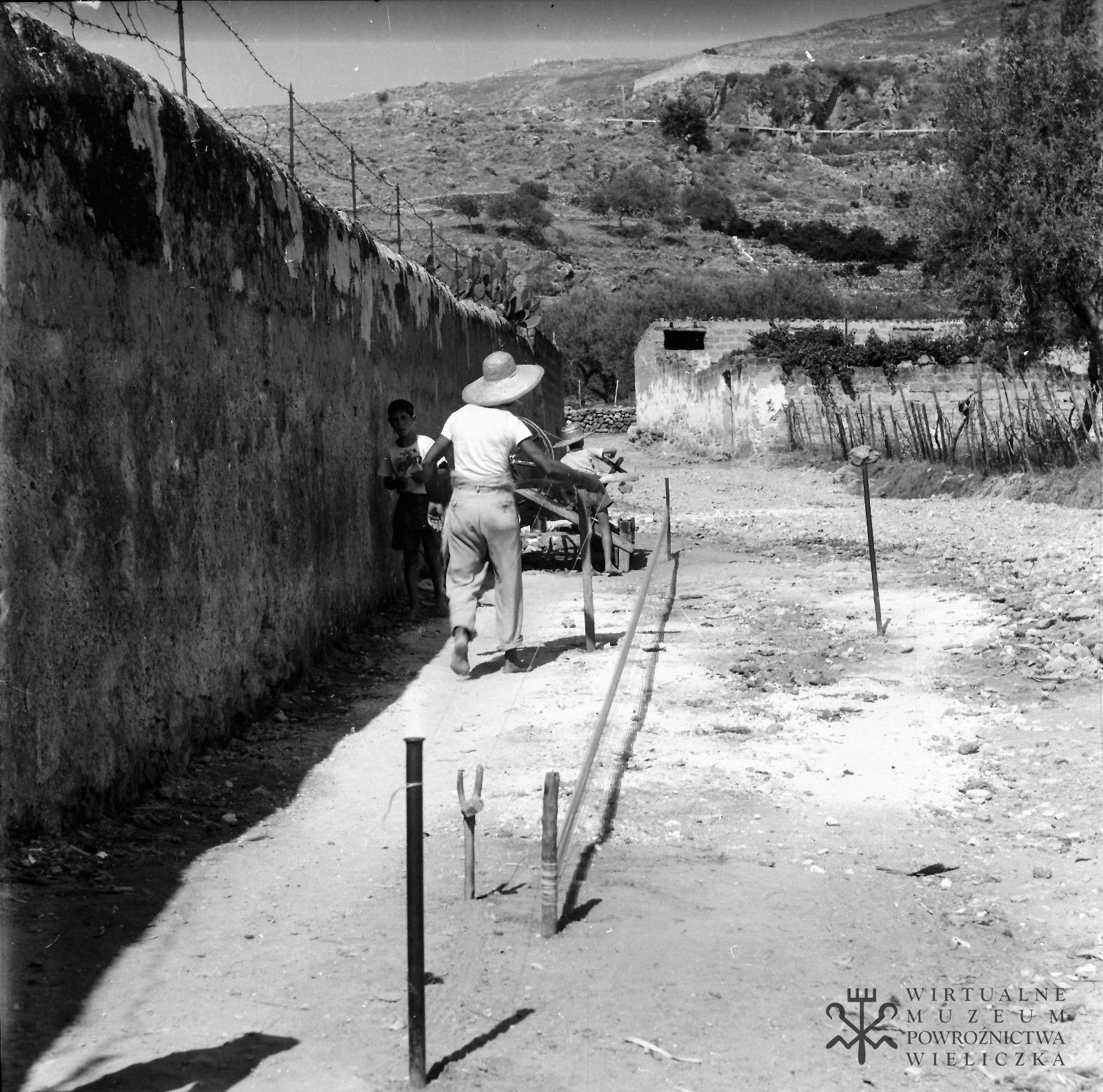
1950 / Solunto, Sicily, Italy
A ropemaking workshop in Sicily
See more
-
Ropemaker in front of the cathedral in Marseille, France.
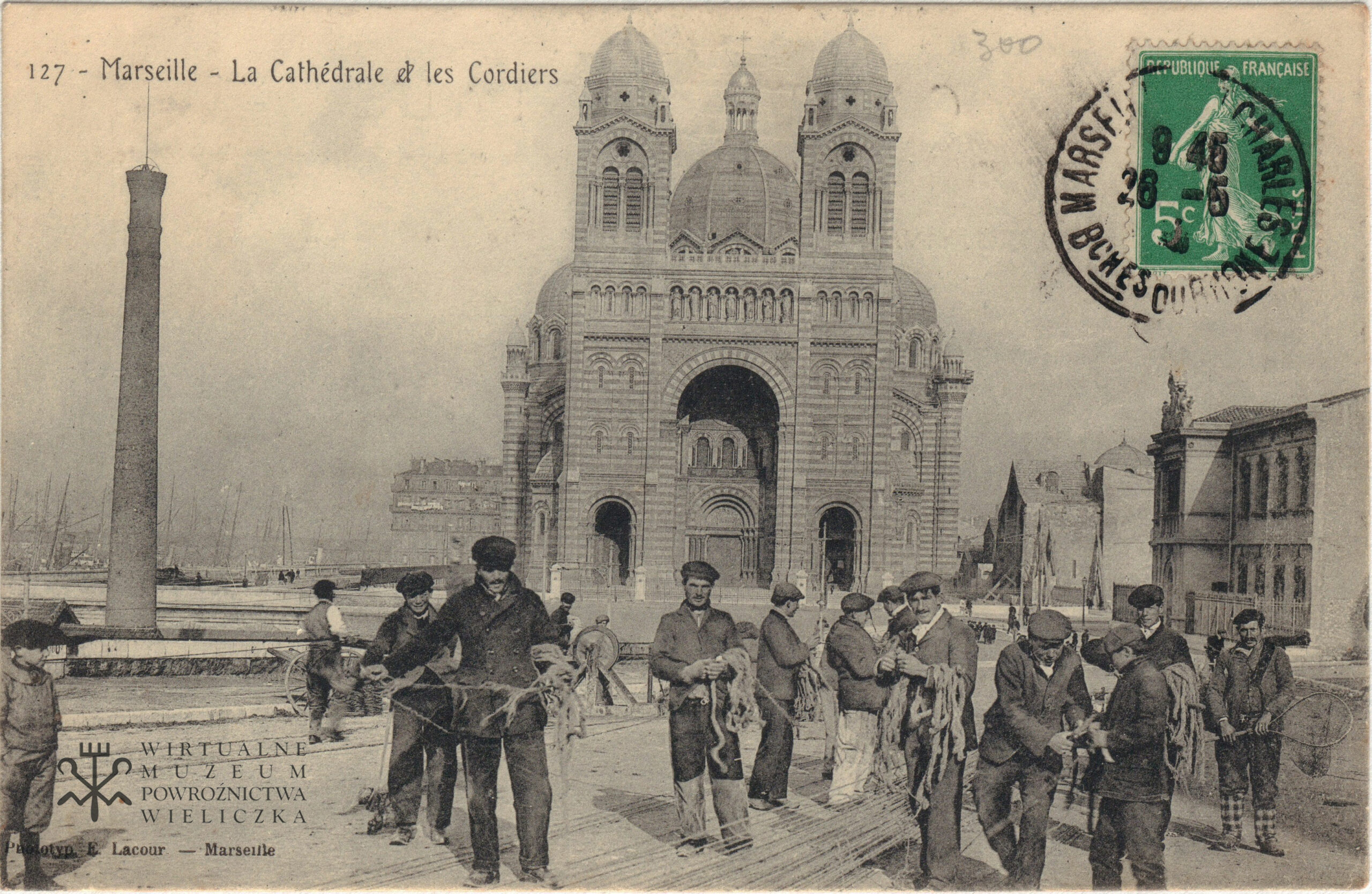
1913 / Marsylia, France
Ropemaker in front of the cathedral in Marseille, France.
A group of ropemakers work in the square in front of the cathedral in Marseille. The craftsmen are holding ropes. A ropemaking machine (wheel) is visible behind them. Ropes are stretched on the track.
Captions: „127 – Marseille – La Cathédrale & les Cordiers”, „Phototype E. Lacour – Marseille”.
material / technique:
negative, photography
dimensions:
height / width
size: small;”>9.3 cm / 14 cm -
Russian prisoners of war making ropes in Germany
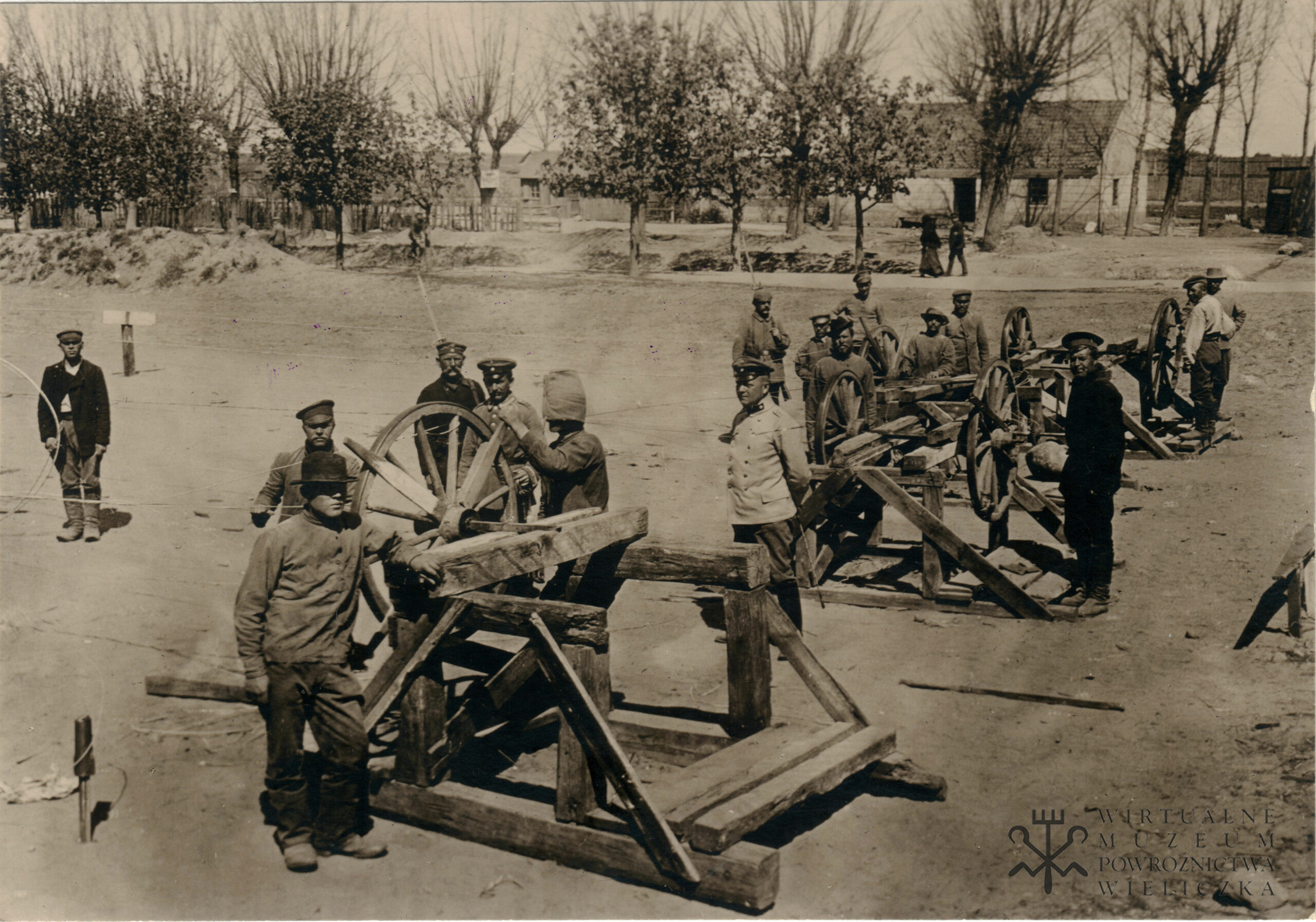
1914-1918 / Germany
Russian prisoners of war making ropes in Germany
The photograph shows Russian prisoners of war guarded by a German soldier, twisting ropes on three machines. Large wagon wheels are mounted on structures made of wooden logs, and twisted ropes were attached to the spokes.
On the reverse side a stamp with the inscription: „J. H. Hennings & Co., Hamburg 5.”
material / technique:
paper, photography
dimensions:
height / width
10.7 cm / 15.4 cm -
A ropemaking workshop in Sicily
1950 / Solunto, Sycylia, Italy
A ropemaking workshop in Sicily
A ropemaker workshop in Sicily
The photograph shows a ropemaker stretching a thread between a ropemaking wheel and a peg, supported by a ropemaking rake. Also visible in the photo are two boys, one of whom is turning a crank to move the rope wheel. Along the stretched strings walks a man dressed in black. The cordage track (the place where the cords are twisted) is located along the wall.
The factory (stamp on the reverse): „PHOTO GOLDNER / 4, Square Claude Debussy, 4 / PARIS-17e / CARNOT 43-81”.
Handwritten inscription on the reverse: „Sicile / un cordier à Solunto”.
material / technique:
paper, photography
dimensions:
height / width
17.8 cm / 18 cmSee also
1950 / Solunto, Sycylia, Italy
A ropemaking workshop in Sicily
-
A ropemaking wheel from a workshop in Myslenice


XIX/XX century / Germany (?)
A ropemaking wheel from a workshop in Myslenice
A rope wheel – from a large flywheel moved by a crank, the drive by means of a string is transferred to spindles with hooks (three or more – in a fan-shaped arrangement). You can adjust the height of the upper part with rollers. The machine was purchased from a ropemaker running a workshop in Myslenice, who had previously bought it from a ropemaker in Bochnia.
Material:
wood, iron
dimensions:
height / length / width
145 cm / 60 cm / 97 cmZobacz także
1950 / Solunto, Sycylia, Włochy
Warsztat powroźniczy na Sycyli
Zobacz więcej